

The tradition that prescribes women to cover their head with a scarf has is a long-standing one. Sharia (a set of prescriptions that determine the life of every Muslim) orders Muslim women to cover their heads and hair. An obligatory component of the female Tatar folk costume is a veil. It was believed that the hair accumulated energy, so girls avoided wearing their hair down, fearing the negative consequences. After marriage, women completely covered their hair, while the girls could display part of their braid from under a scarf.
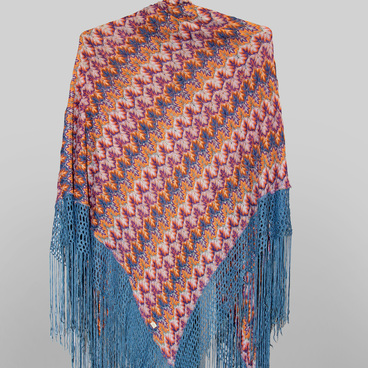
In the 19th century, the veil was replaced by the scarf, which was a universal headdress for almost the entire female population of our country at that time. The headscarf was both an adornment and an essential accessory for a Muslim woman. At home, while doing the chores, women most often wore inexpensive small chintz or calico shawls. When leaving the house, they put on a larger scarf on top of the light scarf. The outer scarf — the shawl — usually was of better quality.
Shawls came into fashion in Europe at the end of the 18th century. In the Russian Empire, their production and mass distribution began in the early 19th century. The folk costume, including that of Siberian Tatars, began to include shawls in the middle of the 19th century. In the 1830s, white, pink, and blue openwork silk shawls entered the European fashion under the name a la Taglioni. The Russian word for “openwork” was borrowed from French — the original translates as “transmitting daylight”, “mesh”, and “transparent”. At the same time, openwork shawls became a fashionable novelty in the Russian Empire, and already from the second half of the 19th century, they were produced in large quantities in the factories of the country. Such shawls were an important element of the costume of almost all townswomen and wealthy villagers; they were not ethnically specific in any way.
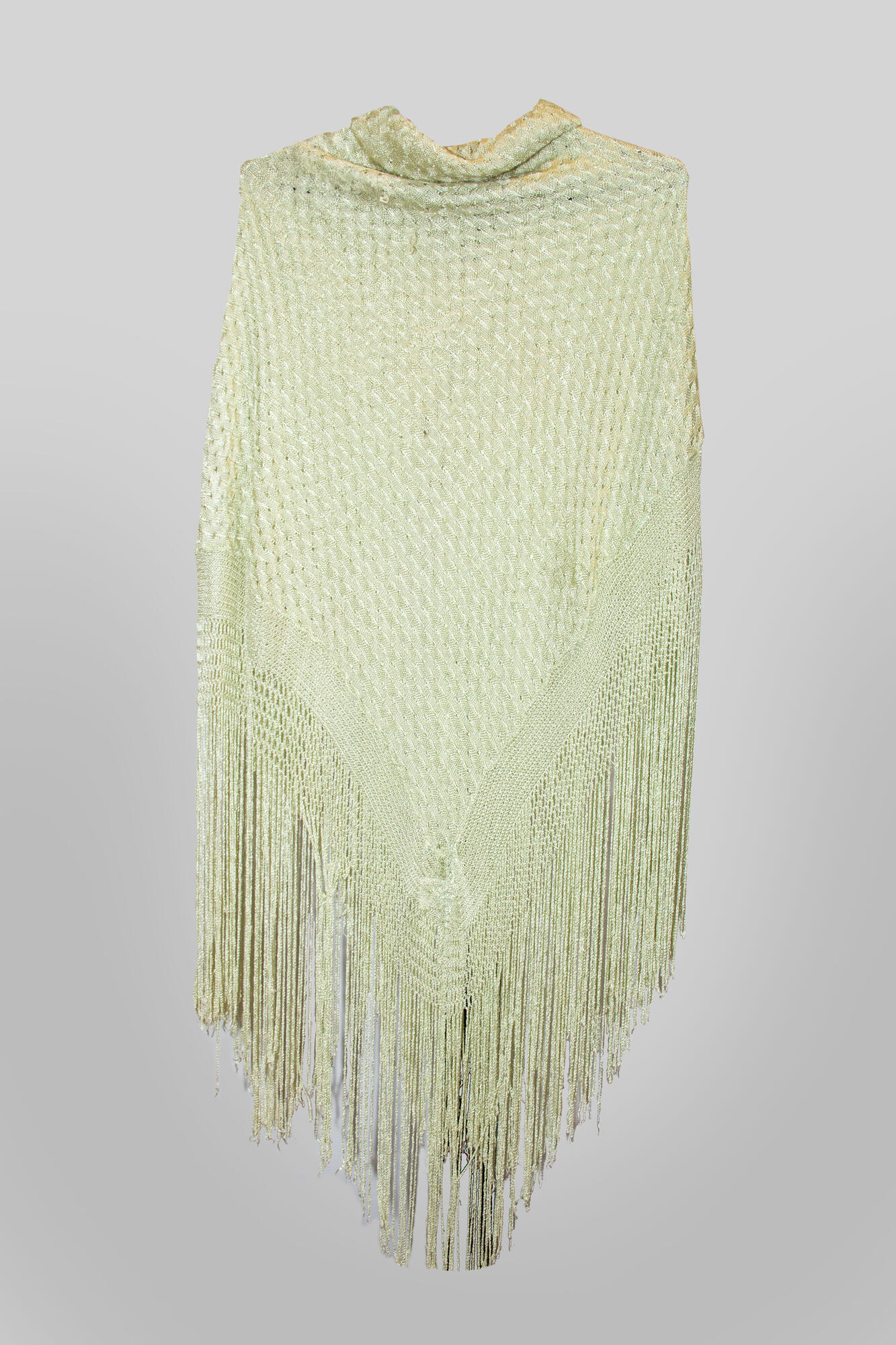
The museum’s collection contains many types of different scarves, from ancient to modern ones. The oldest one is over a hundred years old. A light green openwork shawl with long tassels and a braided pattern was donated to the museum by Marhaba Rechapova, an old resident of the Embaevo village.
In the 19th century, the veil was replaced by the scarf, which was a universal headdress for almost the entire female population of our country at that time. The headscarf was both an adornment and an essential accessory for a Muslim woman. At home, while doing the chores, women most often wore inexpensive small chintz or calico shawls. When leaving the house, they put on a larger scarf on top of the light scarf. The outer scarf — the shawl — usually was of better quality.
Shawls came into fashion in Europe at the end of the 18th century. In the Russian Empire, their production and mass distribution began in the early 19th century. The folk costume, including that of Siberian Tatars, began to include shawls in the middle of the 19th century. In the 1830s, white, pink, and blue openwork silk shawls entered the European fashion under the name a la Taglioni. The Russian word for “openwork” was borrowed from French — the original translates as “transmitting daylight”, “mesh”, and “transparent”. At the same time, openwork shawls became a fashionable novelty in the Russian Empire, and already from the second half of the 19th century, they were produced in large quantities in the factories of the country. Such shawls were an important element of the costume of almost all townswomen and wealthy villagers; they were not ethnically specific in any way.
The museum’s collection contains many types of different scarves, from ancient to modern ones. The oldest one is over a hundred years old. A light green openwork shawl with long tassels and a braided pattern was donated to the museum by Marhaba Rechapova, an old resident of the Embaevo village.