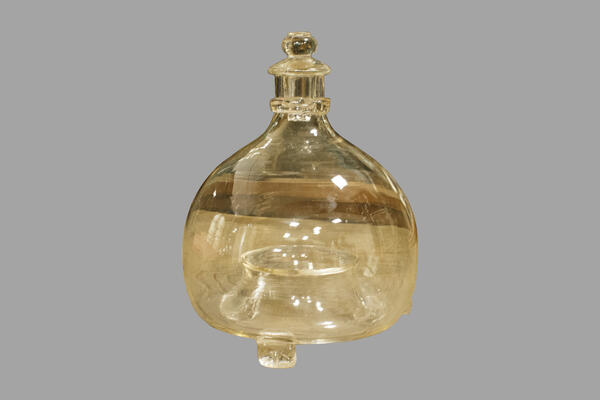
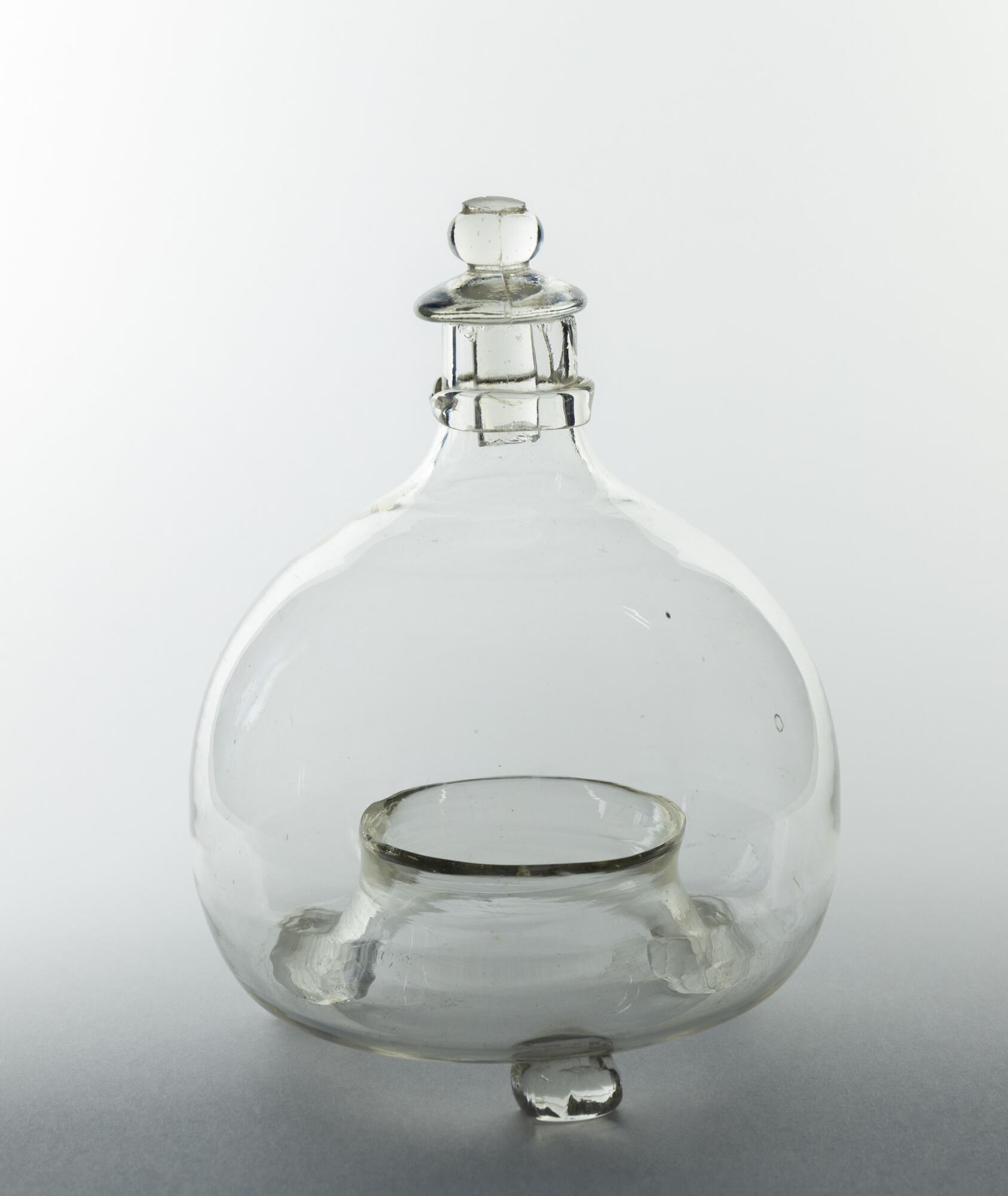
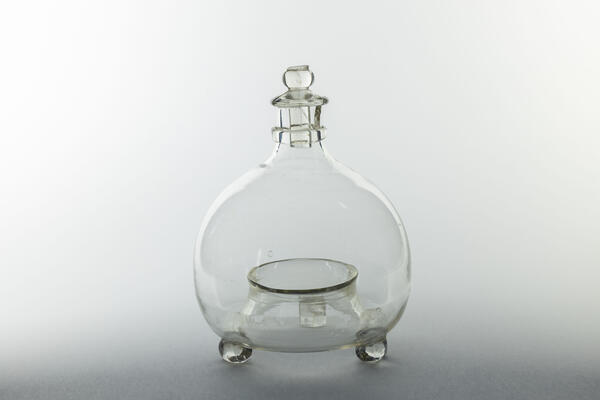
A flytrap is a glass vessel for killing flies. The first flycatchers were made at Russian glass-blowing factories in the 17th century, and they were available only to notable people. Later, glass flytraps appeared in many houses, as well as in taverns and restaurants, where they remained in use until the middle of the 20th century.


Flytrap
Creation period
the late 19th — early 20th century
Place of сreation
The Russian Empire
Dimensions
18x12x12 cm
Technique
glass, blowing
Collection
Exhibition
2
Open in app#2
#4
We all live together, cramped together and we all rub against each other. Have you seen, in some houses they put glass flytraps with beer inside? Swarms of flies would get it and they would all stew in their own juice and sour until the day they die. So, did we, brother Sasha, turn sour in our flycatcher and get angry.
In the short story “In Retirement”, published in 1902, Aleksandr Kuprin writes
#3
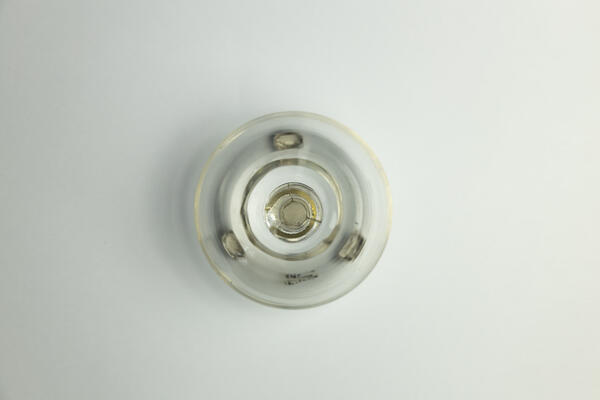
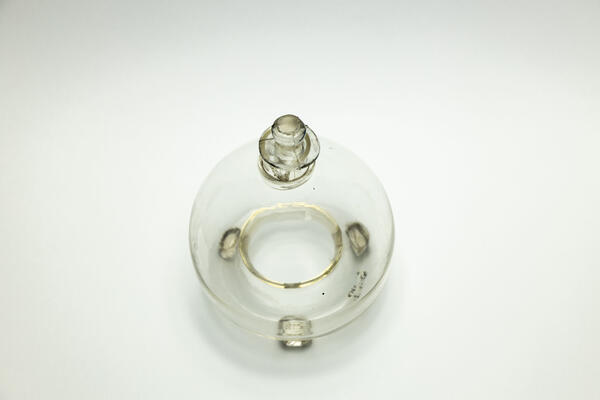
There were two types of glass flytraps: two-piece and solid ones. The former had a detachable cap to cover the main vessel, and the solid one was a spherical vessel on three legs and with two holes. The top hole was a low opening with a glass stopper, and the lower one was a wide funnel in the center of the bottom.
The book for housewives by Elena Molokhovets, published in 1895, describes the principle of the trap, “Glass flycatchers are devices, under which a piece of rye bread sprinkled with sugar, or just fine sugar, is placed, and into which soap or tea water is poured. Flies are enticed by the sugar, they fly up and fall into the poured liquid, from which they can no longer get out.”
The book for housewives by Elena Molokhovets, published in 1895, describes the principle of the trap, “Glass flycatchers are devices, under which a piece of rye bread sprinkled with sugar, or just fine sugar, is placed, and into which soap or tea water is poured. Flies are enticed by the sugar, they fly up and fall into the poured liquid, from which they can no longer get out.”
#6
Some liquid that attracts flies — whey or kvass — is poured from above. The opening of the flycatcher is closed from above with a cork. The fly climbs into the flycatcher from below and, not knowing how to get out again, dies after a while in the liquid. If you remove all the crumbs from the table and if you cover the food well, the flies would gather en mass in a short time in the flycatcher.
In the Soviet brochure of the 1920s, “Destroy the Flies!”
#5
It is especially noteworthy how the brochure “Destroy the Flies!” ends, “The key to the fight against flies is the activity, self-initiated activity of the population itself, its common people. Mothers, citizens! A fly brings death and illness to your children. The question of their destruction, the complete extermination of flies depends on your activities. Get to work, comrades! Death to the flies!”
#8
Flytrap
#7
Ministry of Culture of the Russian Federation
read morehide
00:00
00:00
1x
Flytrap
Creation period
the late 19th — early 20th century
Place of сreation
The Russian Empire
Dimensions
18x12x12 cm
Technique
glass, blowing
Collection
Exhibition
2
 Point your smartphone camera to open in the app
Open in app
Share