A kerosene lamp is a lighting device that uses kerosene as a fuel. From 1860 to 1920, it was the main source of lighting in European homes. Before the kerosene lamp, an oil lamp was used, which was filled with solid or liquid oil. The lamp has been known since the Paleolithic period, but it was unsafe and produced dim light and a lot of smoke. Today oil lamps are used for church services and rituals.
The kerosene lamp appeared in the era of technological progress and active oil refining. The brightness of the kerosene lamp depended on the length of the wick, which was measured by an old Russian and English unit — the line. The first kerosene lamps burnt like ten wax candles, and the more advanced ones — like 300-watt electric bulbs. The wick was covered with a transparent glass topper with a hole for letting air flow in and out. The flame was regulated using a special wheel on the side of the lamp, which released or shortened the wick.
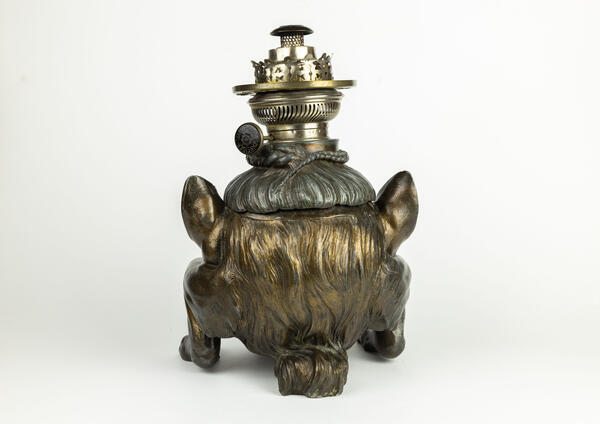
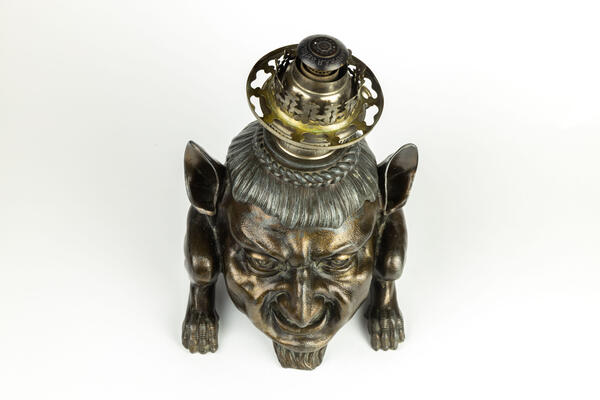
Kerosene lamps often had a utilitarian design, but some were true works of decorative and applied art. The glass was painted with a bright pattern or covered with a ceramic lampshade in the form of a flower, a house or an animal. The lamp from the collection of the Glazov Museum of Local Lore is made in the form of the head of a Kobold. It was a character of English, German and Scandinavian mythology. A Kobold is a brownie, an underground spirit, a relative of an elf and a goblin. Its name translates as “the lord of the room”; it is good-natured, but likes to make fun of people. Most often, a Kobold is depicted as a dwarf with pointed ears, however, it can take on different guises, one of which is the flame.
The kerosene lamp in the shape of a Kobold’s head is a product of the famous German company Hugo Schneider. The products of Hugo Schneider’s workshops were patented in Russia at the beginning of the 20th century as “B.Sch.D.” — “Joint Stock Company Bruner, Schneider, Ditmar”. These factories specialized in kerosene lamps, primuses and burners. Their era ended with the spread of electricity and gas, but kerosene appliances are still used by tourists and residents of regions where power outages are common.
The kerosene lamp appeared in the era of technological progress and active oil refining. The brightness of the kerosene lamp depended on the length of the wick, which was measured by an old Russian and English unit — the line. The first kerosene lamps burnt like ten wax candles, and the more advanced ones — like 300-watt electric bulbs. The wick was covered with a transparent glass topper with a hole for letting air flow in and out. The flame was regulated using a special wheel on the side of the lamp, which released or shortened the wick.
Kerosene lamps often had a utilitarian design, but some were true works of decorative and applied art. The glass was painted with a bright pattern or covered with a ceramic lampshade in the form of a flower, a house or an animal. The lamp from the collection of the Glazov Museum of Local Lore is made in the form of the head of a Kobold. It was a character of English, German and Scandinavian mythology. A Kobold is a brownie, an underground spirit, a relative of an elf and a goblin. Its name translates as “the lord of the room”; it is good-natured, but likes to make fun of people. Most often, a Kobold is depicted as a dwarf with pointed ears, however, it can take on different guises, one of which is the flame.
The kerosene lamp in the shape of a Kobold’s head is a product of the famous German company Hugo Schneider. The products of Hugo Schneider’s workshops were patented in Russia at the beginning of the 20th century as “B.Sch.D.” — “Joint Stock Company Bruner, Schneider, Ditmar”. These factories specialized in kerosene lamps, primuses and burners. Their era ended with the spread of electricity and gas, but kerosene appliances are still used by tourists and residents of regions where power outages are common.