In 1911, the Russian Empire marked the 50th anniversary of the abolition of serfdom. In 1910, a group of citizens of Rybinsk appealed to their compatriots with a proposal to commemorate the occasion by erecting a monument to Emperor Alexander II, known as the liberator.
A fund for the purpose of collecting donations was established by a special committee. Yefrem Stepanovich Kalashnikov, a merchant of the first guild and chairperson of the Rybinsk Trading Exchange, became the chairperson of the committee responsible for managing this fund. By 1911, the total amount available to the committee had surpassed 10,000 rubles.
A design contest for the future monument took place in the spring of 1912. The project submitted by the Adolf Moran firm from Petrograd won. Alexander Opekushin, who hailed from the Yaroslavl region, designed the monument. The sculpture created for Rybinsk was a variation of the statue that would later be installed in the Moscow Kremlin. Originally, the date for the installation of the monument was set for 1913, but it was later postponed to the following year.
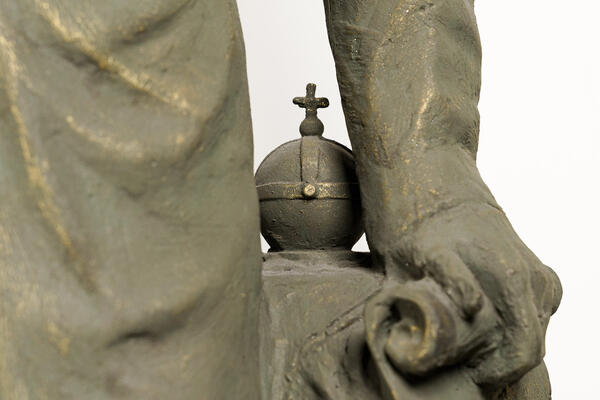
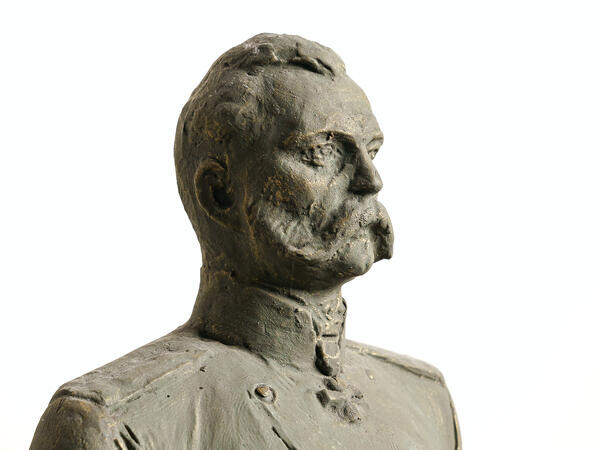
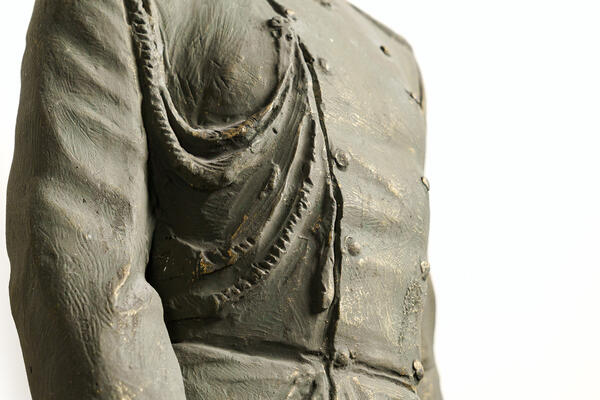
The statue showed Emperor Alexander II standing in a frock coat and leaning on a small column with his left hand. It bore a strong resemblance to the emperor, as Opekushin knew many members of the Romanov Imperial family personally.
The statue was placed on a pedestal in the form of a truncated pyramid constructed from Finnish granite. The overall height of the monument was approximately eight meters.
The monument was erected in Rybinsk’s Red Square, which was surrounded by an indoor market and the building of the New Grain Exchange, which served as the commercial and financial hub of the city at the time.
For four years, the monument to Alexander II stood in Red Square. In 1918, it was dismantled and replaced with the symbols of the newly established Soviet state — the hammer and sickle. The whereabouts of the original monument remain unknown, with some reports suggesting that it was either sunk in the Volga or dismantled and melted down for scrap metal.
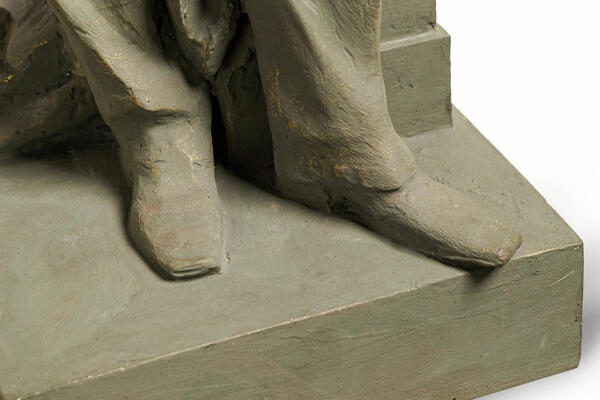
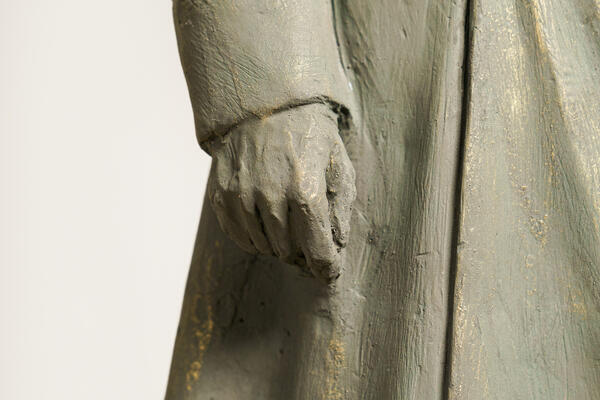
The Rybinsk foundation “Everything is Possible” commissioned this replica of the lost statue. A St. Petersburg-based sculptor Albert Serafimovich Charkin created a model and full-size plaster sculpture, which was to be then cast in bronze. Unfortunately, the necessary funds were not raised to complete the bronze replica.