The cradle is associated with birth and naming rituals, as the cradle is considered the first “dwelling” of the child. For example, for a long time, a small bag made of silk was hung over the headboard of the cradle, in which the umbilical cord of a child was kept. The number of umbilical cords hanging over the cradle was equal to the number of children born in that family. The umbilical cords of deceased children were also preserved with the others. It was believed that the umbilical cord contained the baby’s soul.
To this day, Tuvans consider it a bad omen to bring the cradle into the house before the baby is born. It was forbidden to rock an empty cradle because it was believed that evil spirits swayed in an empty cradle.
After the birth of the firstborn, the man of the family — the child’s father, a grandfather or a maternal uncle — made a cradle for the baby. Sometimes an elderly and respected man who had many children was chosen to make the cradle.
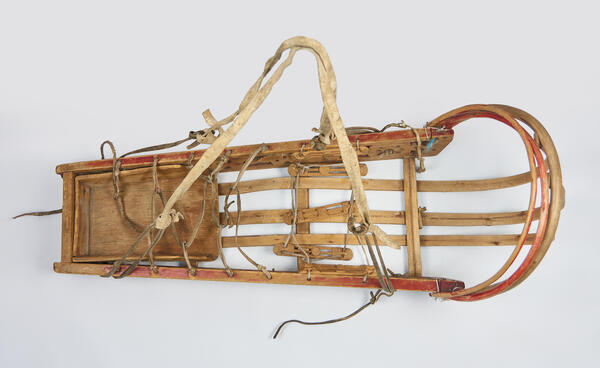
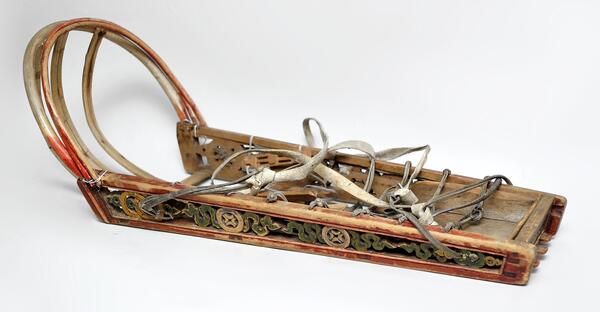
The bottom of the cradle is sparse, made of four poles, which are firmly fastened on both sides. The side walls of the cradle are two wide planks and are designed to protect the child. For example, if the cradle fell from the horse, the side walls protected the child from the impact. The side walls are decorated with carved national patterns.
To prevent the baby from suffocating and to protect it from insects, there is always a coverlet on the cradle, which is a well-dressed lamb skin. A birch bark cup was placed under the baby’s bottom. It was usually made of treated birch bark or dressed bull skin. It was filled with dry sheep dung, or dry cedar needles, or sawdust of dry anthills, which had hygroscopic properties.
Under the infant’s chest, the cradle contained dried crossbars 2 centimeters wide and 12 centimeters long. There were three or four bars on each side of the cradle. They prevented the child’s head from bending and the chest from contracting. Thin and soft straps were used to bind the bars. The bars were strung on these straps and then attached to the cradle. These cords were pulled through the sides of the cradle and laced over the baby’s swaddles. The cradle with the baby was suspended from the ceiling of the yurt. A hook (aatkyysh) carefully carved from cedar, spruce or birch served as a fastener to the ceiling.
The cradle was given to the museum by Ondar Tigrin, a resident of the village of Chal Kezhig, Tanda District, Tuva ASSR, in 1976.