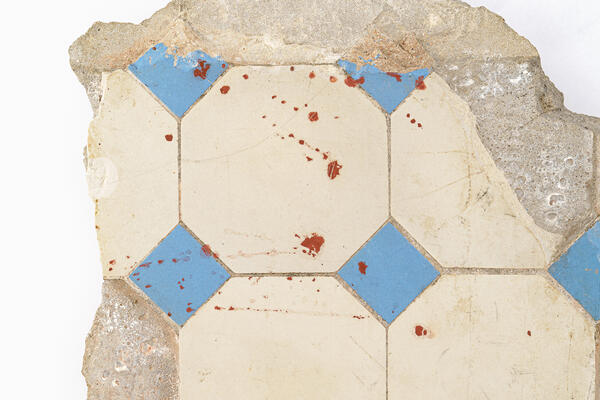
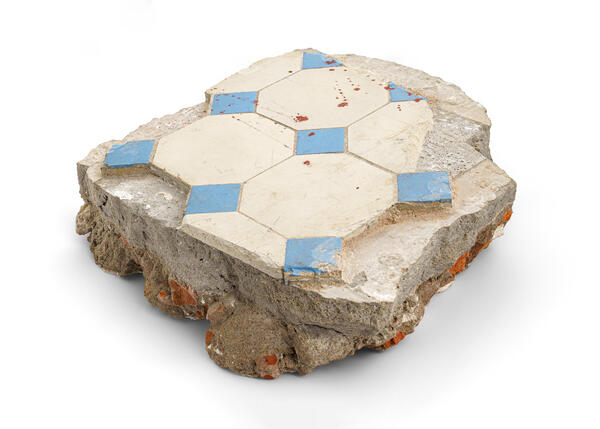
As defined by the dictionary of Vladimir Ivanovich Pluzhnikov, Mettlach tiles are a type of flooring material that has the shape of tiles and is made of clay that has been pressed, fired, and painted.
Mettlach tiles have been around for about 150 years and remain a popular choice for flooring. The name “Mettlach” is derived from the German city of Mettlach. The first large-scale ceramic production was organized there in the mid-19th century.
The popularity of Mettlach tiles peaked during the early industrial era. Due to their unique combination of durability and aesthetic appeal, Mettlach tiles were actively used to decorate both luxury apartments and palaces, and smaller areas of train stations, theaters, factories, and churches.
Nowadays, fragments of old décor created from exquisite Mettlach tiles can be found in many popular historic places, such as the Bolshoi Theater in Moscow, the Hamburg U-Bahn, and Cologne Cathedral, among others.
In Russia, Mettlach tiles began to be actively used in the décor of Orthodox churches in the late 19th century. Some examples include the Smolensk Church of the Novodevichy Convent, the Cathedral of Our Lady of Kazan in Maloyaroslavets, the Church of Joachim and Anne in Mozhaisk, and many other churches built in the second half of the 19th century.
This particular exhibit is a fragment of Mettlach tiles from the floor of the Church of St. Seraphim of Sarov. It was laid in 1903 during the construction of the church at the Sarov Monastery. The tile was discovered during restoration work in 2002 when old floor coverings were being dismantled.
This was part of the original décor. The tsar and pilgrims may have walked on it in 1903 during the opening of the new church.
The church in the Sarov Monastery was originally intended to be dedicated to the Holy Trinity. The consecration of the church coincided with the canonization of the holy elder Seraphim of Sarov. Moreover, the church was built above the cell where the monk had spent his final years in solitude. It was also the place where the Virgin Mary appeared to St. Seraphim. Taking into account all these facts, it was decided to consecrate the new church in the name of St. Seraphim.
The church was designed by Alexander Stepanovich Kaminsky. The construction started in 1897. The church was consecrated on August 1, 1903. Hundreds of thousands of pilgrims gathered in the Sarov Monastery to venerate the great Russian elder.