The struggle against drunkenness in Russia has been going on for many centuries. Back in the 16th century, the “Domostroy” set of rules contained such an instruction: “One may drink, but not get drunk.” Men were advised to use “wine for a little fun, not for drunkenness”, this was explained by the fact that “drunkards will not reach the kingdom of God”. Drinking for women was very frowned upon.
Under Peter I, “awarding” binge drinkers became a common practice. This tradition was established by the Demidovs. Being the largest Russian industrialists, they were very concerned about discipline at their factories, while also seeking to improve the quality of life of their workers.
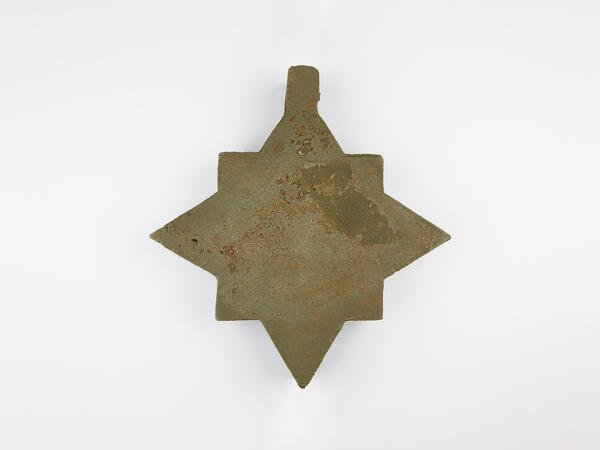
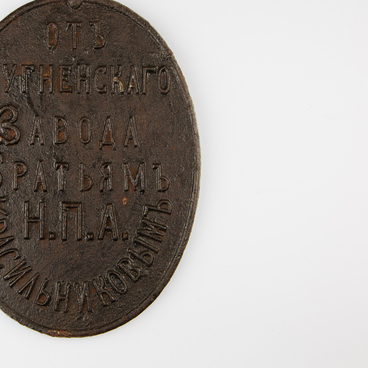
Workers of the Demidov factories were demonstratively punished for drunkenness. A cast-iron medal in the shape of an eight-pointed star with the inscription “For drinking” in the center was hung on their necks. Ironically, its design resembled the highest award of the Russian Empire — the Order of St. Andrew the First-Called. It was attached to the collar and put locked, so that the worker could not take it off. Peter I approved of this idea so much so that in 1714 such medals enjoyed state-wide use.
Some time later, similar medals were awarded to sailors who enjoyed a strong drink more than they should. However, by the decree of Peter I they were entitled to a bonus “a cup to the bearer of this medal so that they may freshen the nip in any tavern for free”. It is curious to note that during Peter’s reign, along with the medal “For Drinking” there was also a one-and-a-half-liter Big Eagle Cup that the tsar forced the guilty courtiers to drain. Neither men nor women were safe from this punishment in St. Petersburg.
The medal “For Drinking” weighed several kilograms, without counting the weight of the chain itself. The medal was chained to the neck of a person who consumed alcohol during work. It was fixed with an iron hoop around the neck of the convicted person, with sharp edges resting on the chest and stomach (this explains the shape of the medal). They had to live with this medal for the entire term of the conviction — they would eat, drink, sleep and rest with this medal on their neck. It was removed only after the guilty person gave a church pledge of sobriety.