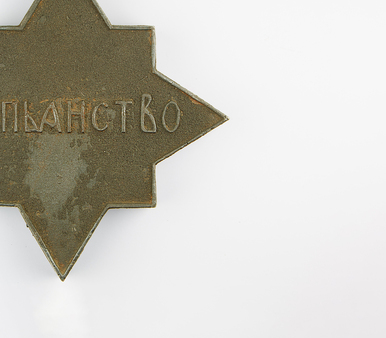
In the Urals, copper-rimmed magnets — similar to the one on display in the Historical and Memorial Museum of the Demidovs — were produced in large quantities and hold a special place among other products of the Demidov factories.
The pieces of magnetic ore were reinforced with iron plates at the ends, which made the magnet stronger. The artistically decorated copper box served as the frame. In line with the experimental nature of Russian science during the age of Enlightenment, magnets were thoroughly studied which was kickstarted with the establishment of the Vysokogorsk mine in the Urals in 1721. In 18th-century Russia, magnets and the way they worked possessed artistic significance.
The short-lived history of artistic copperworks in the Urals (the 1730s–1770s) was preceded by a time of changes in the Russian copper industry. The tradition of copper processing has deep roots. Until the 18th century its use in production of everyday copper products was limited by the amount of imported metal and the need to manufacture arms and weaponry. By the end of the 1720s, the volume of copper smelted in Russian factories increased significantly, thus greatly contributing to the development of the copper industry. The establishment of the factory for the production of tableware in the Urals can be explained by the influx of new settlers-factory workers who needed basic household appliances.
Copper in the Urals repeatedly experienced spikes in popularity. Born of the tastes of the Peter the Great era and manufactured to satisfy the desires of the wealthy, new kinds of tableware were made of a new material — brass. This trade began to develop during the reign of Anna Ioannovna — “the time of brute German force”. Its development in the 1740s–1760s coincided with the reign of Elizaveta Petrovna, partly with the “golden age” of Catherine II, and in general — with the heyday of the copper business in the Urals.