In July 2010, the press reported on a successful operation to seize historical valuables from a group of residents in the Kursk and Bryansk regions. The story itself began long before these reports. Staff members of the Kursk State Museum of Archaeology, who were on an expedition, received information that a resident of Zheleznogorsk had come into possession of “golden” items found in the Kursk region. The Russian FSB was immediately informed about this. Over the course of several months, investigative activities were carried out, allowing authorities to identify the individuals involved in the discovery, as well as the location where the items were found. The looting itself was recorded on video. Through the joint efforts of the FSB and the Main Directorate of Internal Affairs of the Kursk Region, both the finder, who lived in the Zheleznogorsk district, and two participants in the illegal business of extracting and selling historical artifacts from Zheleznogorsk and Bryansk, were apprehended.
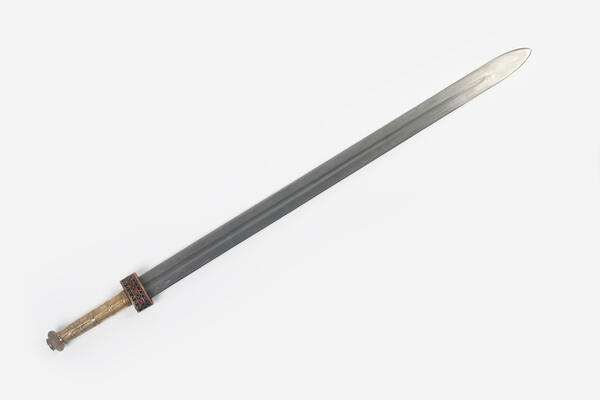
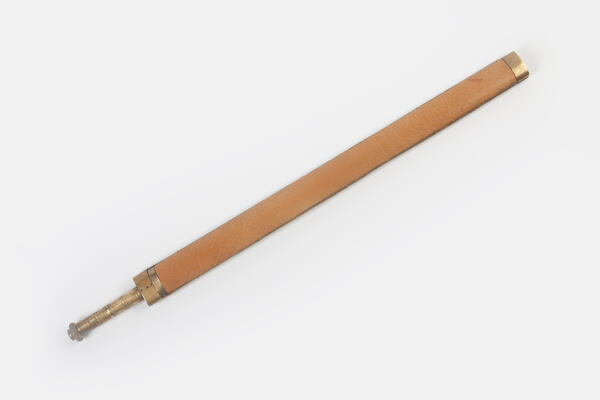
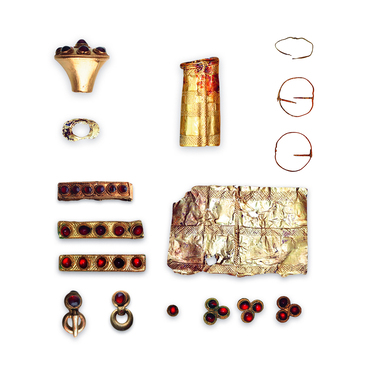
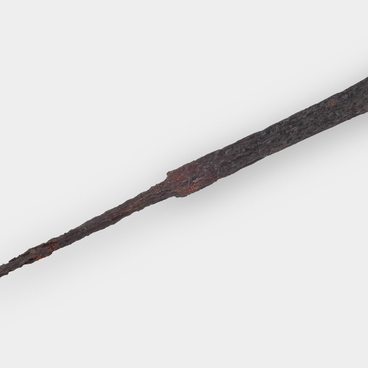
More than 150 artifacts were confiscated from those detained, all of which were related to the disturbed burial site. It was established that the finder had cleaned the first part of the unearthed items with an anti-corrosion liquid, which negatively affected their condition. Upon examining the collection, it became clear that these items belonged to the era of the Migration Period. The collection that reached the scholars included components of two swords with gold-plated crossguards featuring cloisonné inlay and garnet inserts, as well as scabbards covered in gold foil, parts of two belt sets of plaques and buckles, and a bridle set with gold plating and garnet inserts.
In 2011, the items from the burial were sent to the
Department of Scientific and Technical Expertise of the State Hermitage Museum,
where the composition of the metal was determined by X-ray fluorescence
analysis, and mineralogical determinations of the stone inserts were made. In
the items crafted in the cloisonné inlay style, the green-colored inserts were
found to be made from sodium-calcium glass, colored with copper. Based on the
findings of scientific research and drawing on modern knowledge in the field of
historical reconstruction, craftsmen from Tula created an exact replica of a
sword with a scabbard from the Volnikovka hoard.