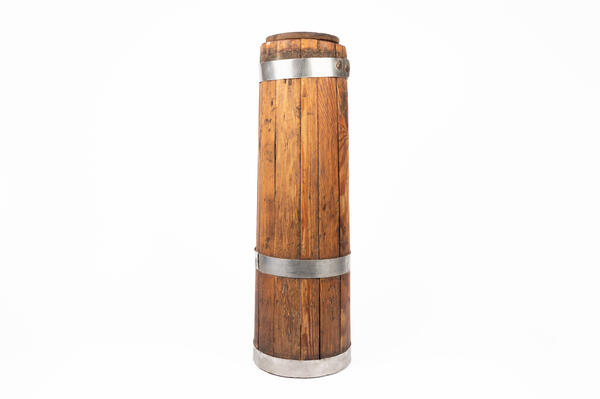
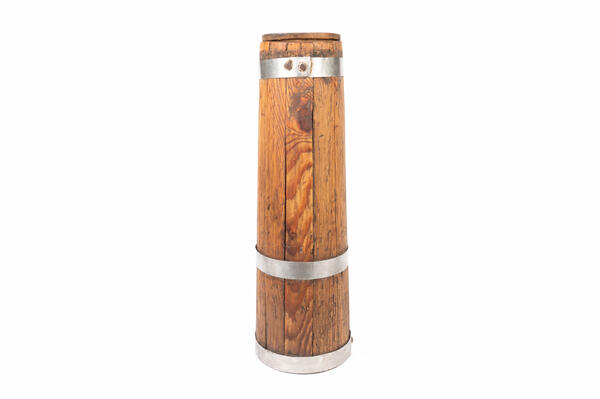
A churn is a traditional device used to make butter. It was common in Russian villages until the mid-20th century. It was typically crafted in one of two ways: either carved from a single hollowed-out tree trunk or assembled from wooden staves shaped into a cylindrical vessel.
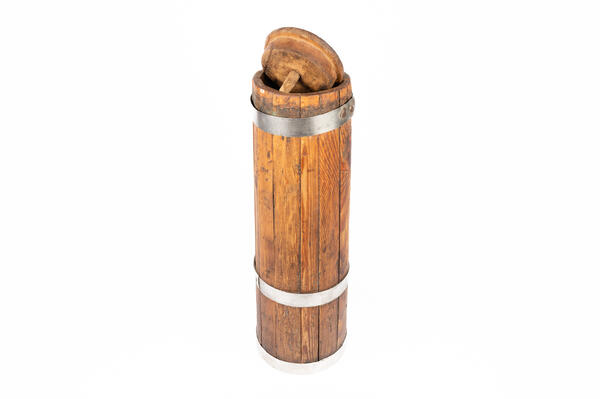
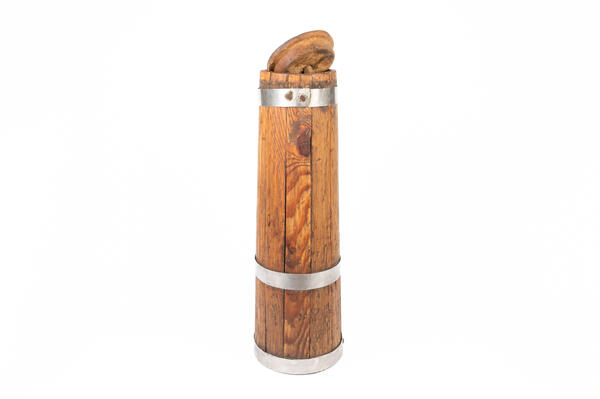
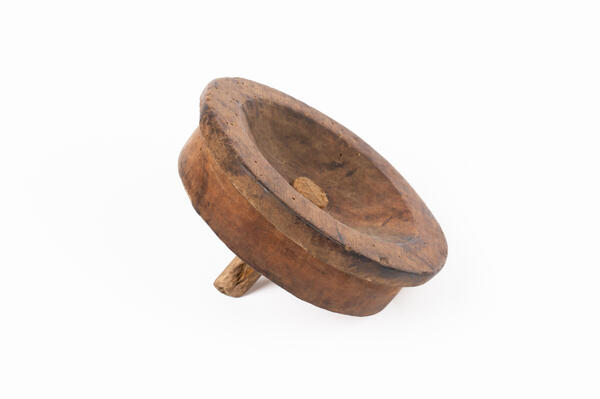
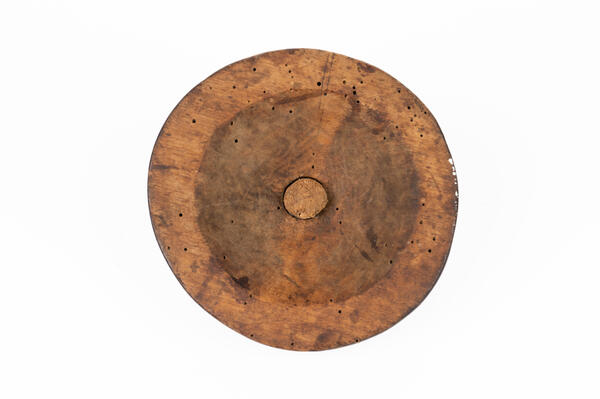
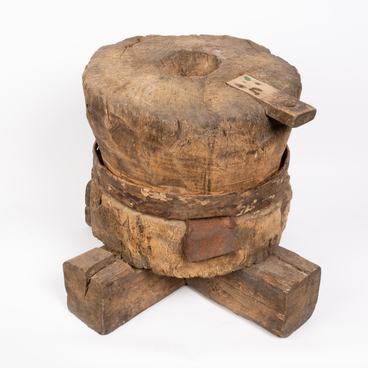
The churn from the collection of the Unecha Local Lore Museum was made using the second method. Crafted by a skilled cooper in his workshop, it is constructed from fitted wooden planks bound tightly with metal hoops for strength and durability. It has a rounded bottom and is closed at the top with a wooden lid featuring a central socket for a wooden plunger used to agitate the cream during churning.
Plungers came in a variety of shapes: most commonly, they featured a spatula, circle, spiral, horn, or crosspiece at the end. The Russian word for the plunger “mutovka” derives from verbs meaning “to stir up” or “to agitate”, actively mix the contents.
To ensure the churn was watertight, it was soaked in water at a certain stage of production. The wood would swell, closing gaps between the staves and creating a dense, leak-proof vessel.
Butter churning was primarily women’s work, though children often helped. It was done mostly in spring and summer, when cow’s milk production peaked. First, fresh milk was left to settle in clay pots. Once the cream (or sour cream, if fermented) rose to the top, it was skimmed off with a spoon and poured into the churn. Vigorous up-and-down motion of the plunger caused the fat particles to clump together, eventually forming solid masses of butter.
The finished butter was then rinsed thoroughly with cold water to remove residual buttermilk. This liquid — far from wasted — was drunk as a refreshing beverage, used in baking, or fed to calves. For longer storage, the butter was often melted down into clarified butter and salted.
In Russian folk tradition, butter churned in a linden churn was considered especially rich and flavorful. Owning such a churn was a sign of prosperity and well-being. It is no coincidence that a successful, well-fed man was described with the saying: “He has a buttery beard”.
This particular churn belonged to Arina Semyonovna Zhuk of Pokoslovo village in the Starodubsky District and remained in her family for more than fifty years. Like many similar household objects, it was a trusted kitchen companion — passed down through generations as a symbol of labor, skill, and domestic warmth.