

One of the most important attributes of a shaman was a mask. In the collection of the Grodekov Museum there are masks only of the Udege shamans. It is possible that other indigenous peoples of the Amur region in the 19th century no longer used them or wore them rarely.
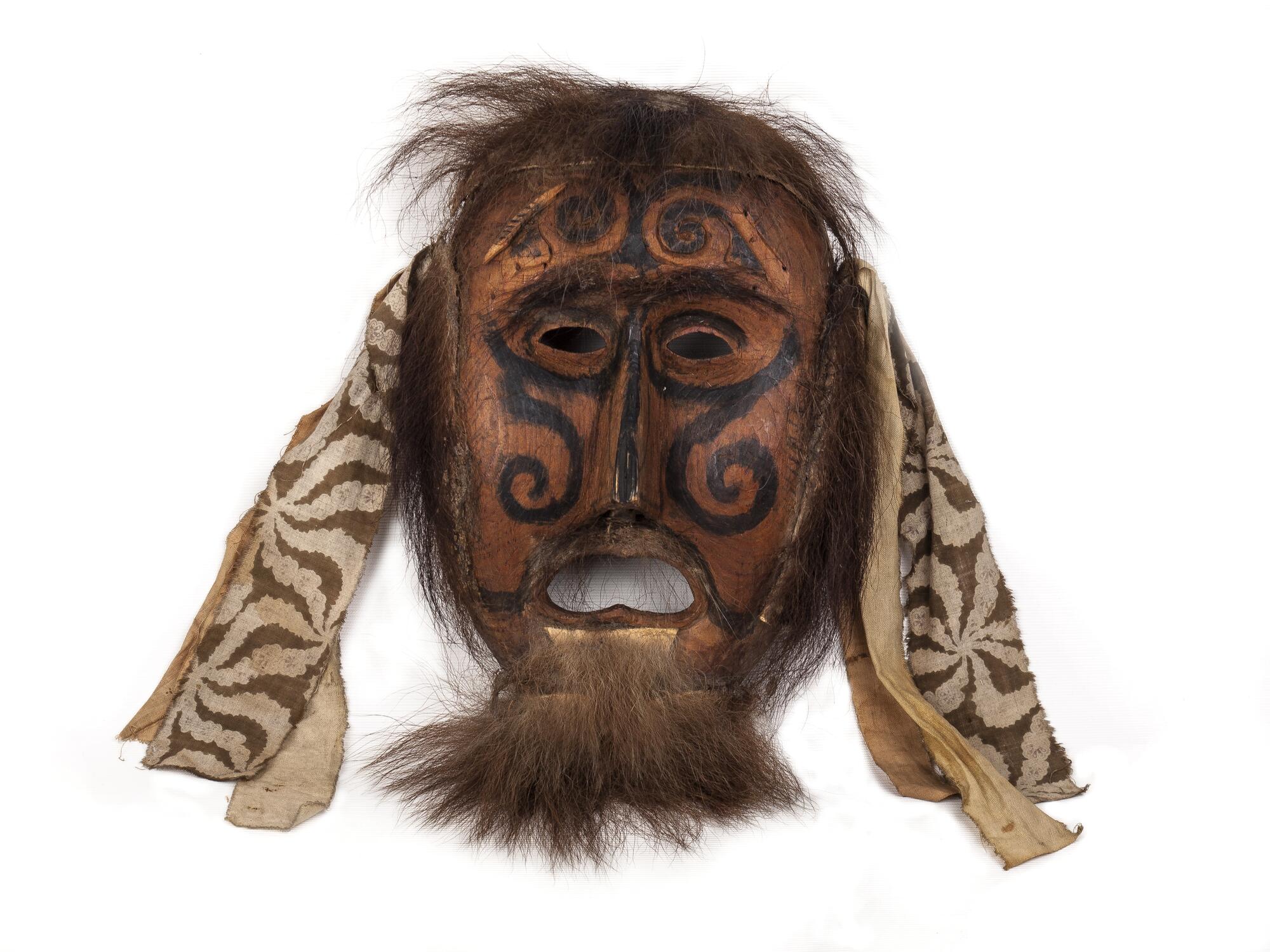
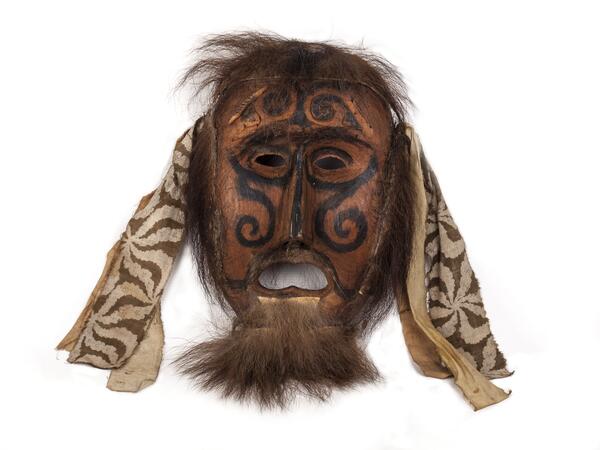
The exhibit was obtained by the traveler and ethnographer Vladimir Arsenyev (1872–1930) during the 1911 expedition on the Nakhtokhu River. According to the beliefs of the Udege people, the mask was a receptacle of the immortal spirit — the patron of the shaman. The Udege people of the Primorskaya Oblast believed that this was the image of Khambaba, a sorcerer ancestor who had long died at an advanced age.
All helper spirits of each shaman were subordinate to the main spirits — Khambaba or Tengki. Udege masks were made of poplar, linden or birch bark, painted with black, red and white colors and decorated with carvings. Researchers believe that the patterns on such objects had more than just decorative value, and imitated tattooing, which was once practiced by the Udege people and their ancestors.
The eyes and mouth of the mask were cut through, and eyebrows, mustaches and beards were made from pieces of leather with fur, most often bear fur, or applied with paint. The masks were kept in cases or special houses, and were sometimes “fed”. Most often they were inherited from generation to generation. In some Udege groups, if the shaman died and had no relatives, their attributes were hidden in a rock near the sea.
As a rule, shamans and shaman women wore masks during the rite of sending the soul of a deceased person to the other world. This was done in order to remain unrecognized by the relatives whose souls the shaman had sent there earlier. Otherwise, they might not let them out of the world of the dead.
According to the Udege
people of Primorskaya Oblast, the shaman’s mask was used to exorcize the evil
spirit from a sick person. In the comments to the exhibit, Vladimir Arsenyev gave
the following explanation of its function: the mask is worn “by a shaman during
a kamlanie ritual in order to frighten the devil by its frightening appearance
and expel it from the sick person’s dwelling.” The Udege people, who lived on
the Khor River, wore the mask during the ritual honoring the shaman’s patron
spirit, with tens of people participating for several days.