Since ancient times, the peoples of Siberia divided the universe into three areas, which were located on top of each other. The earth and its inhabitants were taken as a kind of reference point, which was believed to be in the bright middle world or, in Tuvan, ortaa oran.
Beneath the earth’s solid surface lay the lower world, aldyy oran. Moreover, the territory “on the other side of the sky” had the name of the Upper World — ustuu oran. All three worlds were surrounded by an area that existed outside of time and space — tengri.
In folklore, the hero would go down into a cave or jump into the water to get to the lower world. It depended on where exactly he wanted to go: aldyy oran was divided into many other areas, as into states.
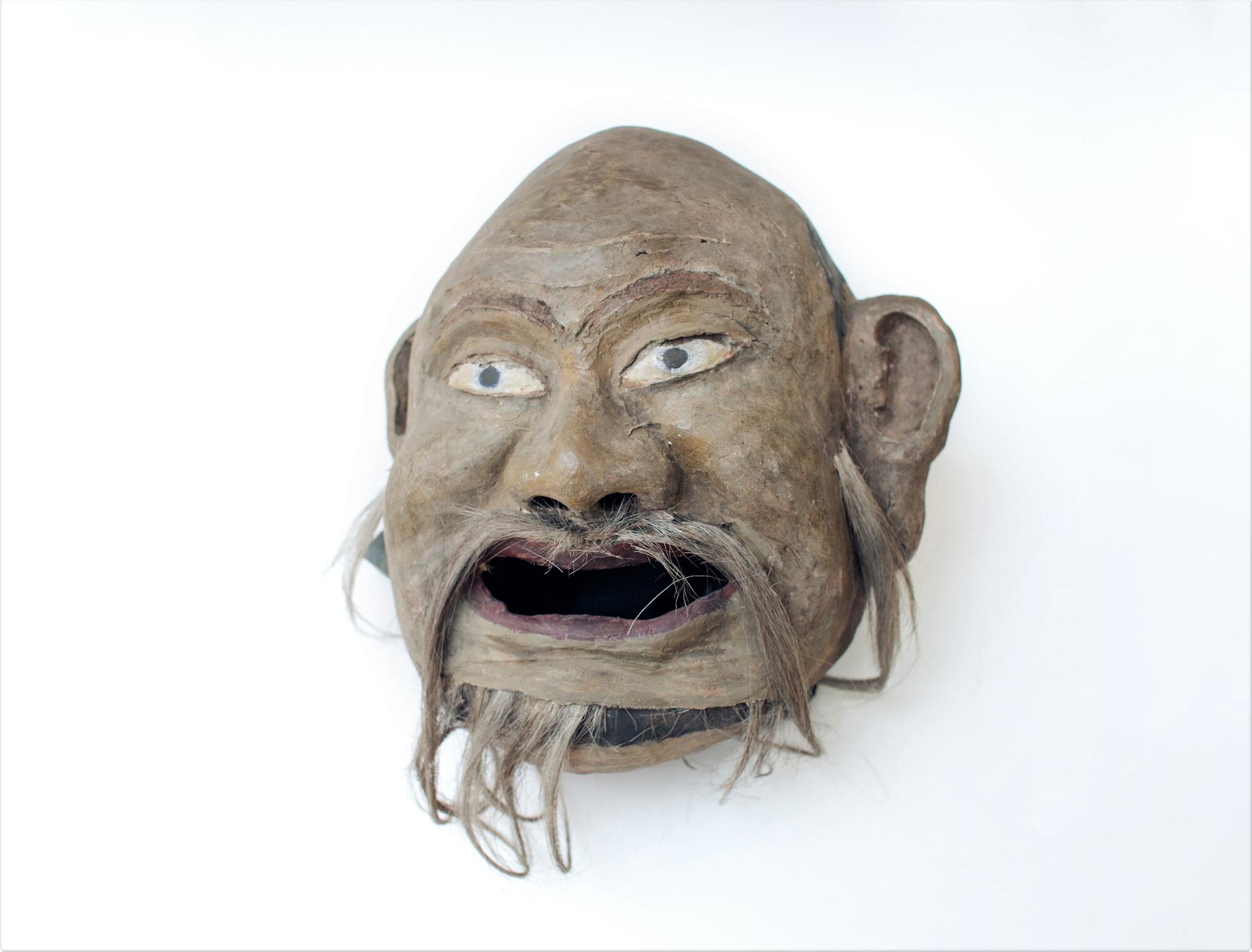
In the lower world, the hero was assisted by the elder Ak-Mergendey. He was endowed with “white” qualities and “white” thoughts and was thought to patronize animals and plants.
Legend has it that the White Elder was in ancient times a great shaman who was later elevated to the status of god in Buddhism. In the Tuvan belief system, he became one of the incarnations of Amitayus Buddha — he was addressed in prayers for long happy life, health, and wealth.
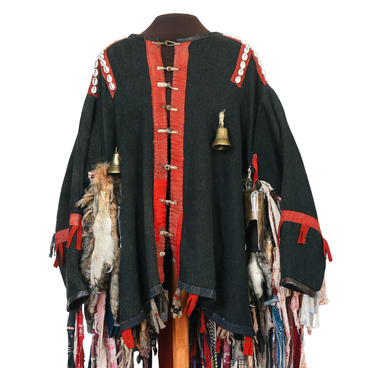
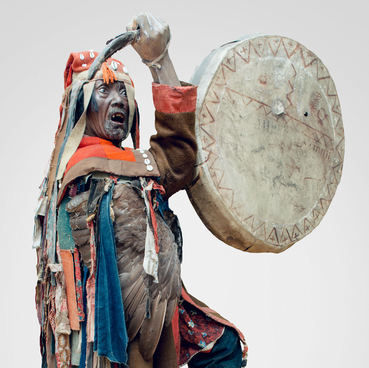
The masks, which include the White Elder mask in the museum exhibition, came from the Tsam culture, a mystical dance. For the ceremony, monks donned costumes and masks of Buddhist god and then used special movements to depict how Buddhist teachings defeat evil spirits, life rises over death, and good over evil. The origins of Tsam go back to the ancient theatrical mysteries of South and Central Asia. Researchers believe that the prototypes of the masks were Central Asian Neolithic and Bronze Age cave paintings.
The Tuvans began to perform Tsam at the turn of the 19th century, when the first stationary Buddhist temples (khuree) were built on the territory of Tuva. The masks were usually made of papier-mache or carved from wood. Then they were hand-painted with mineral paints, some decorated with coral, turquoise, malachite, complemented with gilded earrings and a crown. The masks were consecrated before the dance.