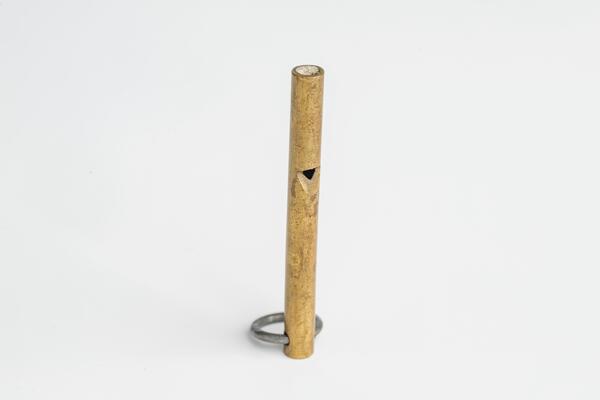
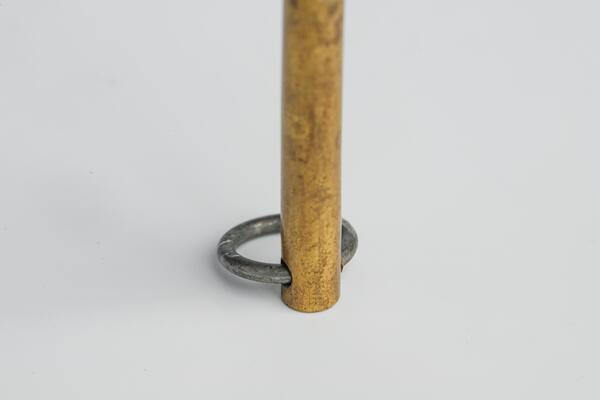
The Nikolai Ivanovich Kuznetsov Museum houses a grouse caller, an object used by Nikolai Kuznetsov in the 1930s.
During his years in Kudymkar, where he lived for several years, Nikolai Kuznetsov endured extreme poverty. He had no permanent home and changed rented rooms four times during this period. Most of his modest salary went toward food. Like much of the country, Kudymkar suffered greatly after collectivization: food became scarce, and hunger was widespread.
To survive, Nikolai Kuznetsov turned to hunting — not as a pastime, but out of necessity. He shot hares and wood pigeons, and gathered mushrooms, berries, nuts, and edible herbs. It was during these years, while hunting grouse, that he used this caller — a simple yet elegant device that mimics the call of a male or female grouse.
The grouse is one of the forest’s most cautious and elusive birds: it can vanish without a sound, rarely falling for bait. Yet, skillful use of the caller greatly increases a hunter’s chances of success. A hunter who mastered its nuances almost always returned with game.
The technique was straightforward but demanded patience. The hunter would quietly take cover behind a tree trunk and begin calling after two or three minutes. If the bird did not respond, he could carefully shift position after five minutes. The key was to avoid any sudden movement. Even if the grouse did not answer the call, it might still fly close — sometimes within 5–10 meters, or even directly overhead. Grouse possesses an extraordinary ability to pinpoint the source of a sound, so the caller had to produce a call as natural as possible.
A crucial aspect of the caller’s design was its capacity to vary the tone of the whistle. Metal models, though durable, introduced harsh overtones that distorted the authentic sound. At close range — when the bird was already in sight — the purity and naturalness of the tone were essential. Conversely, when calling birds from a distance, sound intensity became more important.
Grouse callers held a special place in a hunter’s life. They were cherished like the apple of one’s eye and often passed down through generations.