The traditional occupation for the indigenous population of the Minusinsk Basin, the Khakass, was semi-nomadic herding. That is why there were many shepherds among the Khakass.
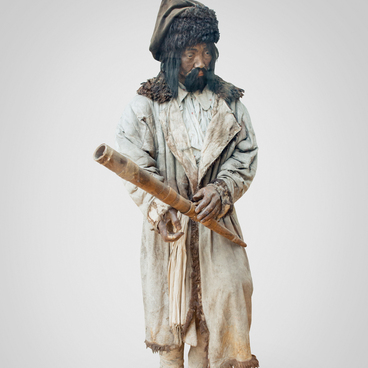
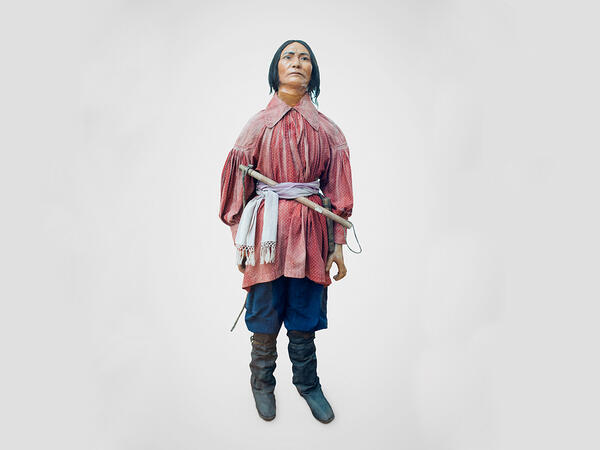
The doll of a shepherd, which is kept in the museum, and 12 other exhibits were created in 1891. Their faces are plaster casts from the faces of living people, representatives of the indigenous population of Minusinsk district.
The shepherd is dressed in a national shirt, girded with a sash, and wears pants and boots. A whip for chasing cattle, khamchi, at the waist.
The cut of a man’s shirt resembled a woman’s dress, but it was made much shorter and no gussets were inserted in the middle of the back. The belted clothing consisted of lower and upper pants. Khakass sewed everyday clothes from local cloth or factory-made cotton fabrics. The festive garment was silk. They chose red, blue, green, brown, black fabrics and a shade of bordeaux for their clothing. The Khakass did not like yellow: it symbolized the spirits of malaria and jaundice.
The Khakass bred horses, cattle, and sheep, so they called themselves a three-tailed people. Herds and flocks spoke of the wealth of their master and defined his status.
Cattle breeding provided the population with meat, milk, and dairy products, as well as raw materials for clothing and household items.
About 40 dishes were prepared from milk, they constituted the basic summer ration of the Khakass. For example, horse milk was used to make cheese, yogurt, tarak (a fermented milk product), and the most widespread drink until the 19th century — koumiss. And the lamb was a favorite national dish.
Sheep’s wool was used to make winter clothes and felt, which was widely used in everyday life. Hunting and fishing tackle, strings of musical instruments, and harnesses were made with the help of horsehair.
Among the animals bred by the Khakass, horses were especially loved. In national folklore, they have always acted as faithful friends and helpers to the master. People rode on them, used them to transport goods. Therefore, they were given special care.
In late April and early May, before the onset of heat, the horses were groomed: their manes and tails were trimmed, a brand was placed, and young stallions were castrated. In winter, they were kept on the fodder, tied to special stakes so that they would not go to the open steppe.
Horses in the herd were caught with a lasso (urukh) or ukruk (ur agas) in the form of a long willow pole with a noose attached to the end. Large cattle-owners — bais — preferred to breed horses of a particular color; the Khakass language had about 90 names for their shades. Horses were also given names based on their colors: white-fronted — khaskha, red — posyrakh — and others.
The doll of a shepherd, which is kept in the museum, and 12 other exhibits were created in 1891. Their faces are plaster casts from the faces of living people, representatives of the indigenous population of Minusinsk district.
The shepherd is dressed in a national shirt, girded with a sash, and wears pants and boots. A whip for chasing cattle, khamchi, at the waist.
The cut of a man’s shirt resembled a woman’s dress, but it was made much shorter and no gussets were inserted in the middle of the back. The belted clothing consisted of lower and upper pants. Khakass sewed everyday clothes from local cloth or factory-made cotton fabrics. The festive garment was silk. They chose red, blue, green, brown, black fabrics and a shade of bordeaux for their clothing. The Khakass did not like yellow: it symbolized the spirits of malaria and jaundice.
The Khakass bred horses, cattle, and sheep, so they called themselves a three-tailed people. Herds and flocks spoke of the wealth of their master and defined his status.
Cattle breeding provided the population with meat, milk, and dairy products, as well as raw materials for clothing and household items.
About 40 dishes were prepared from milk, they constituted the basic summer ration of the Khakass. For example, horse milk was used to make cheese, yogurt, tarak (a fermented milk product), and the most widespread drink until the 19th century — koumiss. And the lamb was a favorite national dish.
Sheep’s wool was used to make winter clothes and felt, which was widely used in everyday life. Hunting and fishing tackle, strings of musical instruments, and harnesses were made with the help of horsehair.
Among the animals bred by the Khakass, horses were especially loved. In national folklore, they have always acted as faithful friends and helpers to the master. People rode on them, used them to transport goods. Therefore, they were given special care.
In late April and early May, before the onset of heat, the horses were groomed: their manes and tails were trimmed, a brand was placed, and young stallions were castrated. In winter, they were kept on the fodder, tied to special stakes so that they would not go to the open steppe.
Horses in the herd were caught with a lasso (urukh) or ukruk (ur agas) in the form of a long willow pole with a noose attached to the end. Large cattle-owners — bais — preferred to breed horses of a particular color; the Khakass language had about 90 names for their shades. Horses were also given names based on their colors: white-fronted — khaskha, red — posyrakh — and others.