

At the turn of the 19th and 20th centuries, the World Expo was held in Paris. 35 countries and more than 76 thousand participants presented their exhibitions in 18 thematic sections. The Minusinsk Museum prepared ethnographic exhibits for the exhibition. They reflected the life and beliefs of the indigenous population of the southern part of the Yenisei Governorate, who today are known collectively as the Khakass.
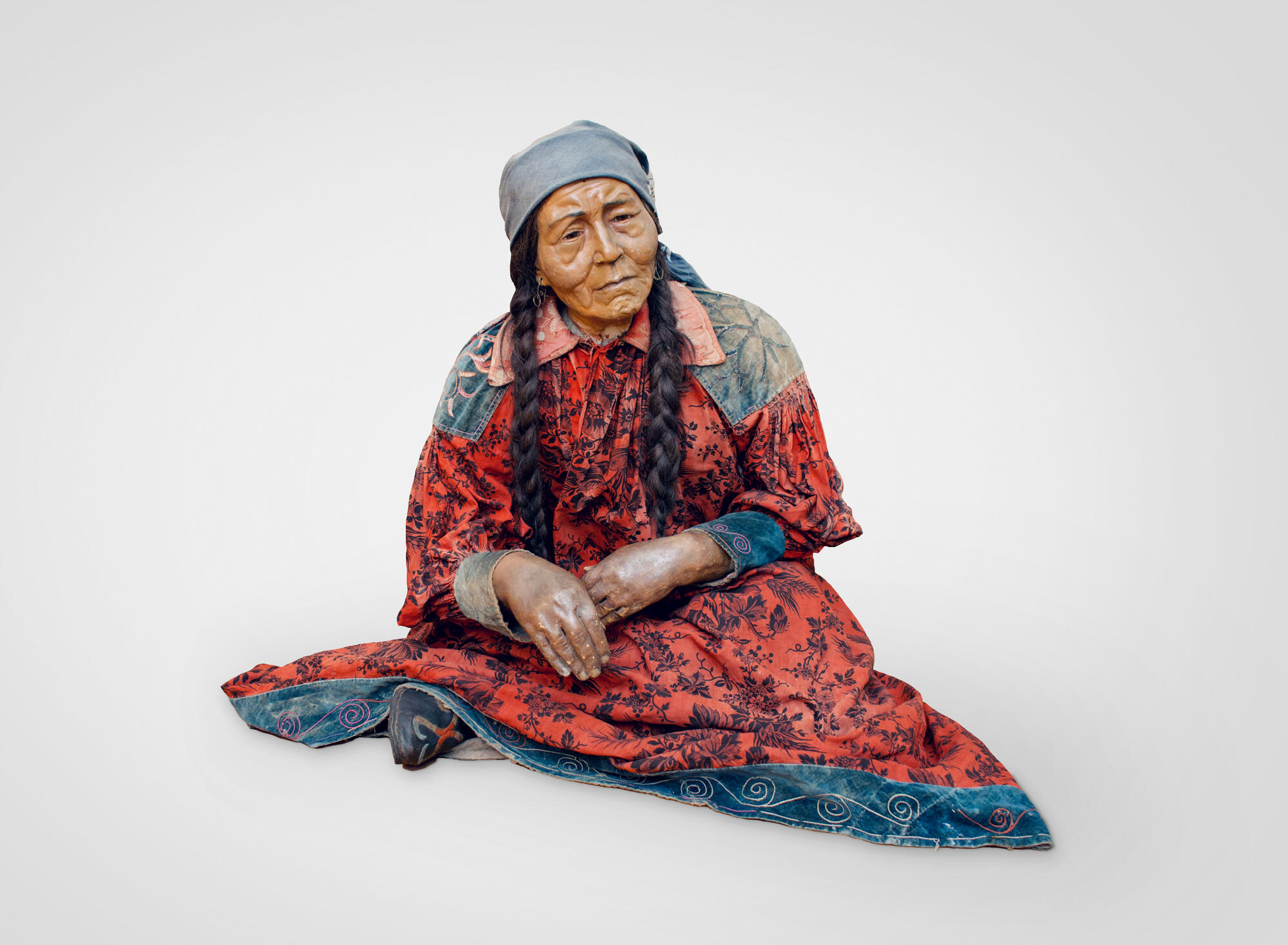
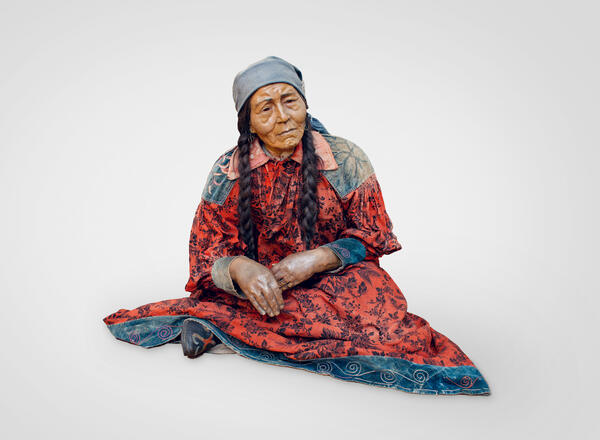
The doll of a Khakass old woman gives an idea of what a typical representative of the indigenous population of the Minusinsk Basin looked like in the 19th century. The woman is dressed in a national shirt, the shoulders and sleeves of which are decorated with traditional ornaments. She has a scarf on her head and two braids peeking out from under it. Such braids in Khakass meant that the woman was married.
Khakass women’s clothing was more conservative than men’s and changed little over time. Daily dress shirts were decorated with shoulder pads made of a different fabric. Then they were embroidered with silk threads, with assemblages. Fashionistas made them of brocade and silk with traditional floral ornaments.
One could easily determine her social status and marital status by the hairstyle of a Khakass woman. According to the customs, girls wore many plaits (surmes) braided clockwise. Such braiding was called ‘onar’. A married woman wore two braids — tulun. They were braided counterclockwise. The remaining unmarried woman braided three braids. When a girl gave birth to a child out of wedlock, she was obliged to wear one braid, kichege, which was considered a great disgrace. Only little girls could walk around with their heads uncovered.
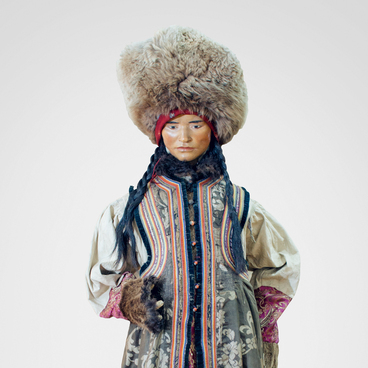
In winter, married and elderly women wore chapykh hats. The round part of such hats, adjoining the head, was sewn from otter or beaver fur. The lower part of the cap was lined with the fur from the skin of a black lamb — mercurial fur. In the north of Khakassia, a wide otter cap was made with a cutout for the face, covering the ears and back of the head. Therefore, the northern Khakass called this headdress ‘carved hat’.
The top part of the hat (tunic) resembled a sack and was high. Plush or velvet was used to make it. Four long rectangular gussets (tala) were sewn together so that the top of the hat was square. Its four sides and square top were decorated with bright colored patterns. A mother-of-pearl button (tana) with a red tassel or red and blue ribbons (chalama) were sewn on the crown.
The lining was made of meringue. Goose down and a circle of felt, the size of the head, were inserted between the lining and the carcass, which gave the product a stable shape.
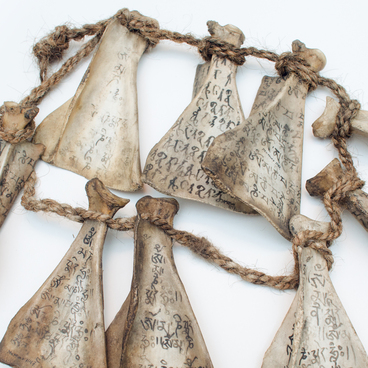
In Khakassia, the elderly were the guardians of the rites. They gave names to newborn children and held memorial services for the dead. Old women who knew all the customs also performed the rite of feeding tyos (spirit helper).
The doll of a Khakass old woman gives an idea of what a typical representative of the indigenous population of the Minusinsk Basin looked like in the 19th century. The woman is dressed in a national shirt, the shoulders and sleeves of which are decorated with traditional ornaments. She has a scarf on her head and two braids peeking out from under it. Such braids in Khakass meant that the woman was married.
Khakass women’s clothing was more conservative than men’s and changed little over time. Daily dress shirts were decorated with shoulder pads made of a different fabric. Then they were embroidered with silk threads, with assemblages. Fashionistas made them of brocade and silk with traditional floral ornaments.
One could easily determine her social status and marital status by the hairstyle of a Khakass woman. According to the customs, girls wore many plaits (surmes) braided clockwise. Such braiding was called ‘onar’. A married woman wore two braids — tulun. They were braided counterclockwise. The remaining unmarried woman braided three braids. When a girl gave birth to a child out of wedlock, she was obliged to wear one braid, kichege, which was considered a great disgrace. Only little girls could walk around with their heads uncovered.
In winter, married and elderly women wore chapykh hats. The round part of such hats, adjoining the head, was sewn from otter or beaver fur. The lower part of the cap was lined with the fur from the skin of a black lamb — mercurial fur. In the north of Khakassia, a wide otter cap was made with a cutout for the face, covering the ears and back of the head. Therefore, the northern Khakass called this headdress ‘carved hat’.
The top part of the hat (tunic) resembled a sack and was high. Plush or velvet was used to make it. Four long rectangular gussets (tala) were sewn together so that the top of the hat was square. Its four sides and square top were decorated with bright colored patterns. A mother-of-pearl button (tana) with a red tassel or red and blue ribbons (chalama) were sewn on the crown.
The lining was made of meringue. Goose down and a circle of felt, the size of the head, were inserted between the lining and the carcass, which gave the product a stable shape.
In Khakassia, the elderly were the guardians of the rites. They gave names to newborn children and held memorial services for the dead. Old women who knew all the customs also performed the rite of feeding tyos (spirit helper).