The Salym District (the present-day Nefteyugansk District) is located in the forest and bog zone. Summers are warm but short, and winters are long and harsh. Permanent snow cover forms in early November and melts at the end of April. The main occupations of the Khanty — reindeer herding and hunting — always forced them to travel long distances. In the warm season, they moved along the rivers on dugout boats — oblas, and in winter — on skis.
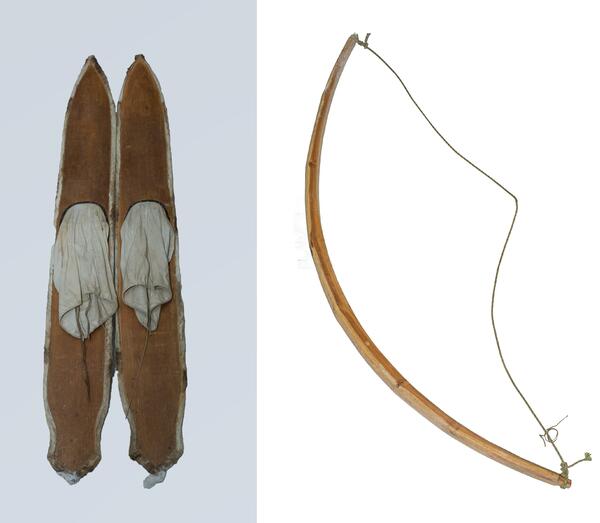
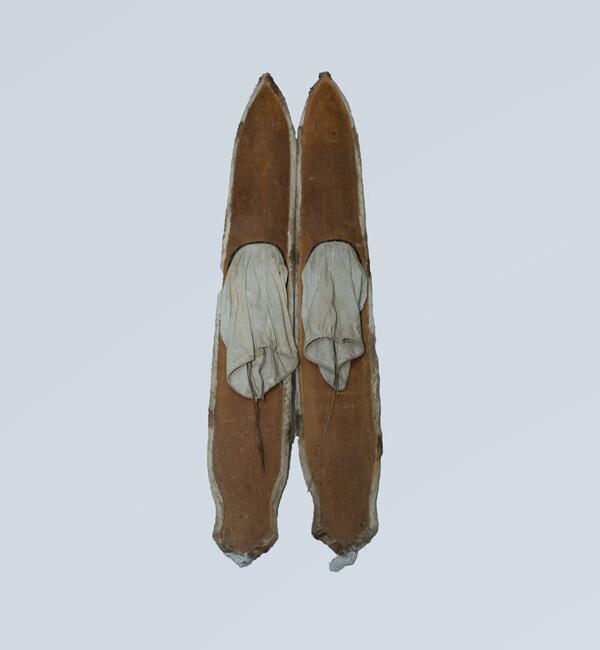
The Khanty hunters used special skis — podvoloky. They are wide skis with climbing skins (kamus) glued to the bottom — the skins from the legs of animals, such as reindeer or elk. Skis go faster with climbing skins. Elk skins are the most durable, and reindeer skins are the softest and does not squeak. Such skis make it possible not only to easily move on loose and deep snow even in thaws (wet snow does not stick to the climbing skins) but also to climb a steep slope.
The Yugan Khanty made the base of skis from cedar. The podvoloky were lined with elk or reindeer skins. They were attached to a wooden blank with fish scale glue, and then fixed with wooden nails. The skins were selected so that the fur would go strictly along the ski, otherwise, the skis would shift when moving.
The podvoloky served for a very long time — 20 years or more. The Khanty not only stored them correctly but also avoided walking on ice and crust: from a hard surface, the skins could become bald. Both in winter and summer, the podvoloky were protected from rodents and predators, who are attracted by the smell of skin and natural glue.
The climbing skins were sewn by women, the rest of the work was made by men. A cloth bag bordered with skins or leather was nailed to the podvoloky. The bag was tightened slightly below the knee: this way, the fabric protected the hunter’s legs from snow. The length of the skis of the Yugan Khanty varied depending on the owner’s height and was on average 170–200 centimeters, and the width reached 30 centimeters.
The Museum of the Ob River displays podvoloky from the village of Russkinskaya. They were brought to the museum in 1975. Inside the fabric cover, there are belts for the skier’s foot. Researchers note that during the 20th century, podvoloky skis practically did not change.
The Khanty hunters used special skis — podvoloky. They are wide skis with climbing skins (kamus) glued to the bottom — the skins from the legs of animals, such as reindeer or elk. Skis go faster with climbing skins. Elk skins are the most durable, and reindeer skins are the softest and does not squeak. Such skis make it possible not only to easily move on loose and deep snow even in thaws (wet snow does not stick to the climbing skins) but also to climb a steep slope.
The Yugan Khanty made the base of skis from cedar. The podvoloky were lined with elk or reindeer skins. They were attached to a wooden blank with fish scale glue, and then fixed with wooden nails. The skins were selected so that the fur would go strictly along the ski, otherwise, the skis would shift when moving.
The podvoloky served for a very long time — 20 years or more. The Khanty not only stored them correctly but also avoided walking on ice and crust: from a hard surface, the skins could become bald. Both in winter and summer, the podvoloky were protected from rodents and predators, who are attracted by the smell of skin and natural glue.
The climbing skins were sewn by women, the rest of the work was made by men. A cloth bag bordered with skins or leather was nailed to the podvoloky. The bag was tightened slightly below the knee: this way, the fabric protected the hunter’s legs from snow. The length of the skis of the Yugan Khanty varied depending on the owner’s height and was on average 170–200 centimeters, and the width reached 30 centimeters.
The Museum of the Ob River displays podvoloky from the village of Russkinskaya. They were brought to the museum in 1975. Inside the fabric cover, there are belts for the skier’s foot. Researchers note that during the 20th century, podvoloky skis practically did not change.