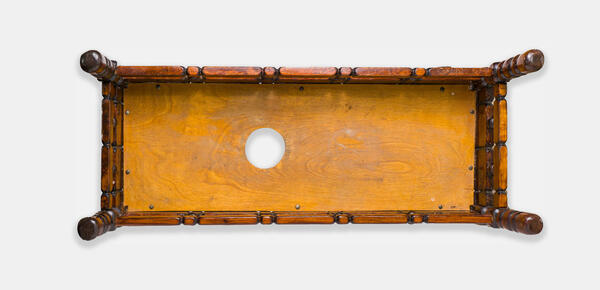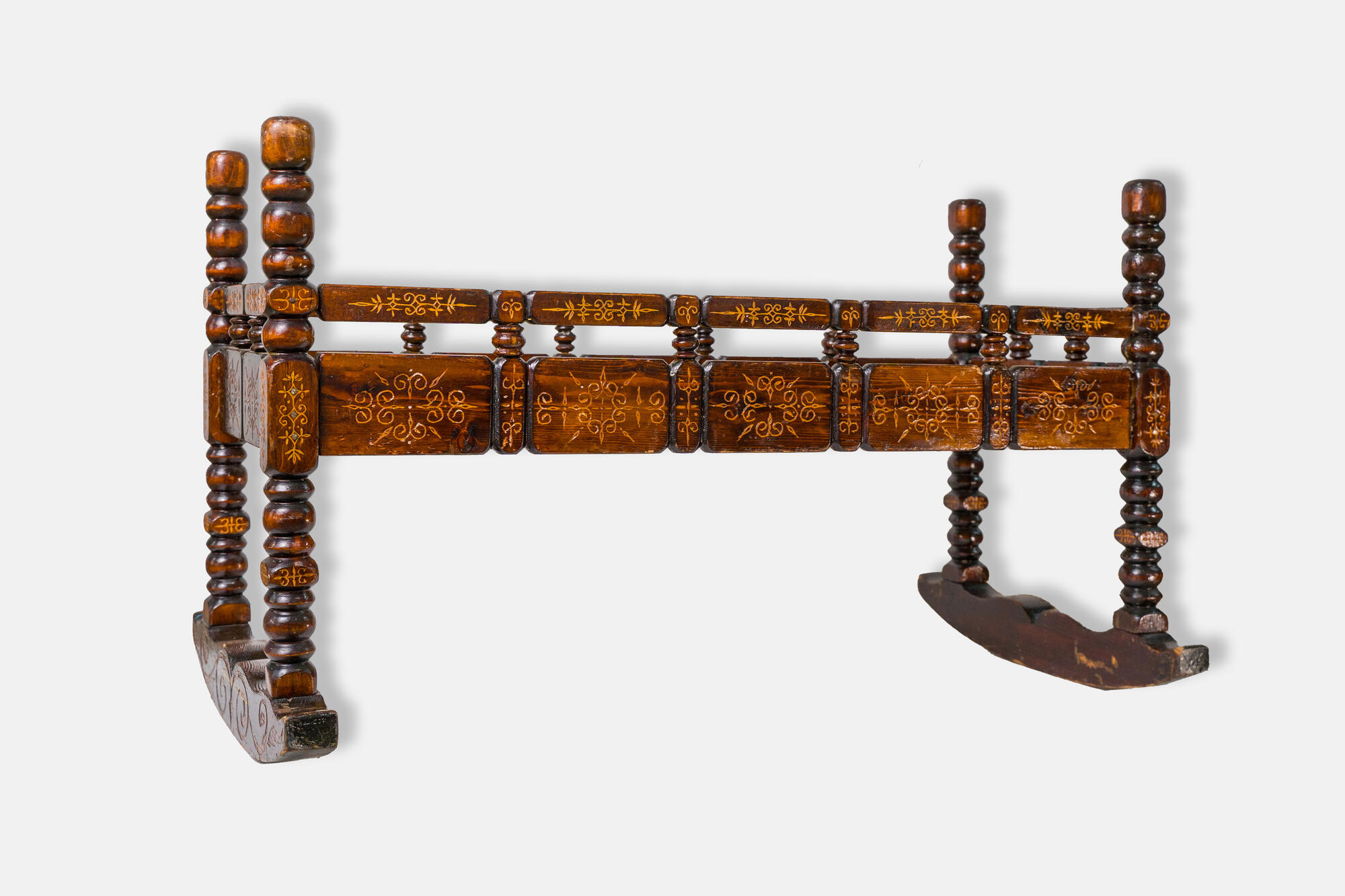


The Adyghe word for cradle is “кушъэ” (kushe). The design of the Adyghe cradle is simple. It is essentially a wooden bed with backrests, to which arc-shaped pieces of wood are attached for smooth rocking.
The Adyghe chose the tree from which the cradle was made carefully and thoughtfully. Hawthorn was considered a happy tree and ideal material. In such cradles, children grew up to be strong, healthy and beautiful. A thorn tree, on the other hand, was deemed unfit for cradle-making, believing that children in such cradles will be haunted by misfortunes. Elderberry was also not suitable as the children would grow up to be hot-tempered, prone to arguments and quarrels.
Tradition required the baby to be placed in the cradle only two weeks after their birth. The family carefully prepared for this day, set the table and waited for guests. The laying ceremony was entrusted to the senior woman of the family — the paternal grandmother. It was possible to perform this ceremony with just an unrelated woman, but only if she had many children.
A small Koran or pages from it were placed under the mattress — “so that the child would not be afraid.” In addition, an egg, scissors or matches could be put in the cradle as talismans.
The cradle was usually placed on a mat to not make knocking sounds when rocked. Often the pelts of various animals were placed under the cradle, mainly wolf pelts, which at the same time served as talismans. To protect against flies and the “evil eye”, the baby in the cradle was covered with thin muslin fabric.
The babies stayed in the cradle until they were one year old. They were taken out of the cradle several times a day so they could move a bit. The person rocking the child to sleep sang a lullaby. The plot of these lullabies centered around the future life of the boy or girl. The boy was represented by a brave warrior, and the girl by a hardworking housekeeper and excellent craftswoman. Every day the child was bathed in the evening (sometimes twice — in the morning and the evening). The parent held the child in their arms and poured warm water on it from above.
This cradle was made by Mira Khadzhimetovna Stash, a woodworker. The cradle’s previous owner was the former head of the city of Adygeisk, Kim Mamiyok, who donated the cradle to the museum in 2000.