


Throughout its history, humanity has experienced several technological revolutions that have fundamentally changed the lives of not only individuals, but also all peoples as a whole. One of these innovations was the development of metal mining technology and the gradual replacement of stone, bone or wooden tools with metal ones. The economy has become more productive, but the wars have also become bloodier.
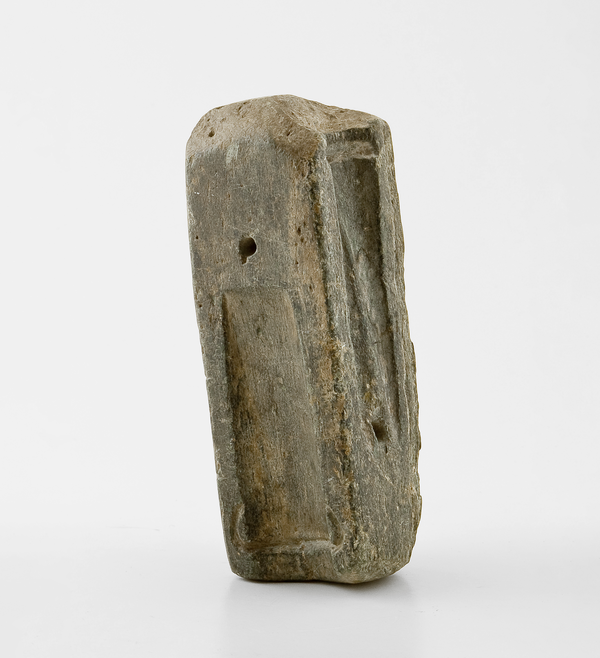
A separate, important component of the technological chain was the manufacture of molds. Such molds could be made of different materials — stone or clay, which, accordingly, required the artisan to have completely different skills and experience. Talcum shales were most often used for the manufacture of stone molds.
From natural stone to the foundry, there was a long way, consisting of grinding tiles, splitting them into bars, fitting parts for multi-complex matrices, polishing the surface for the negative, marking the negative and cutting it out, drilling recesses for pins.
Often, molds were used to cast not the object itself, but its wax model, followed by smelting using the appropriate technology. Such a careful attitude to the casting mold allowed it to be used many times, making a large number of tools.
This stone casting mold was found by chance in 1938.


