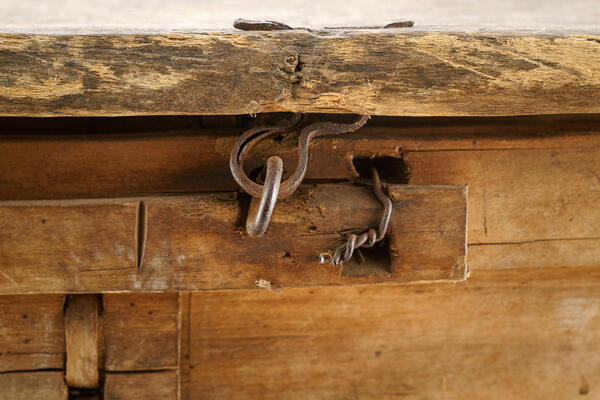
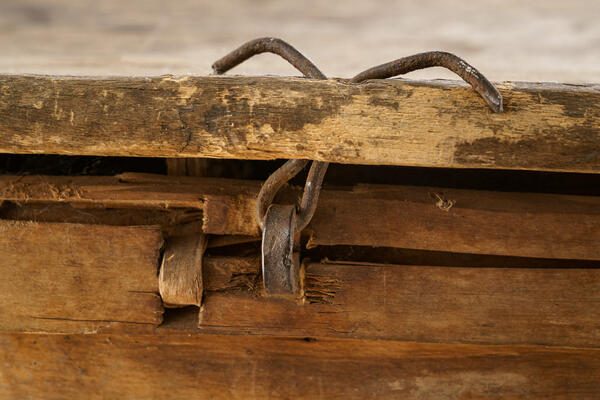
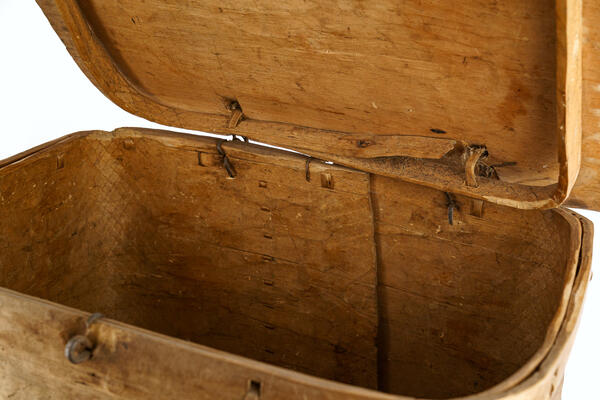
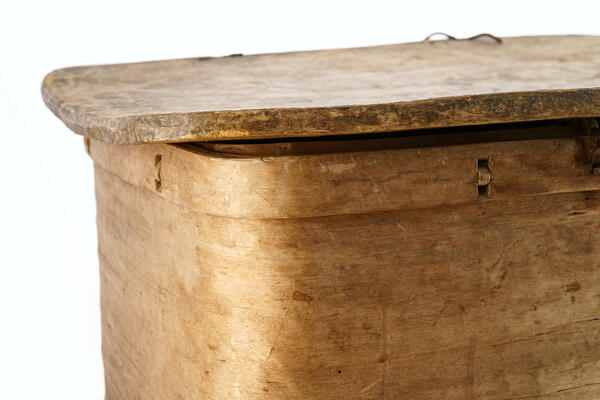
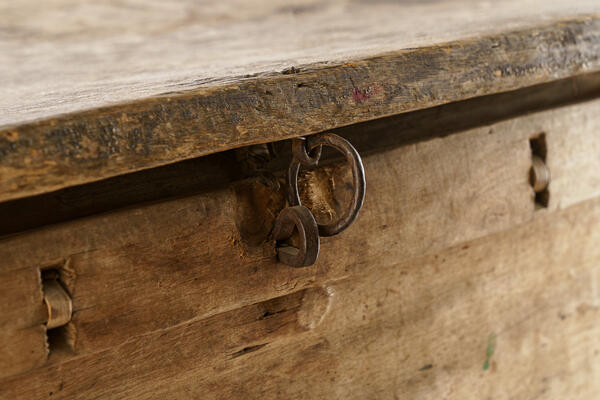
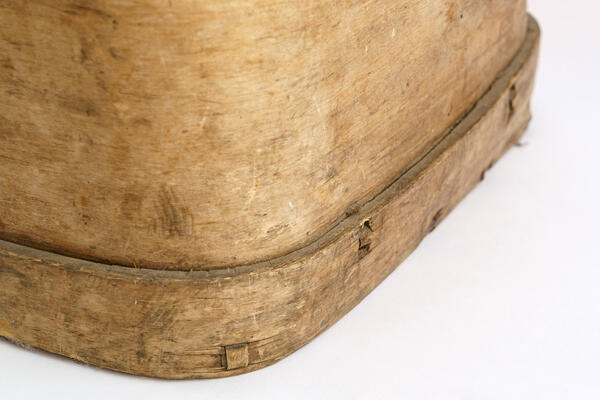
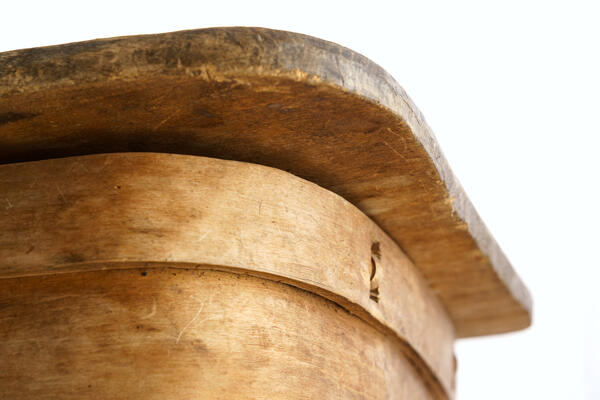
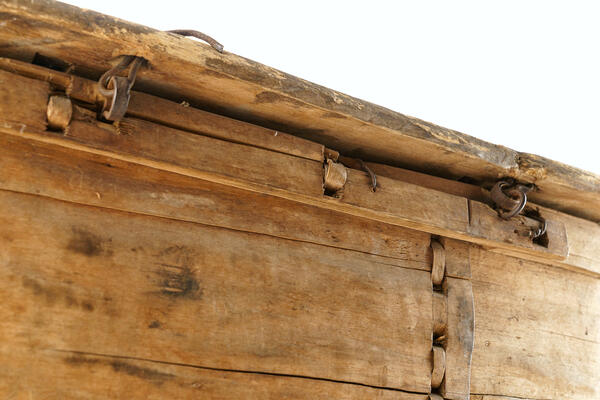
Unlike a larets — a casket — the lar is relatively large. Compared to the casket, it is characterized by a simple shape and the absence of paintings or other decorations. Typically, it was used for storing household utensils and ingredients in bulk. The lar falls into the intermediate category between furniture and containers. Its classification as a piece of furniture or a container depends on its size, level of portability, and the ability to sit, lie, or perform activities on its lid. This also explains the other use of wooden lars in city bazaars, where they were used simultaneously as storage boxes and counters. Interestingly, the Russian word for a stall or a small trading kiosk — laryok — was derived from the word “lar”.
An excerpt from “Provincial Sketches” by Mikhail
Yevgrafovich Saltykov-Shchedrin describes the use of lars as counters,