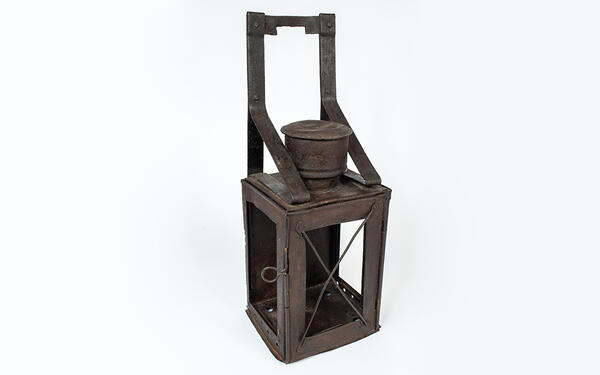
The Wolf safety lamp is a portable gasoline lamp used by miners. Lamps with an exposed wick or open flame could cost them their lives: the flammable gas was most often found in coal mines.
The lamp had a metal body with a latch door. It could only be opened with a heavy magnet, which weighed more than 10 kilograms. This ensured that the lamp could not open by accident, and that its sparks could not get outside into the air.
The lamp not only illuminated the mine, but also helped determine if there was any firedamp in the air. To do this, its flame was reduced to a barely noticeable light, and then carefully brought to the top of the mine, where gas usually accumulated. If there were flammable impurities in the air, a halo in the form of a bluish glow appeared around the flame.
In the old days, miners used homemade lamps. They took a jar of oil or fuel oil and put a wick in it. Such devices produced weak light and were dangerously explosive.
They were replaced by portable oil lamps, which were used until the middle of the 19th century. They had a closed metal bonnet. A wick was inserted into the lamp and a handle was attached to hang the lamp. As a fuel, rapeseed oil was used, which was obtained from the seeds of rape, rapeseed and other cruciferous plants. The flame in the oil lamp was open, so the miners jokingly called it ‘God help us.’
The light from the oil lamps was weak, and several of them were required to illuminate the mine. So, the profession of a ‘lamp-carrier’ emerged in the mines — this person regularly checked the lamps and replaced the extinct ones with new ones.
However, the miner’s lamps were in need of improvement: it was necessary to isolate the flame from the flammable air. In the 19th century, new models began to appear in different countries, and were named after their inventors. For example, in addition to the Wolf lamp, there was the Davy lamp, which was invented by the English chemist and physicist Humphry Davy. He came up with the idea to encase the flame in a cylinder of copper wire mesh.
Later, miners began to use gasoline instead of oil, as it gave more light. However, no flammable gasoline was put into the lamp. Cotton wool was soaked with a flammable liquid, which gradually permeated the wick.
The lamp had a metal body with a latch door. It could only be opened with a heavy magnet, which weighed more than 10 kilograms. This ensured that the lamp could not open by accident, and that its sparks could not get outside into the air.
The lamp not only illuminated the mine, but also helped determine if there was any firedamp in the air. To do this, its flame was reduced to a barely noticeable light, and then carefully brought to the top of the mine, where gas usually accumulated. If there were flammable impurities in the air, a halo in the form of a bluish glow appeared around the flame.
In the old days, miners used homemade lamps. They took a jar of oil or fuel oil and put a wick in it. Such devices produced weak light and were dangerously explosive.
They were replaced by portable oil lamps, which were used until the middle of the 19th century. They had a closed metal bonnet. A wick was inserted into the lamp and a handle was attached to hang the lamp. As a fuel, rapeseed oil was used, which was obtained from the seeds of rape, rapeseed and other cruciferous plants. The flame in the oil lamp was open, so the miners jokingly called it ‘God help us.’
The light from the oil lamps was weak, and several of them were required to illuminate the mine. So, the profession of a ‘lamp-carrier’ emerged in the mines — this person regularly checked the lamps and replaced the extinct ones with new ones.
However, the miner’s lamps were in need of improvement: it was necessary to isolate the flame from the flammable air. In the 19th century, new models began to appear in different countries, and were named after their inventors. For example, in addition to the Wolf lamp, there was the Davy lamp, which was invented by the English chemist and physicist Humphry Davy. He came up with the idea to encase the flame in a cylinder of copper wire mesh.
Later, miners began to use gasoline instead of oil, as it gave more light. However, no flammable gasoline was put into the lamp. Cotton wool was soaked with a flammable liquid, which gradually permeated the wick.