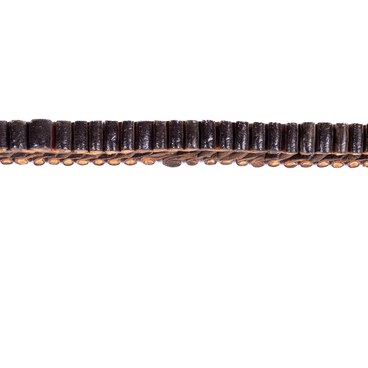
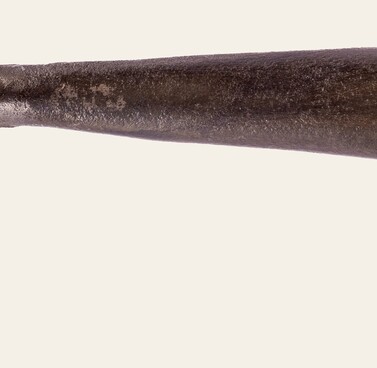
A cradle was used for rocking babies to sleep from time immemorial. In peasant culture there were several versions of it: a wooden or a bast box, a basket or a wooden frame covered with canvas. A special craftsman or the father of the family built a cradle, and if the baby grew up healthy and quiet, the “happy” cradle was passed on in the family. The cradle (lulka, zybka) was tied by a rope to a pole (ochep), one end of which was driven into the house wall and the other end passed through an iron ring screwed into the tie beam. A towel could also serve as a ring. A nail was hammered into the end of the ochep: a rope was wrapped around it to better secure the cradle.
As the first home of all people, the cradle required many protective rituals to be observed. During the first year of life, an infant was placed in a cradle with a blessing, so that “the devil would not replace it”. Two crosses were carved or painted with tar on the walls, or an icon was attached, and bells and a spoon were hung over the cradle, which served as a baby rattle and at the same time warded off evil spirits. There was a universal prohibition to rock an empty cradle, violation of which could have various consequences: insomnia, headache, baby’s death, penetration of evil spirits into the cradle.
The main design feature of the cradle is its suspended position. The floor was always associated with something negative, culminating in death. Therefore, it was prohibited to put a healthy baby on the floor — the cradle was separated from the underworld by placing a knife, scissors, broom or log under it. At the same time, a dying baby was laid exactly on the floor, under the icons, because “it is hard to die in a hanging cradle”.
Ochep plays an essential role in the mythology of the cradle, and this is revealed by the choice of tree species from which it was carved, which was based on mythopoetic motivations. For example, birch or spruce were not to be used: the baby would not sleep in the first case, or they would be covered with crust in the latter. Aspen was looked upon with suspicion as a tree of evil spirits.
The number of knags on the ochep indicated the number of future children.