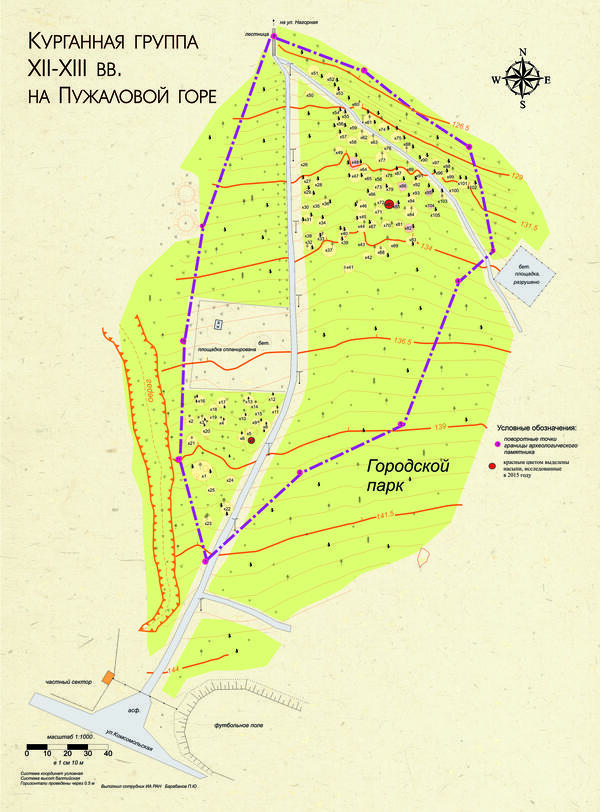
The exhibit on display shows a schematic image of a group of kurgans (burial mounds) — an ancient Russian burial ground. This is one of the rare and understudied burial sites, which is characteristic of the culture, formed on the eastern borders of the Vladimir and Suzdal regions between the 12th century and the beginning of the 13th century, as well as the exploration of the lower reaches of the Klyazma River in the Middle Ages.
Archaeologists discovered the burial ground on Puzhalova Gora in the mid-20th century. Excavations were carried out there in 1956, 1976, and 2015, and each time scientists explored two new kurgans. The first specialist who studied the burial ground was the renowned Slavonic archaeologist Valentin Vasilyevich Sedov.
The excavations were organized to establish the timeline of the burials and find out what funeral rites had been performed. The kurgans revealed inhumations in burial pits that had a western orientation. There were no adornments or household items. The details of the funeral rite indicated that it could have been carried out in accordance with Christian traditions.
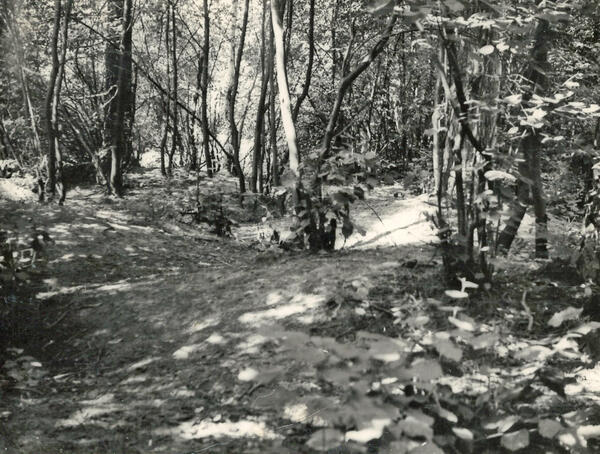
This conclusion is supported by the fact that there were no metal adornments in the burial places. However, the scientists did not manage to provide evidence that was accurate enough to establish the timeline of the burials. The archaeologists eventually abandoned the excavations in order to preserve the unique, historically formed landforms with kurgans. In 2012, a detailed plan of the burial ground was prepared, which helped to obtain the status of a conservation area for this territory.
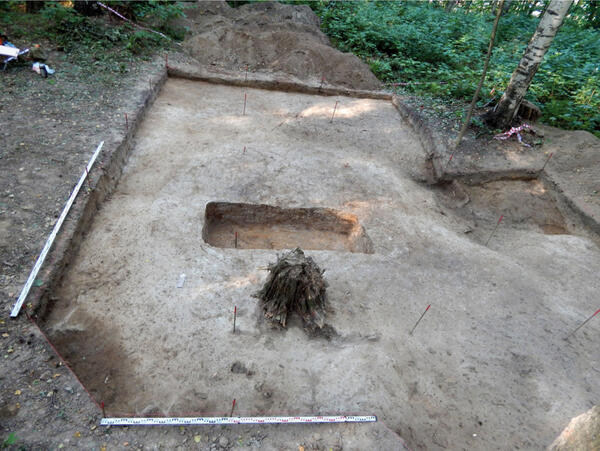
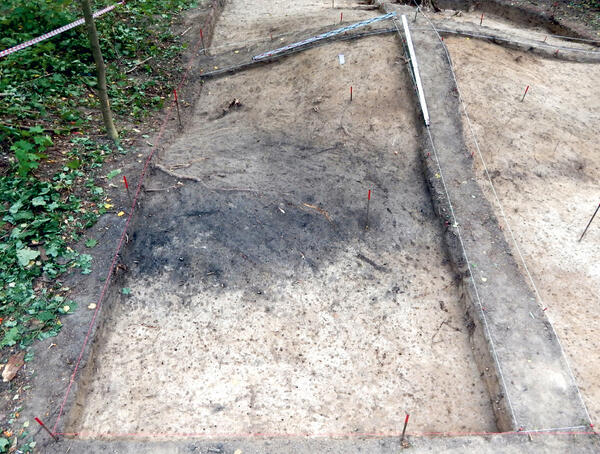
The beautification of the public park in 2020 sparked new archaeological excavations, which provided the opportunity for the most extensive research of the area. It turned out that the burial sites were located right under the existing paths of the park and were in no way discernable on the surface of the current landscape.
The excavation of the burial pits revealed jewelry and remains of clothes. A certain peculiarity was established about the location of the pits. Most of the inhumations — 16 out of 24 — form small groups consisting of two or three sites next to each other. At the same time, the groups themselves are spaced at a considerable distance from each other. Such an arrangement indicates that the people buried in those pits were related.
The materials obtained from the latest excavations are of interest: they can help elaborate on the early history of one of the small towns of North-Eastern Rus and the features of Old Russian culture on the periphery of the East Slavs settlement in the 12th–13th centuries.
Archaeologists discovered the burial ground on Puzhalova Gora in the mid-20th century. Excavations were carried out there in 1956, 1976, and 2015, and each time scientists explored two new kurgans. The first specialist who studied the burial ground was the renowned Slavonic archaeologist Valentin Vasilyevich Sedov.
The excavations were organized to establish the timeline of the burials and find out what funeral rites had been performed. The kurgans revealed inhumations in burial pits that had a western orientation. There were no adornments or household items. The details of the funeral rite indicated that it could have been carried out in accordance with Christian traditions.
This conclusion is supported by the fact that there were no metal adornments in the burial places. However, the scientists did not manage to provide evidence that was accurate enough to establish the timeline of the burials. The archaeologists eventually abandoned the excavations in order to preserve the unique, historically formed landforms with kurgans. In 2012, a detailed plan of the burial ground was prepared, which helped to obtain the status of a conservation area for this territory.
The beautification of the public park in 2020 sparked new archaeological excavations, which provided the opportunity for the most extensive research of the area. It turned out that the burial sites were located right under the existing paths of the park and were in no way discernable on the surface of the current landscape.
The excavation of the burial pits revealed jewelry and remains of clothes. A certain peculiarity was established about the location of the pits. Most of the inhumations — 16 out of 24 — form small groups consisting of two or three sites next to each other. At the same time, the groups themselves are spaced at a considerable distance from each other. Such an arrangement indicates that the people buried in those pits were related.
The materials obtained from the latest excavations are of interest: they can help elaborate on the early history of one of the small towns of North-Eastern Rus and the features of Old Russian culture on the periphery of the East Slavs settlement in the 12th–13th centuries.