A significant part of the collection of the Astrakhan Art Gallery is made up of artifacts created by Eastern artists. They were transferred to the gallery from private individuals and from the State Museum Fund.
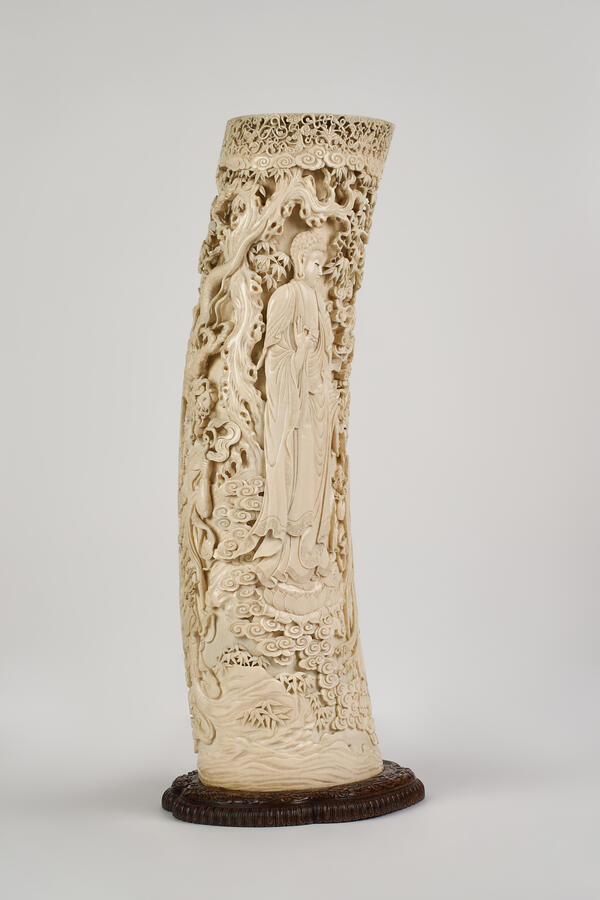
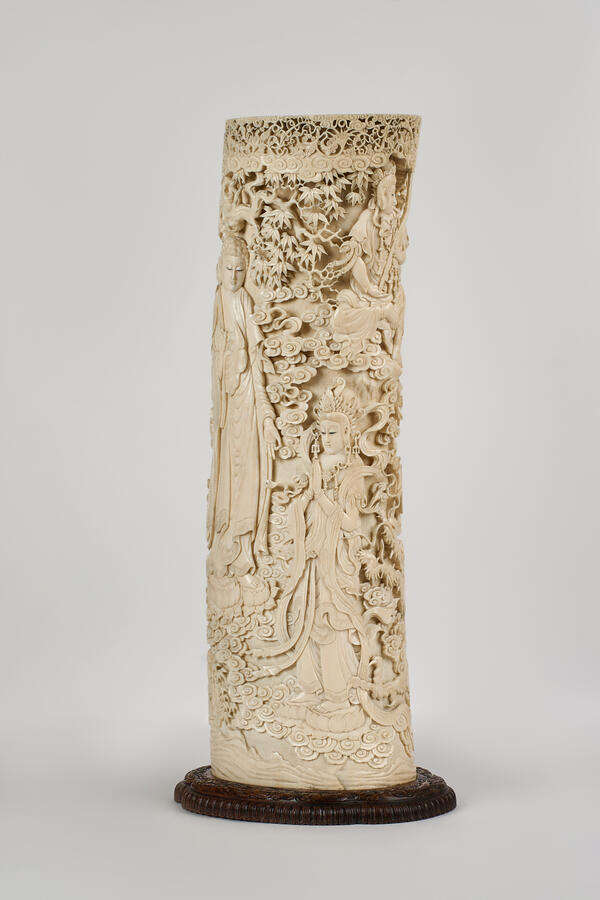
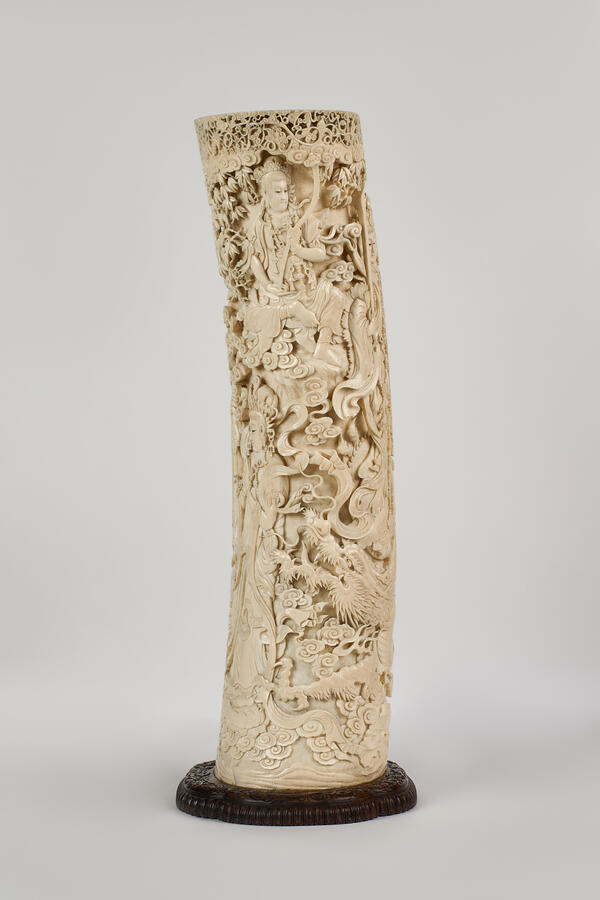
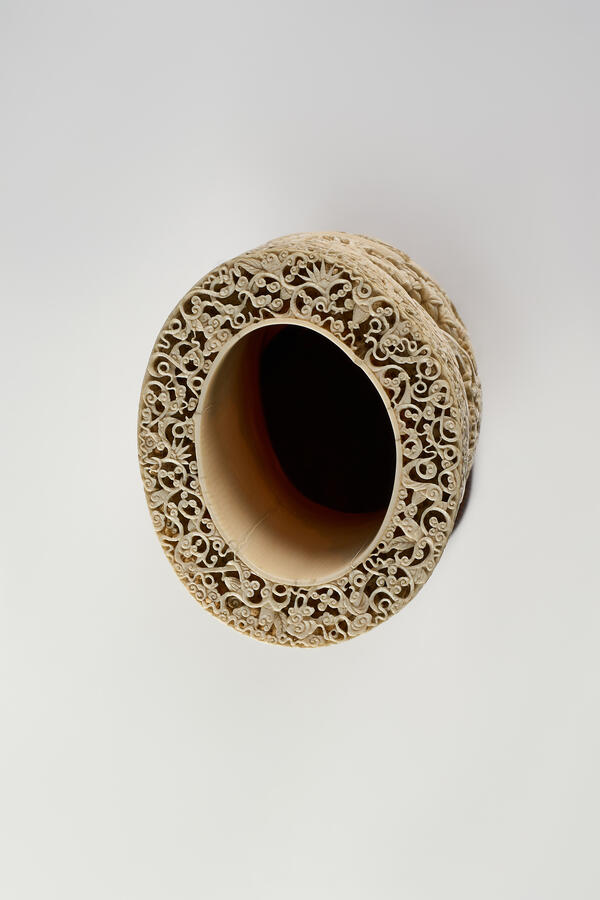
Two carved ivory cups, presented as part of the Collection of Foreign Art in the exhibition “Art of the Countries of Asia and the East of the 18th–21st Centuries”, are rightfully considered true gems of the collection. The first cup was donated to the gallery by Yevdokia Neshmonina in 1928. Apparently, the second cup, which entered the gallery in 1963, also belonged to her. Together they once were a set or were used for ritual purposes. For some unknown reason, they were separated and found each other again many years later.
Both cups have a slight curve, echoing the natural curve of the tusk from which they are made. Elephant tusks have been used to create sculptures since ancient times. This material shows off the finest details and allows carvers to achieve great artistic and emotional expressiveness in a small-scale work. Polishing gives the ivory surface a unique texture and shine.
There are four main types of carving: three-dimensional (sculptural), relief, contour, and pierced (openwork). Relief carving is considered one of the simplest types. The artist transfers a design onto the workpiece and begins removing the material around the design, so that it starts protruding. Reliefs are classified according to the height of the figures’ projection — from almost flat to convex images with additional overlay details that are attached to bone spikes. This type was used in the manufacture of cups. Volumetric and pierced (openwork) types of carving are more complicated in terms of technique.
All these types of carving were used to create the carved pattern on the cups presented in the museum. The entire surface of the cup is decorated in the technique of deep carving. It depicts human figures and a dragon against a background of small geometric and floral patterns.
The central image of this multi-figure composition is Buddha dressed as a monk. On his head is the ushnisha — a three-dimensional oval, which is considered the crown of Buddha, a symbol of his Enlightenment and Enthronement.