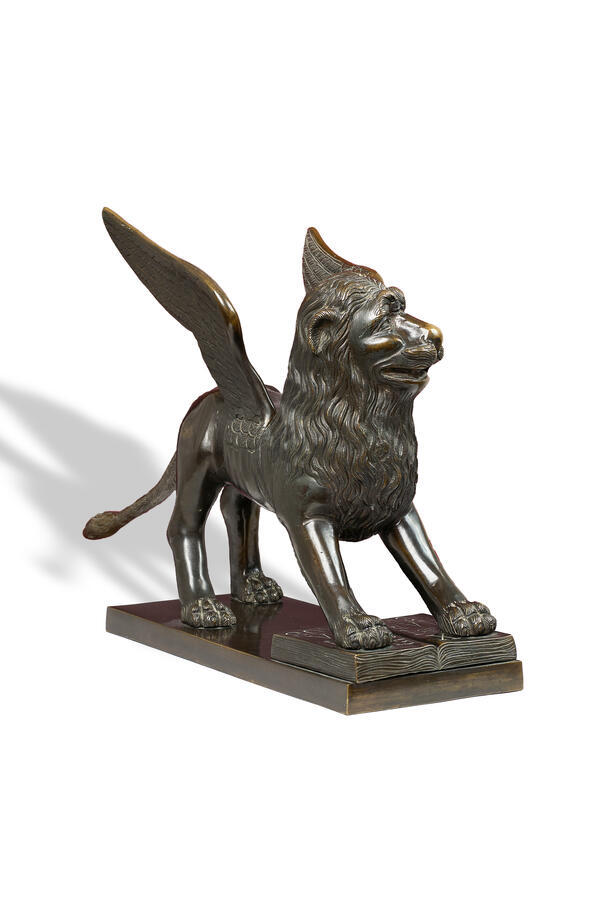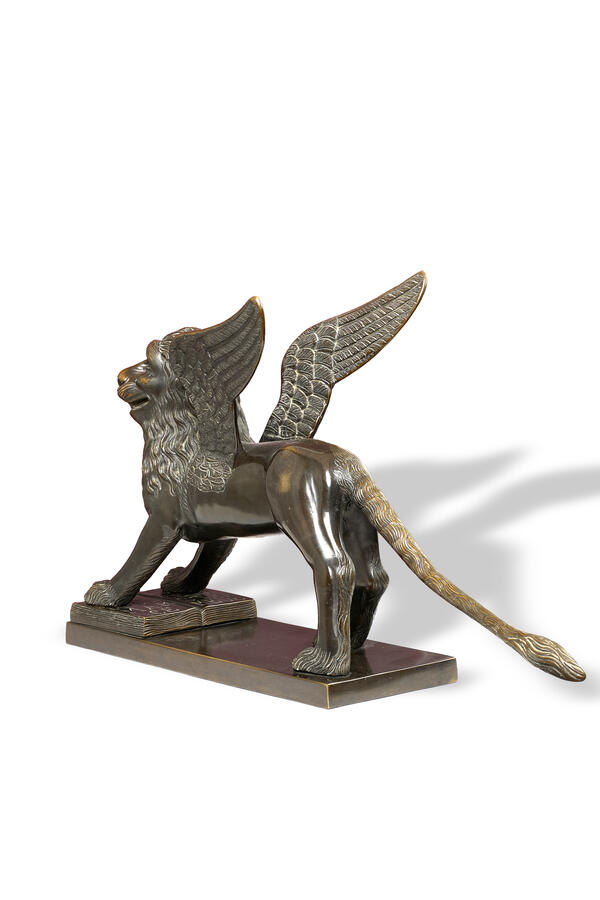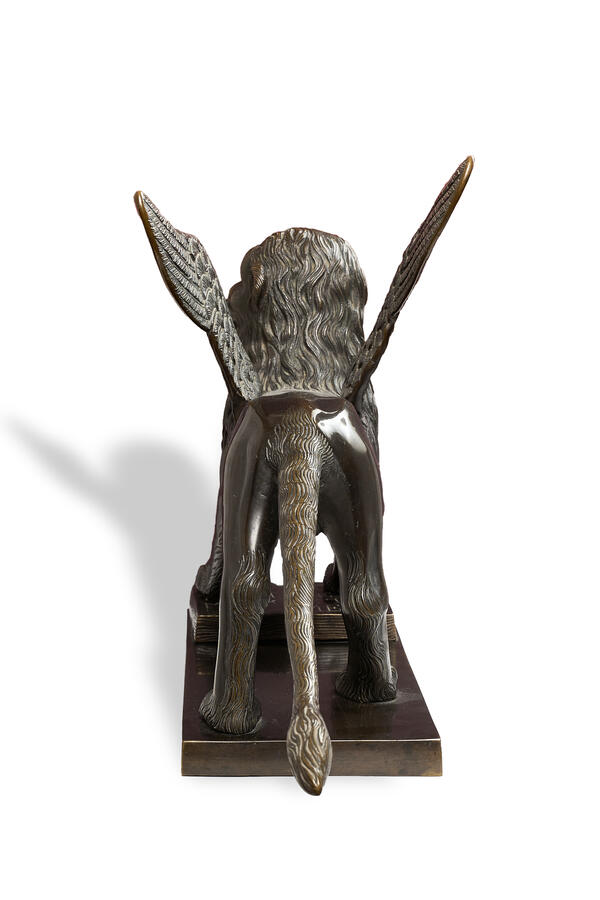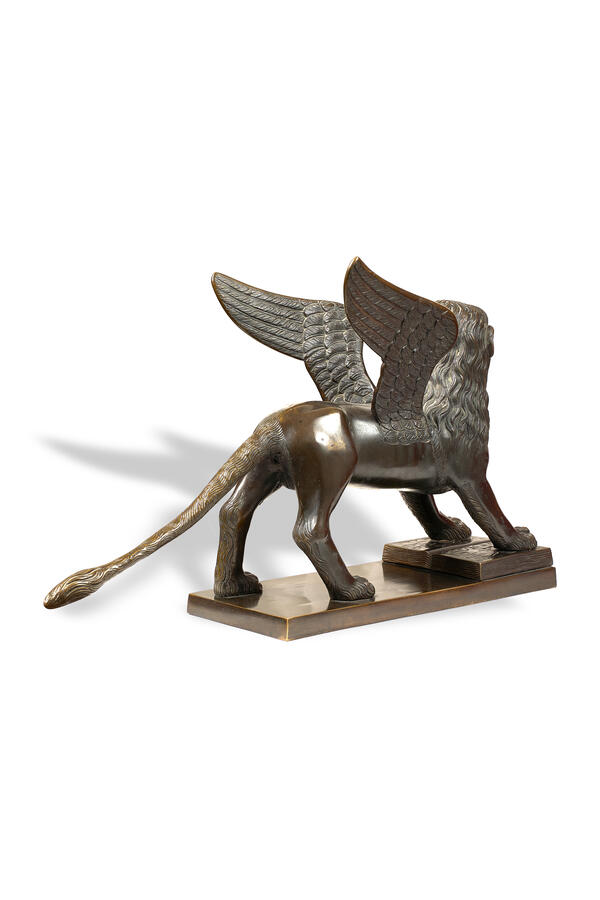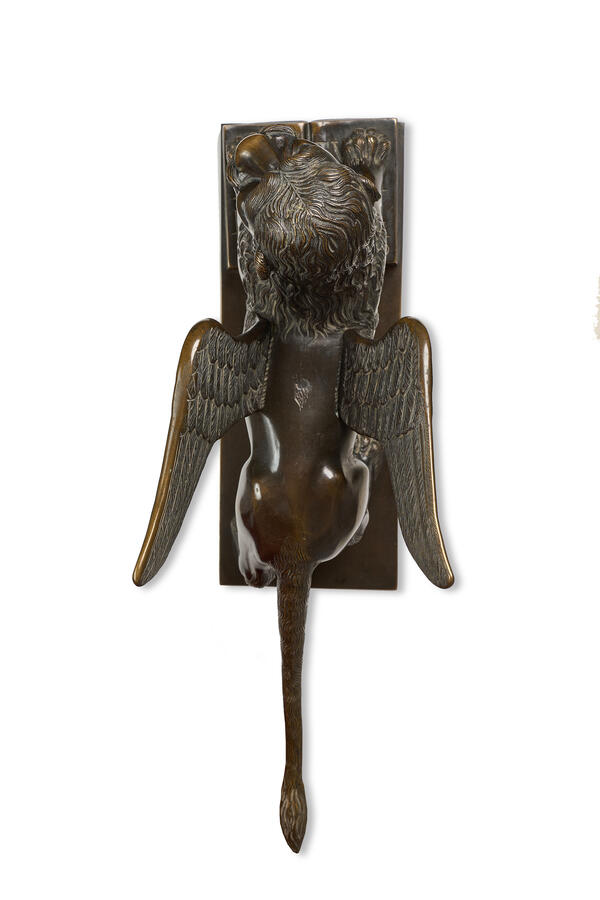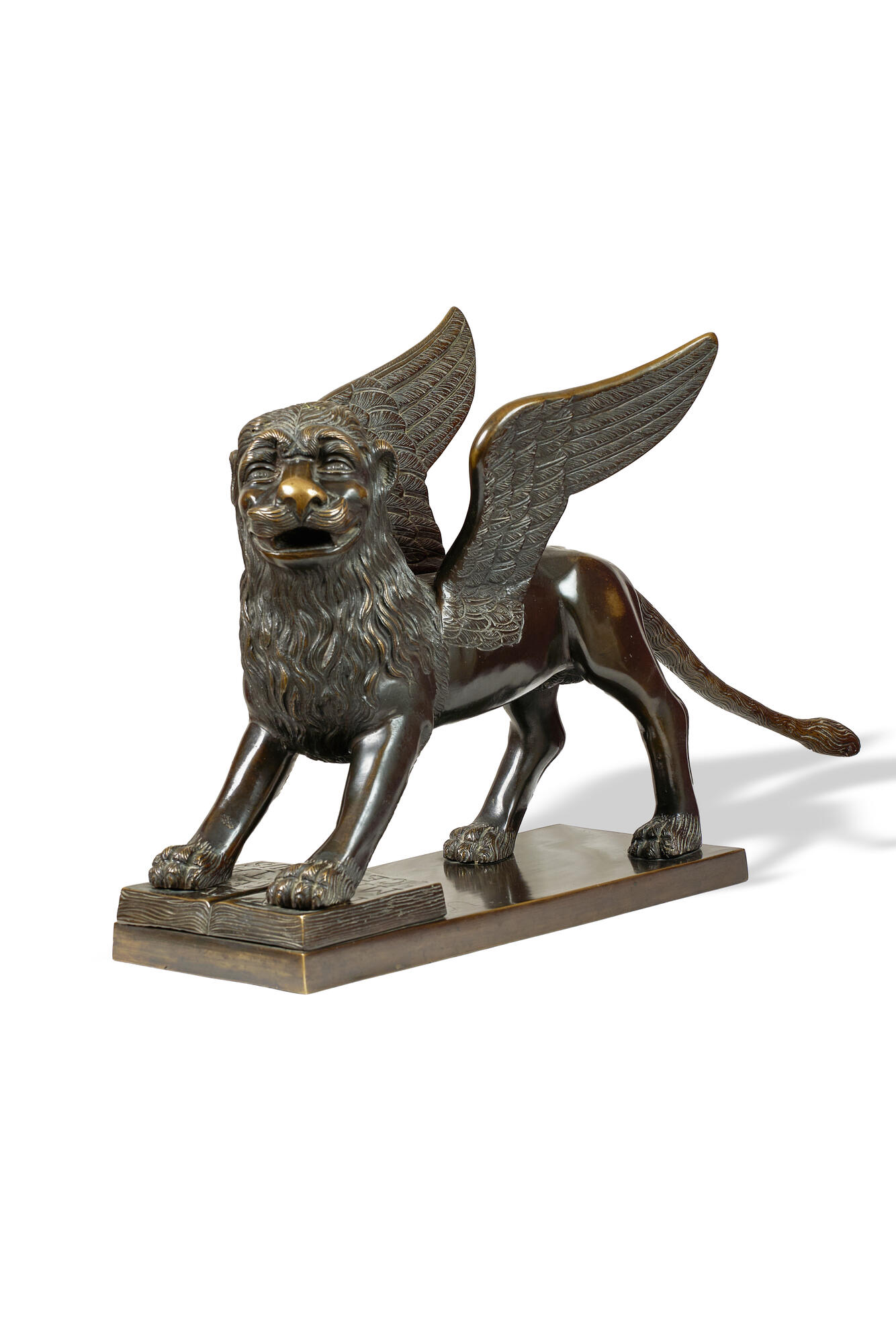


The Astrakhan Art Gallery displays a winged Venetian lion standing with its front paws on a book. This item was kept in the collection of the Austrian merchant Otto Yakovlevich Wiblinger, who was associated with Astrakhan from 1893 to 1914 as a representative of the trading company “Ivan Kattus in Vienna”. He sold “Astrakhan gold” — black caviar — to the western countries.
Wiblinger was an art connoisseur, patron of the arts and an enthusiastic collector, about whom the Astrakhan press wrote with great respect. He began to form his own collection in the late 19th century, while still in Vienna. The collector traveled a lot around Europe, often visited Italy, and especially loved Venice.
Venice is a city on the water, located in the north of Italy in the Veneto region. The embankments of the city are connected by bridges, and instead of streets Venice has canals. There are a lot of ancient buildings and palaces in the city. Their architecture is a combination of Baroque and Gothic styles. One of the main “signs” of Venice is the winged lion, which tourists and travelers can find literally at every turn. The lion of St. Mark is a symbol of Venice. Lion statues in bronze and marble crown the famous squares of the city. The lion adorns the facades of buildings and, of course, is depicted on the coat of arms of the city.
The lion is considered a symbol of St. Mark the Evangelist, who was the patron saint of the Republic of Venice.
The image of a lion with wings also existed in pagan mythology. For example, in Babylon, winged lions were associated with four planetary gods. The sphinx also has the body of a lion, complete with wings. A similar image is mentioned in the legends of Asia Minor and Central Asia.
The exhibit is an accurate replica of the bronze lion that sits on top of the massive granite column adorning St. Mark’s Square for more than 800 years.
The image of a lion has several meanings. If the paw rises above the open book, this lion is the bearer of peace. When the paw of the animal lies on a closed book, it denotes a militant attitude and military power of Venice. During battles, the book was “closed”, and a sword appeared in the lion’s paw instead of a book. If the lion’s front paws are on the ground and the hind paws are in the water, this position signifies that Venice is the mistress of land and sea.