Font
Color
Graphics
Изображение точки

To see AR mode in action:

1. Install ARTEFACT app for iOS or Android;

2. Find the exhibition «Urazovo Local History Museum»

3. Push the «Augmented reality» button and point your phone's camera at the exhibit;

Скрыть точки интересаПоказать точки интереса
Показать в высоком качестве

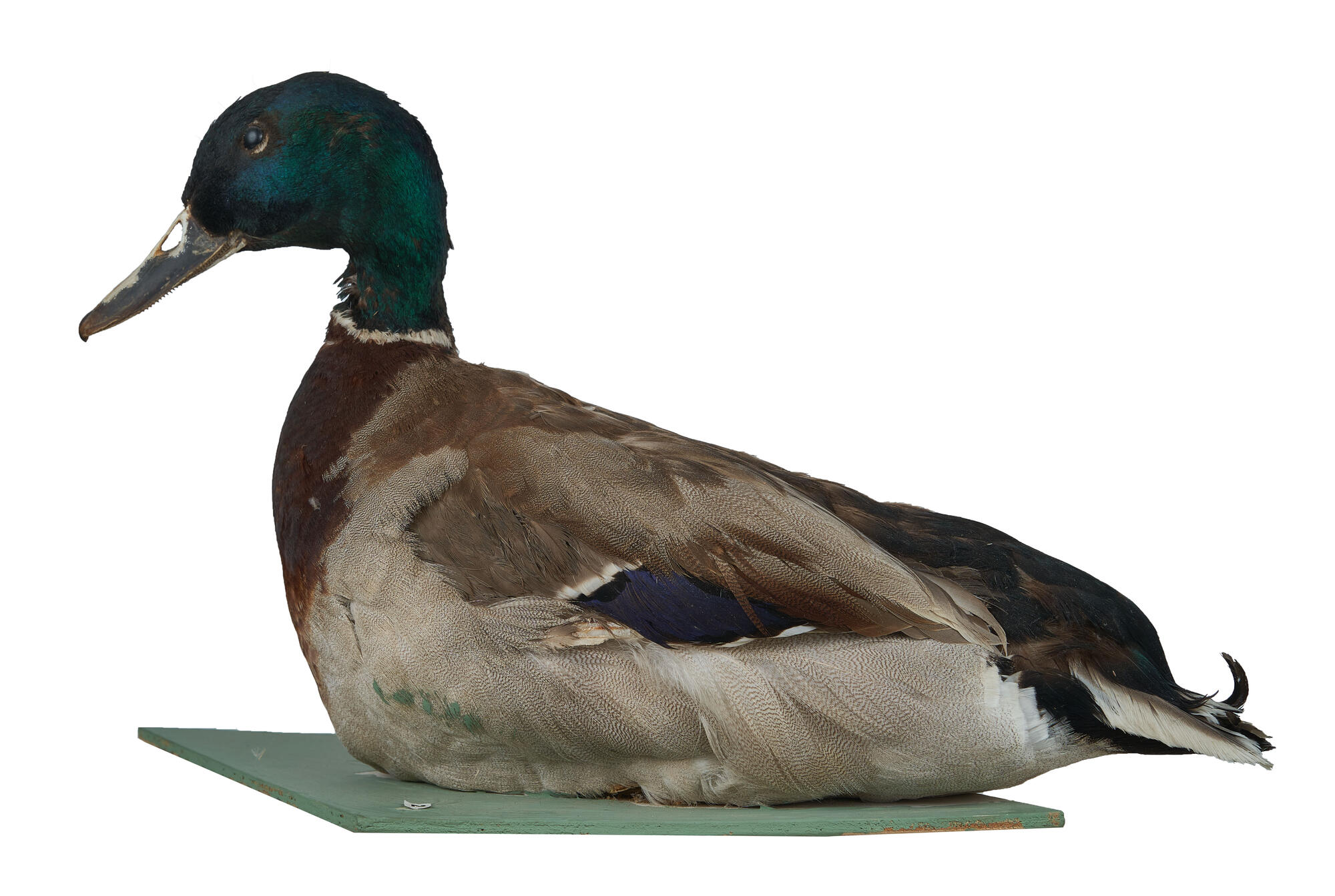
Mallard Drake

Creation period
1989
Dimensions
24x40x15 cm
Technique
Taxidermy
2
Open in app
#1
Mallard Drake
#2
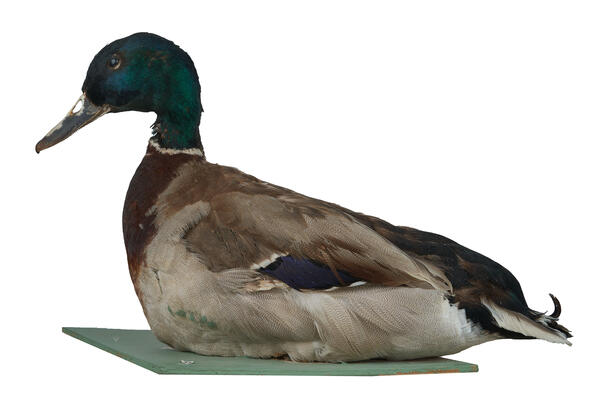
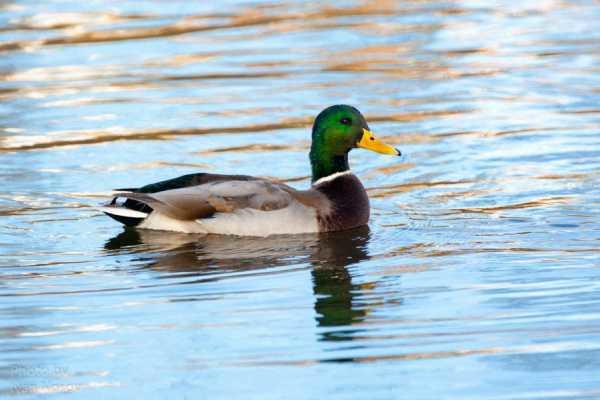
In the collection of the Urazovo Local History Museum you can see a stuffed mallard duck, which was made in 1989. 

The wild mallard lives wherever water bodies and coastal thickets are located. Unpretentiousness to habitat conditions allowed the bird to settle all over the world. It can be found in fresh, brackish water bodies with vast areas of shallow water, which are covered with duckweed. It dislikes fast flowing rivers and deserted shores. Favorite habitats are near fallen trees in the riverbed. 

The body length of the mallard usually reaches 40–60 centimeters, and the weight is from one and a half to two kilograms. The weight of the bird increases by autumn, when the fat layer grows. The wingspan can reach one meter. The wild duck has a massive head, a flattened beak and a short tail. 
#4
Mallard Drake
#5
On land, mallards seem clumsy. This is due to the specific footstep and unhurried movement. However, in case of danger, they can develop their speed and quickly hide in the thickets. The mallard takes off quickly, without effort, with a characteristic whistle, which is formed due to the frequent flapping of its wings.
Sexual dimorphism of wild ducks is so well-developed that at first the male and female were recognized as different species. You can always distinguish them by the color of the beak — the males have a green color at the base, and the yellow one at the end, and the females have the base which is covered with black dots. Drakes are larger, and their color is much brighter — emerald head and neck, white collar emphasizes the brown chest. Also, the paws of the female are orange, and the paws of the male are red.

In autumn, the mallard loses its ability to fly for 20–25 days — during this period, its plumage changes. In the daytime, the birds sit in dense thickets of river banks, and in the evening they feed on the water.
It is impossible to confuse the mallard with other forest birds — its voice is low and well recognizable. It received such a name due to her dissonant voice. Outside of the mating season, these birds stay in their flocks, which can consist of several dozens, and sometimes even several hundred mallards. Some species prefer to keep in pairs.

The mallard has natural enemies, including eagles, hawks, eagle owls and otters. Many duck eggs die when their nests are ravaged by dogs, crows or foxes. Also, many clutches perish during the flooding of the banks, attacks by birds and land predators.
#6
read morehide
00:00
00:00
1x

Mallard Drake

Creation period
1989
Dimensions
24x40x15 cm
Technique
Taxidermy
2
Point your smartphone camera to open in the app
Share
VkontakteOdnoklassnikiTelegram
Share on my website
Copy linkCopied
Copy
Open in app
To see AR mode in action:
  1. Install ARTEFACT app for 
  2. iOS or Android;
  3. Find and download the «Paintings in Details» exhibition
  4. Push the «Augmented reality» button and point your phone's camera at the painting;
  5. Watch what happens on your phone screen whilst you flip through the pictures.
 
We use Cookies
Cookies on the Artefact Website. We use cookies to ensure that we give you the best experience on our website. If you continue without changing your settings, we'll assume that you are happy to receive all cookies on the Artefact website. However, if you would like to, you can change your cookie settings at any time.
Learn more about useHide
Content is available only in Russian

X

Нашли опечатку?...

%title%%type%