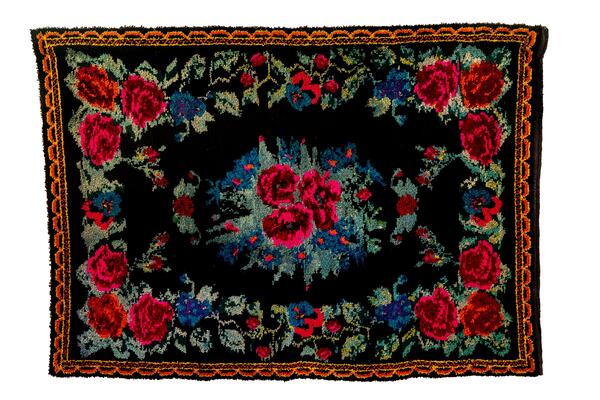
Separate beds were very rare in peasants’ houses in central Russia. The family members usually slept on stoves, bunks (place on a top part of a Russian stove), or benches. The younger children, as a rule, slept on large chests. However, in the Siberian villages of the 19th — early 20th centuries, the bed was a common interior detail. It was put in a large and bright upper room, which was used to meet the guests. The man of the house and his wife usually slept there. However, in some families, children slept on the bed. The upper room was always kept clean and decorated with embroidered bedspreads and curtains, homespun mats, and rugs.
The peasants made most part of the furniture themselves or ordered it from the local craftsmen. Mainly birch, ash tree, poplar, and walnut were used to make beds. Depending on the family’s income, some decorated beds with carvings, painted the furniture, polished or covered with a wood stain that is a special compound used to protect the wood from dampness and pests. It also gave the furniture a noble shade.
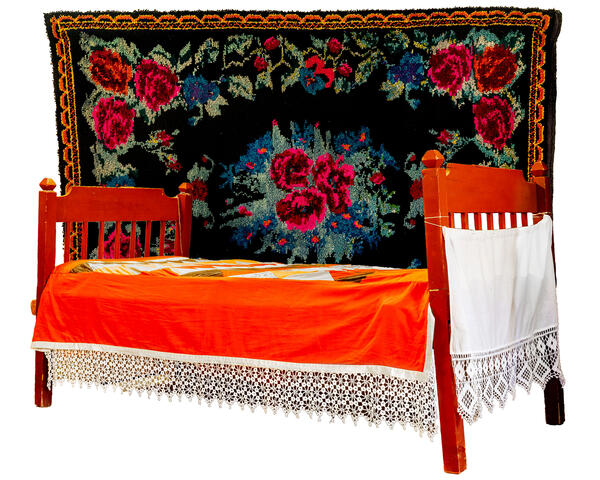
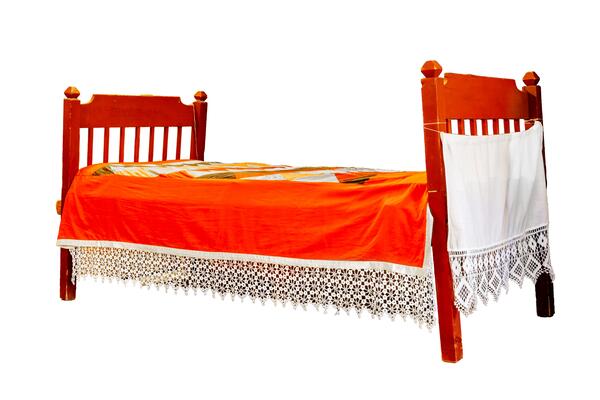
The bed from the collection of Nizhnevartovsk Museum of Local History was made in the 1930s in the Tyumen Region. It consists of two parallel boards. The back and high legs with carved knobs are attached to these boards via through holes. The upper plank of the back is shaped.
Depending on the financial well-being, the peasants used to put straw or feather mattresses on the beds and covered them with sheets. Bedclothes made of purchased fabrics were usually kept for guests and newly married couples. Family members used homespun canvas sheets in their everyday life. The lower part of the sheets, visible from under the bedspread, was called “podzor”. It was decorated with embroidery, braided or looped lace. Pillows of different sizes in beautiful pillowcases were put at the head and at the legs: it was believed that the more pillows, the more prosperous the family. The housewives made bedspreads of small pieces of fabric. They often passed such bedspreads over to their daughters and granddaughters or made bedsheets as a dowry before the wedding. The backs of beds and stacks of pillows were covered with lace or embroidered sheets of fabric.
The peasants made most part of the furniture themselves or ordered it from the local craftsmen. Mainly birch, ash tree, poplar, and walnut were used to make beds. Depending on the family’s income, some decorated beds with carvings, painted the furniture, polished or covered with a wood stain that is a special compound used to protect the wood from dampness and pests. It also gave the furniture a noble shade.
The bed from the collection of Nizhnevartovsk Museum of Local History was made in the 1930s in the Tyumen Region. It consists of two parallel boards. The back and high legs with carved knobs are attached to these boards via through holes. The upper plank of the back is shaped.
Depending on the financial well-being, the peasants used to put straw or feather mattresses on the beds and covered them with sheets. Bedclothes made of purchased fabrics were usually kept for guests and newly married couples. Family members used homespun canvas sheets in their everyday life. The lower part of the sheets, visible from under the bedspread, was called “podzor”. It was decorated with embroidery, braided or looped lace. Pillows of different sizes in beautiful pillowcases were put at the head and at the legs: it was believed that the more pillows, the more prosperous the family. The housewives made bedspreads of small pieces of fabric. They often passed such bedspreads over to their daughters and granddaughters or made bedsheets as a dowry before the wedding. The backs of beds and stacks of pillows were covered with lace or embroidered sheets of fabric.