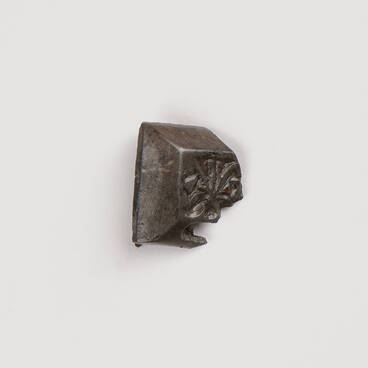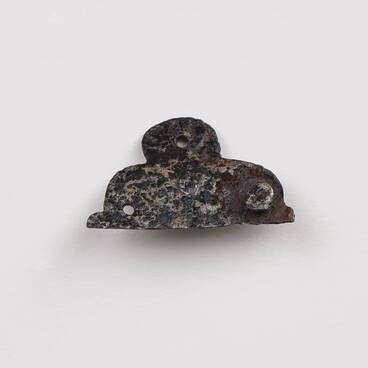
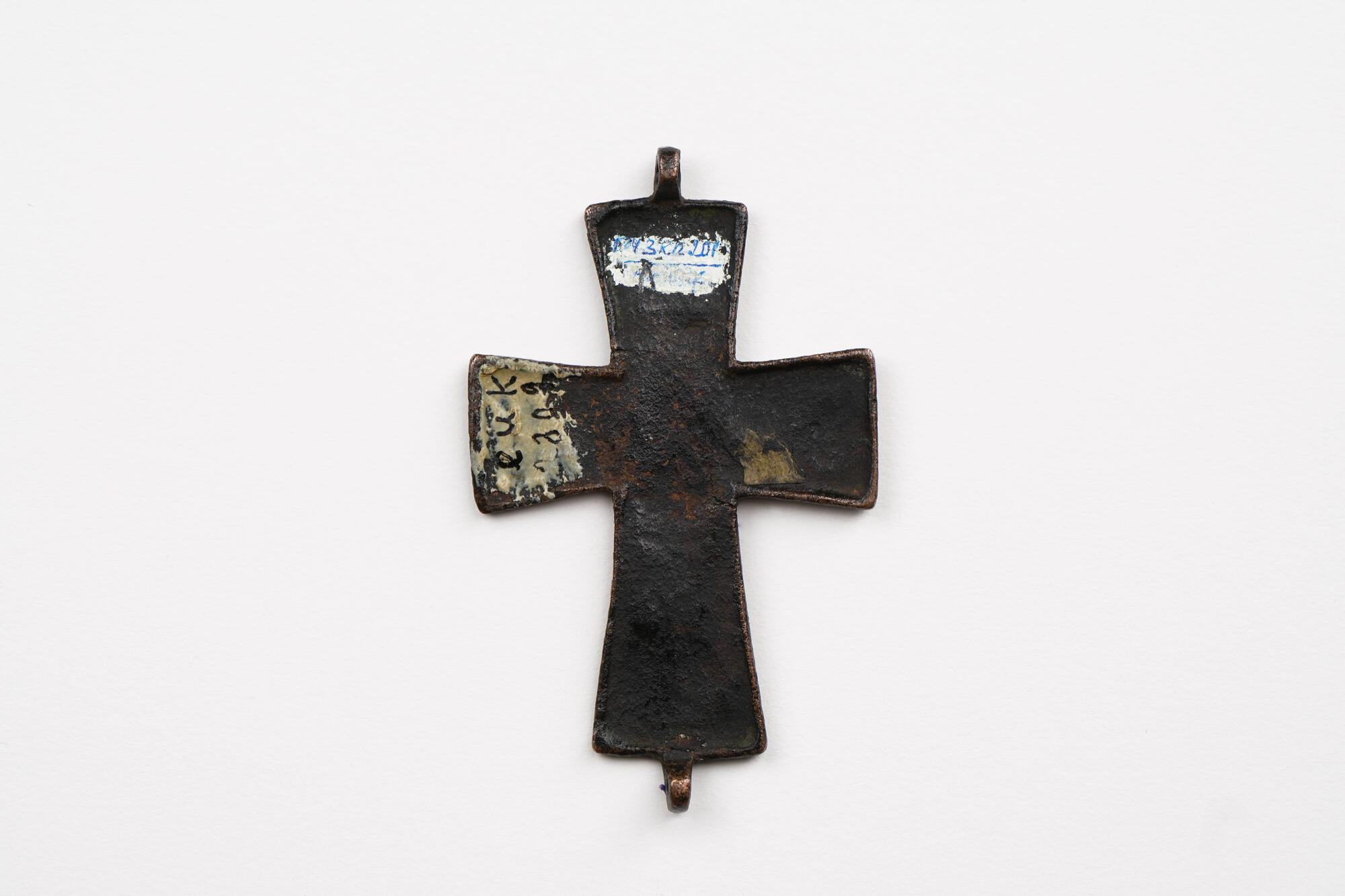


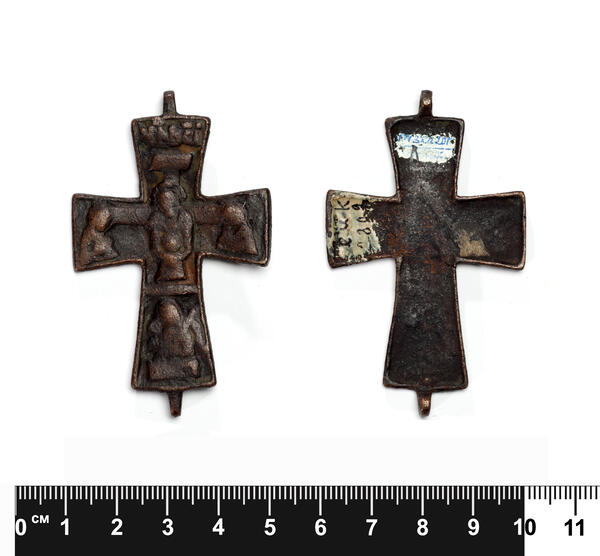
An encolpion is a small rectangular, oval or cruciform medallion bearing the image of Christ or the saints. It contained particles of consecrated prosphora or relics to protect the wearer from all kinds of misfortune.
The iconography of the Passion Cycle developed relatively late, although a number of plots were already known in the early Christian era. The prototype of Russian icons depicting the Passion should be sought in the murals of Old Russian churches in the second half of the 14th century, when all Byzantine art gravitated towards dramatic, psychologically intense themes.
The Crucifixion is one of the central themes in Christian art. The canonical composition is based on the Gospel story and the apocryphal gospel of Nicodemus. The first Christians did not depict the Crucifixion: the religious tradition of venerating this event began after this method of capital punishment was abolished. The cross became a religious symbol to be worshipped.
Medieval artists developed a detailed iconography of the Crucifixion scenes with several independent compositions such as the Deposition, the Pietà (or Lamentation), and the Entombment. The Entombment scene features the body of Christ in a stone sarcophagus, with the cross rising above in the center of the background. The background of the icon can be either dark, since this is the most tragic moment in the earthly life of Jesus Christ, or golden and solemn, giving hope for the salvation of mankind through the death of the Savior.
The encolpion cross was found in the village of Krasnye Buitsy, Tula Governorate, and entered the collection of Count Yuri Alexandrovich Olsufiev. Then he donated the pendant to the Tula Regional Museum of Local Lore. The item was housed there until 1998, when it was transferred to the State Museum-Reserve “Kulikovo Field”.
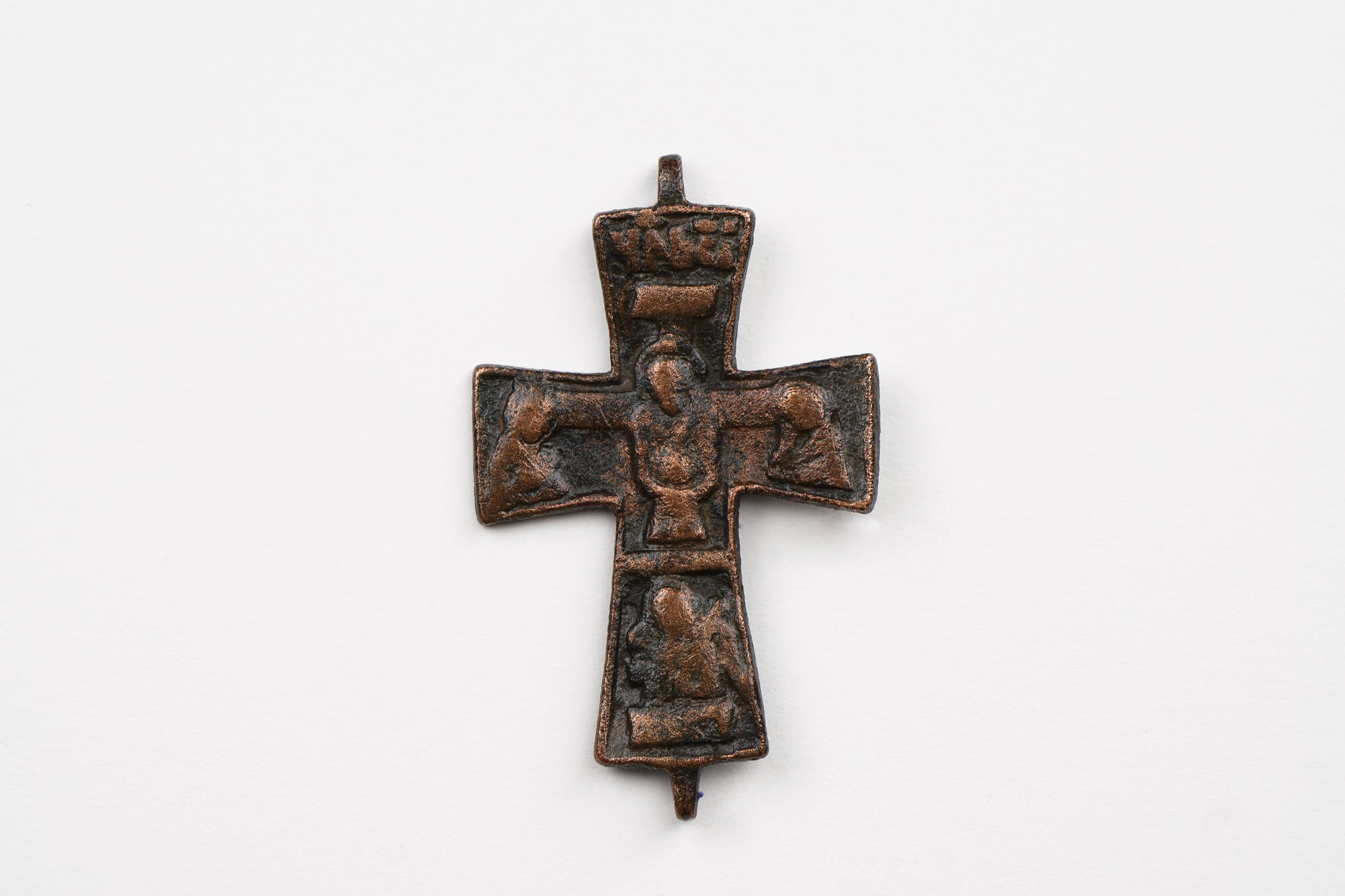
The presented encolpion depicts Christ leaning against the cross; he is flanked by the mourning Virgin and Saint John the Theologian. Such iconography is quite uncommon and is considered a rare occurrence in Russian metalwork. At the top of the cross is the inscription “King of Glory” and the figure of an angel sitting on a tombstone is depicted at the bottom.
The iconography of the Passion Cycle developed relatively late, although a number of plots were already known in the early Christian era. The prototype of Russian icons depicting the Passion should be sought in the murals of Old Russian churches in the second half of the 14th century, when all Byzantine art gravitated towards dramatic, psychologically intense themes.
The Crucifixion is one of the central themes in Christian art. The canonical composition is based on the Gospel story and the apocryphal gospel of Nicodemus. The first Christians did not depict the Crucifixion: the religious tradition of venerating this event began after this method of capital punishment was abolished. The cross became a religious symbol to be worshipped.
Medieval artists developed a detailed iconography of the Crucifixion scenes with several independent compositions such as the Deposition, the Pietà (or Lamentation), and the Entombment. The Entombment scene features the body of Christ in a stone sarcophagus, with the cross rising above in the center of the background. The background of the icon can be either dark, since this is the most tragic moment in the earthly life of Jesus Christ, or golden and solemn, giving hope for the salvation of mankind through the death of the Savior.
The encolpion cross was found in the village of Krasnye Buitsy, Tula Governorate, and entered the collection of Count Yuri Alexandrovich Olsufiev. Then he donated the pendant to the Tula Regional Museum of Local Lore. The item was housed there until 1998, when it was transferred to the State Museum-Reserve “Kulikovo Field”.
The presented encolpion depicts Christ leaning against the cross; he is flanked by the mourning Virgin and Saint John the Theologian. Such iconography is quite uncommon and is considered a rare occurrence in Russian metalwork. At the top of the cross is the inscription “King of Glory” and the figure of an angel sitting on a tombstone is depicted at the bottom.