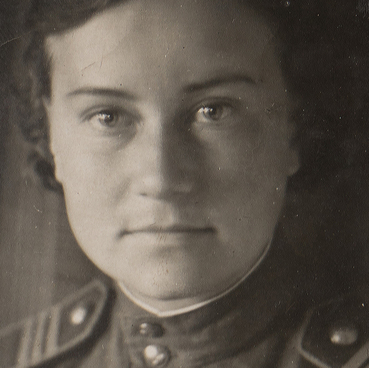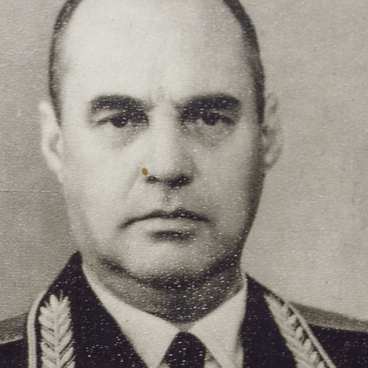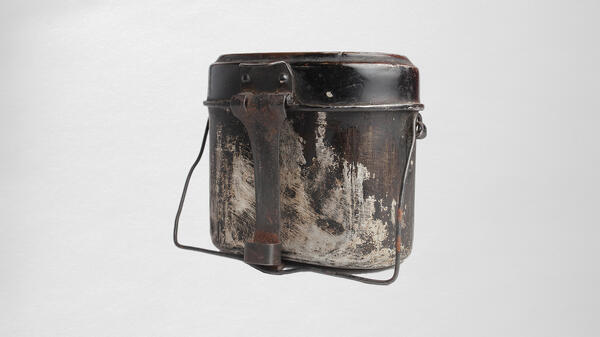
The bowler, which is housed in the collection of the Anzhero-Sudzhensk City Museum of Local History, belonged to Valentin Kolosov, a city resident and a war veteran. The exhibit was donated to the museum by his wife Vera Kolobova in 2003.
Valentin Kolosov was born in Astrakhan, and in 1929, moved with his mother to Anzhero-Sudzhensk. He worked as a mechanic in the cinema “Zaboy”, and then, studied at the Novosibirsk School of Radio Technicians.
Kolosov went to the front line in the first days of the war. He served as a technician-lieutenant on the Volkhov, Leningrad and Belorussian fronts. His main task was to provide radio communications.
After the Victory, Kolosov served several years in Germany and was demobilized only in 1948. He returned home with a soldier’s bowler — a reminder of his army days.
The soldiers used similar aluminum bowlers to cook food in the field. A handle made of wire was attached to the sides of the base. It was used, for example, to fix the dish over the fire. It came with a cover plate that could be used as a frying pan or a plate. The soldiers often stored bread inside so that it wouldn’t get wet during the rain.
In the Russian Imperial Army, every serviceman had his own bowler with a lid. In the field kitchens, the cook usually poured the soup inside of a bowler, and put the second course and bread in the lid. Since 1862, dishware was made of steel, and since 1871 — of red copper. In peacetime, the army also used old Russian bowlers — copper, bronze, and iron ones. This is because aluminum was needed for weapons, bullets, and military equipment at that time, so there was not enough for soldier’s dishware.
During World War I (1914–1918), German troops showed the world the advantages of an aluminum bowler — it was lighter and more convenient for cooking. At the same time, the Russian Army did not have enough dishware for everyone, so after the war it was decided to set up mass production.
In the early 20th century, in Leningrad, at the plant ‘Krasny Vyborzhets’ mass production of aluminum bowlers for the soldiers of the Red Army began. The vessel almost exactly repeated the round aluminum model of the old Russian sample, which had been used since 1899.
In 1936, the factory developed a new oval aluminum bowler of the European model. It was a transformer: the lid could be detached and turned into a separate plate for the second course. Its new shape was more convenient than round: the bowler fit better in a backpack and later in a special bag. After the Great Patriotic War, only a few amendments were made to the design of the bowler; similar ones are used in the army to this day.
Valentin Kolosov was born in Astrakhan, and in 1929, moved with his mother to Anzhero-Sudzhensk. He worked as a mechanic in the cinema “Zaboy”, and then, studied at the Novosibirsk School of Radio Technicians.
Kolosov went to the front line in the first days of the war. He served as a technician-lieutenant on the Volkhov, Leningrad and Belorussian fronts. His main task was to provide radio communications.
After the Victory, Kolosov served several years in Germany and was demobilized only in 1948. He returned home with a soldier’s bowler — a reminder of his army days.
The soldiers used similar aluminum bowlers to cook food in the field. A handle made of wire was attached to the sides of the base. It was used, for example, to fix the dish over the fire. It came with a cover plate that could be used as a frying pan or a plate. The soldiers often stored bread inside so that it wouldn’t get wet during the rain.
In the Russian Imperial Army, every serviceman had his own bowler with a lid. In the field kitchens, the cook usually poured the soup inside of a bowler, and put the second course and bread in the lid. Since 1862, dishware was made of steel, and since 1871 — of red copper. In peacetime, the army also used old Russian bowlers — copper, bronze, and iron ones. This is because aluminum was needed for weapons, bullets, and military equipment at that time, so there was not enough for soldier’s dishware.
During World War I (1914–1918), German troops showed the world the advantages of an aluminum bowler — it was lighter and more convenient for cooking. At the same time, the Russian Army did not have enough dishware for everyone, so after the war it was decided to set up mass production.
In the early 20th century, in Leningrad, at the plant ‘Krasny Vyborzhets’ mass production of aluminum bowlers for the soldiers of the Red Army began. The vessel almost exactly repeated the round aluminum model of the old Russian sample, which had been used since 1899.
In 1936, the factory developed a new oval aluminum bowler of the European model. It was a transformer: the lid could be detached and turned into a separate plate for the second course. Its new shape was more convenient than round: the bowler fit better in a backpack and later in a special bag. After the Great Patriotic War, only a few amendments were made to the design of the bowler; similar ones are used in the army to this day.