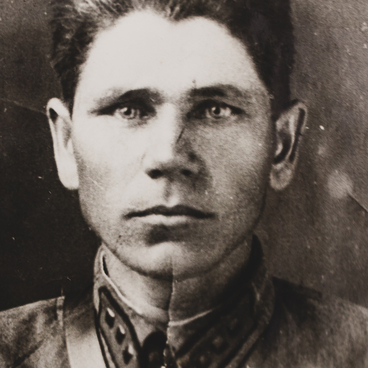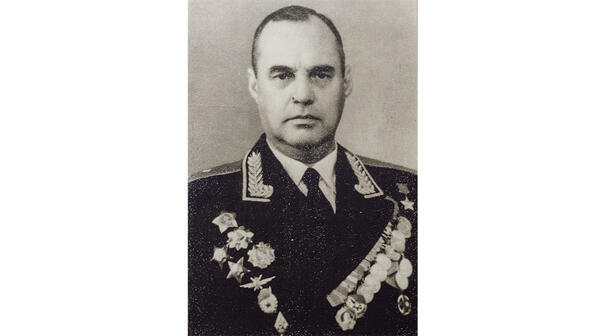
Vasily Tikhonov was born on June 15, 1909, in the mining village of Ulen, Khakassia, in the family of a miner.
In September 1928, he moved to Anzhero-Sudzhensk to work in the coal mines. There, Tikhonov combined hard mining work with social work: he joined the Komsomol, became a member of the trade union, and a delegate of the Anzhersk settlement council.
In November 1930, Vasily Tikhonov volunteered to join the Red Army. The war began when he was a pilot in the Far East; he commanded the 2nd Squadron of the 22nd Long-Range Bomber Aviation Regiment. In August 1941, they were transferred to the outskirts of Moscow, there were battles at the time.
When the German troops began to bomb Moscow, the Supreme High Command decided to counterattack Berlin. Tikhonov and his squadron were sent to Germany. None of the pilots were killed, they did not lose a single plane. Commander Vasily Tikhonov was presented the title Hero of the Soviet Union for this success.
Throughout the war Tikhonov was an army commander — participated in the battles for Moscow, Leningrad, Stalingrad, Sevastopol, Minsk, Kursk, Oryol, and Belgorod. In total, his pilots made 9870 sorties, spent in the sky 38 656 hours and dropped 6 140 tons of bombs. They bombed Budapest and Bucharest, Danzig and Konigsberg, Helsinki and other cities.
At the end of the Great Patriotic War, Vasily Tikhonov was instructed to change the old aircrafts of the regiment to new, more advanced bomber aircrafts Er-2. He organized training for flight personnel. The last air attacks on Berlin and Konigsberg were conducted by regiments of Tikhonov’s division on new planes.
After the war, Tikhonov continued to serve in long-range aviation, where he trained young military pilots. On May 25, 1959, the pilot was promoted to the military rank of lieutenant-general of aviation. In 1962, he was appointed head of the Kharkiv Higher Military Command and Engineering School of Missile Forces, where he served until his retirement in 1970.
During his last years, Tikhonov lived in Moscow. He died in 1976. He was buried in his hometown — the city of Abakan, in Khakassia.
In September 1928, he moved to Anzhero-Sudzhensk to work in the coal mines. There, Tikhonov combined hard mining work with social work: he joined the Komsomol, became a member of the trade union, and a delegate of the Anzhersk settlement council.
In November 1930, Vasily Tikhonov volunteered to join the Red Army. The war began when he was a pilot in the Far East; he commanded the 2nd Squadron of the 22nd Long-Range Bomber Aviation Regiment. In August 1941, they were transferred to the outskirts of Moscow, there were battles at the time.
When the German troops began to bomb Moscow, the Supreme High Command decided to counterattack Berlin. Tikhonov and his squadron were sent to Germany. None of the pilots were killed, they did not lose a single plane. Commander Vasily Tikhonov was presented the title Hero of the Soviet Union for this success.
Throughout the war Tikhonov was an army commander — participated in the battles for Moscow, Leningrad, Stalingrad, Sevastopol, Minsk, Kursk, Oryol, and Belgorod. In total, his pilots made 9870 sorties, spent in the sky 38 656 hours and dropped 6 140 tons of bombs. They bombed Budapest and Bucharest, Danzig and Konigsberg, Helsinki and other cities.
At the end of the Great Patriotic War, Vasily Tikhonov was instructed to change the old aircrafts of the regiment to new, more advanced bomber aircrafts Er-2. He organized training for flight personnel. The last air attacks on Berlin and Konigsberg were conducted by regiments of Tikhonov’s division on new planes.
After the war, Tikhonov continued to serve in long-range aviation, where he trained young military pilots. On May 25, 1959, the pilot was promoted to the military rank of lieutenant-general of aviation. In 1962, he was appointed head of the Kharkiv Higher Military Command and Engineering School of Missile Forces, where he served until his retirement in 1970.
During his last years, Tikhonov lived in Moscow. He died in 1976. He was buried in his hometown — the city of Abakan, in Khakassia.