In the 1970s and 1980s, student construction brigades appeared in the USSR. Young men and women from institutions of higher and specialized education were chosen to join them. Such associations were usually locally established, but they could also be municipal, regional, and state.
The period of work in the construction brigade was unofficially called “labor semester”. Participants, who were called fighters, were sent to the sites according to special documents — the Komsomol directions (travel tickets). They included the student’s surname, first name and patronymic, division affiliation, and destination. Work in the construction brigade was paid.
Students participated in the Virgin Lands campaign and many all-Union construction projects: at the Sayano-Shushenskaya hydroelectric power plant, the Volga and Kamsky automobile plants, the Baikal-Amur Mainline. However, many remained to work in their homelands.
Student brigades from the Mari Autonomous Soviet Socialist Republic first went to the republican construction sites in 1967. In addition, the next year more than 2,000 people started building the first cattle-breeding complexes in Mari El. In just five years, they commissioned more than 400 objects and performed the scope of work for more than 26 million rubles.
Each construction brigade had its own headquarters. It accepted students, made a list of facilities where they could work, and assigned the facilities to educational institutions.
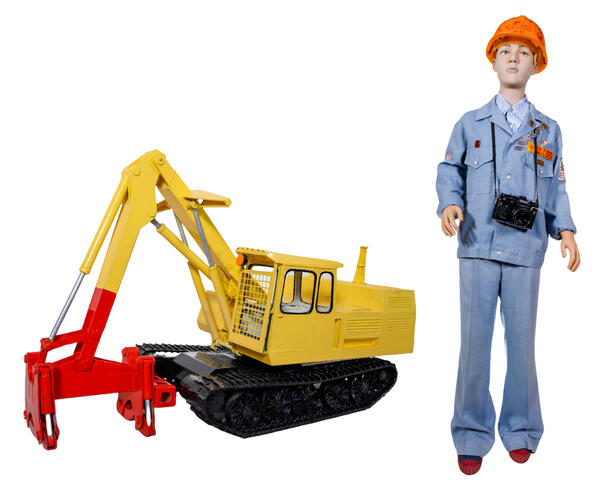
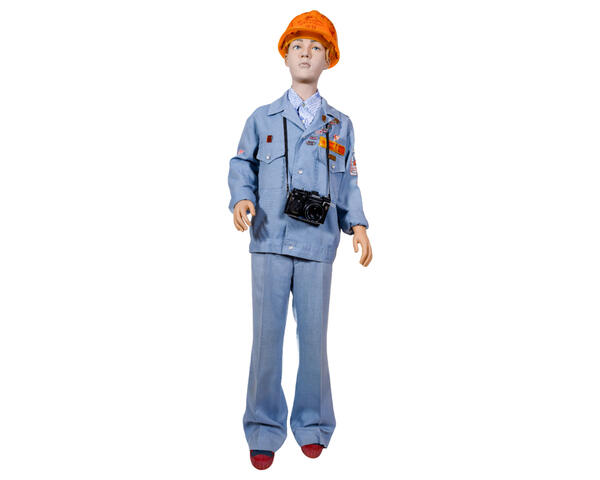
The number of fighters in the student brigades increased every year. By 1974, there were more than 3,500 of them in Mari El. A special uniform was sewn for them: it consisted of trousers and a jacket and was called “tselinka”, “boytsovka” or “stroyevka”. Students wore this uniform at ceremonial events and used overalls for work.
The patches on the sleeves could be used to identify where the student came from, the name of the division, and the year of admittance. Professional artists, including the famous Soviet graphic artist Georgy Gozhev, designed the chevrons.
The brigade always included a treasurer, a steward, a doctor, a nurse, and a cook. Quite often the students also appointed an artist and a “chronicler” who kept notes on the main events of brigade life. Moreover, the students were accompanied by lecturers, agitators, and political informers who organized their leisure time.
The period of work in the construction brigade was unofficially called “labor semester”. Participants, who were called fighters, were sent to the sites according to special documents — the Komsomol directions (travel tickets). They included the student’s surname, first name and patronymic, division affiliation, and destination. Work in the construction brigade was paid.
Students participated in the Virgin Lands campaign and many all-Union construction projects: at the Sayano-Shushenskaya hydroelectric power plant, the Volga and Kamsky automobile plants, the Baikal-Amur Mainline. However, many remained to work in their homelands.
Student brigades from the Mari Autonomous Soviet Socialist Republic first went to the republican construction sites in 1967. In addition, the next year more than 2,000 people started building the first cattle-breeding complexes in Mari El. In just five years, they commissioned more than 400 objects and performed the scope of work for more than 26 million rubles.
Each construction brigade had its own headquarters. It accepted students, made a list of facilities where they could work, and assigned the facilities to educational institutions.
The number of fighters in the student brigades increased every year. By 1974, there were more than 3,500 of them in Mari El. A special uniform was sewn for them: it consisted of trousers and a jacket and was called “tselinka”, “boytsovka” or “stroyevka”. Students wore this uniform at ceremonial events and used overalls for work.
The patches on the sleeves could be used to identify where the student came from, the name of the division, and the year of admittance. Professional artists, including the famous Soviet graphic artist Georgy Gozhev, designed the chevrons.
The brigade always included a treasurer, a steward, a doctor, a nurse, and a cook. Quite often the students also appointed an artist and a “chronicler” who kept notes on the main events of brigade life. Moreover, the students were accompanied by lecturers, agitators, and political informers who organized their leisure time.