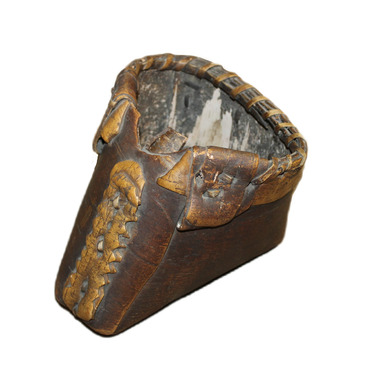
A trough made of a cap — a cone-shaped growth on a birch tree, hollowed out inside. A large, open vessel, for washing clothes and other household needs. A semicircular handicap, an uneven circle. On one side in the upper part of the trough there is a hole for a handle. Handmade work.
Growths occur on trees as a result of any sudden change in the development of the plant, which may have a natural or anthropogenic cause. Some of the caps grow underground, like tumors on the roots, and therefore cannot be detected before the tree dies. Such growths sometimes occur in the form of a group of round cone-shaped bulges connected by rope-like roots. Almost always the caps are covered with bark, even underground. The reason is the protection of the tree from insects and fungal diseases.
Birch cap most often has a rounded shape. This word came to us from the ancient Slavs, in their language “cap” had the meaning of “head”.
Caps have been used for making household utensils since time immemorial. Folk craftsmen appreciated and appreciate them for the natural beauty of texture and strength.A trough made of a cap — a cone-shaped growth on a birch tree, hollowed out inside. A large, open vessel, for washing clothes and other household needs. A semicircular handicap, an uneven circle. On one side in the upper part of the trough there is a hole for a handle. Handmade work.
Growths occur on trees as a result of any sudden change in the development of the plant, which may have a natural or anthropogenic cause. Some of the caps grow underground, like tumors on the roots, and therefore cannot be detected before the tree dies. Such growths sometimes occur in the form of a group of round cone-shaped bulges connected by rope-like roots. Almost always the caps are covered with bark, even underground. The reason is the protection of the tree from insects and fungal diseases.
Birch cap most often has a rounded shape. This word came to us from the ancient Slavs, in their language “cap” had the meaning of “head”.
Caps have been used for making household utensils since time immemorial. Folk craftsmen appreciated and appreciate them for the natural beauty of texture and strength.