#1
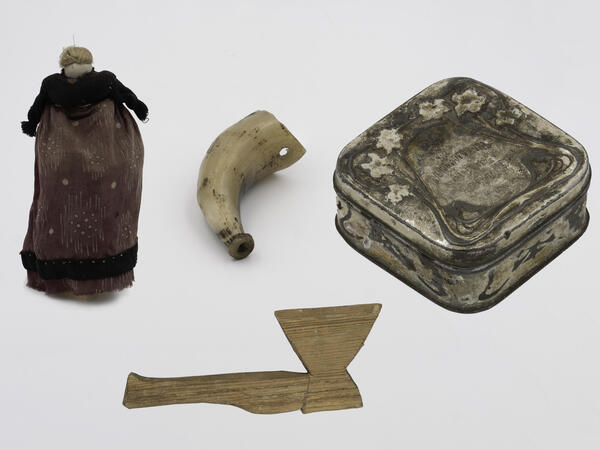
Box, Hatchet, Baby bottle teat, Faceless doll
#2
#17
#4
Since ancient times, tooth powder has been used for tooth brushing. The ancient Romans made it of crushed crab carapace, eggshells, oyster shells, which were burned, ground into dust, and mixed with honey and other beneficial ingredients. The first tooth powder, close to modern, appeared in the UK at the end of the 18th century — it was made of crushed chalk, soap flakes, and mint. Toothpaste, as we are more familiar with, entered the daily use of people relatively recently — in 1837. That year, The Colgate Company introduced the first paste in a jar to the American market. Before its appearance, people brushed their teeth with powder.
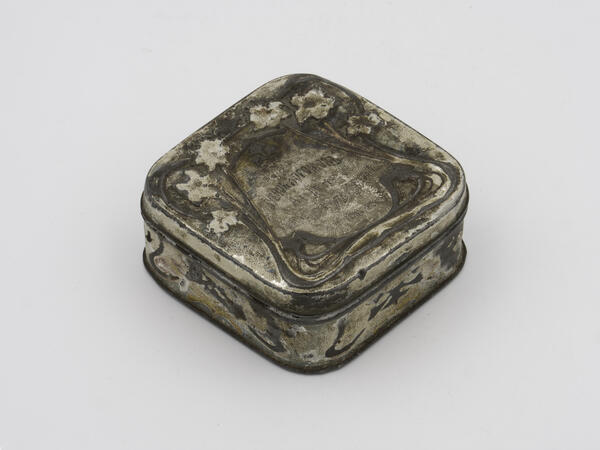
The museum collection presents a box of tooth powder, released in the late 19th — early 20th century. Tooth powder appeared in the Yenisei province much later than in other Russian regions. Initially, it was used only by wealthy and educated representatives of Siberian society — nobles and merchants.
Chalk-based dental powders were widely used. The use of chalk was suggested by dentist John Harris in the middle of the 19th century. The first tooth powders were made in pharmacies following special recipes, then industrial production was developed. Chalk and magnesium carbonate made the basis of the product. For a change, finely ground flower leaves were added to the tooth powder, and the medicinal properties of the powder were given by the fruits of medicinal plants: cinnamon, sage, violets.
Later, these additives were replaced with various essential oils. Despite the fact that the composition of powders was developed by doctors and chemists, they often contained harmful abrasive substances, which the modern world long abandoned. For example, the first powders contained brick dust, crushed porcelain, and clay fragments. They also included soap.
Despite this, tooth powder spread quite quickly in Siberia. Residents of the Yenisei province also used traditional folk hygiene products. For example, they chewed the resin of needle-leaved trees (soft resin), and also rubbed their teeth with birch charcoal, which had an excellent whitening effect.
The museum collection presents a box of tooth powder, released in the late 19th — early 20th century. Tooth powder appeared in the Yenisei province much later than in other Russian regions. Initially, it was used only by wealthy and educated representatives of Siberian society — nobles and merchants.
Chalk-based dental powders were widely used. The use of chalk was suggested by dentist John Harris in the middle of the 19th century. The first tooth powders were made in pharmacies following special recipes, then industrial production was developed. Chalk and magnesium carbonate made the basis of the product. For a change, finely ground flower leaves were added to the tooth powder, and the medicinal properties of the powder were given by the fruits of medicinal plants: cinnamon, sage, violets.
Later, these additives were replaced with various essential oils. Despite the fact that the composition of powders was developed by doctors and chemists, they often contained harmful abrasive substances, which the modern world long abandoned. For example, the first powders contained brick dust, crushed porcelain, and clay fragments. They also included soap.
Despite this, tooth powder spread quite quickly in Siberia. Residents of the Yenisei province also used traditional folk hygiene products. For example, they chewed the resin of needle-leaved trees (soft resin), and also rubbed their teeth with birch charcoal, which had an excellent whitening effect.
#5
Full name: Tooth powder box
Date: late 19th — early 20th century
Technique: manufacturing
Place: Moscow
Copyright: Krasnoyarsk Regional Museum of Local History
Dimensions: 3×7×7 cm
Goskatalog Number: 10625578
Date: late 19th — early 20th century
Technique: manufacturing
Place: Moscow
Copyright: Krasnoyarsk Regional Museum of Local History
Dimensions: 3×7×7 cm
Goskatalog Number: 10625578
#6
Hatchet
#18
#7
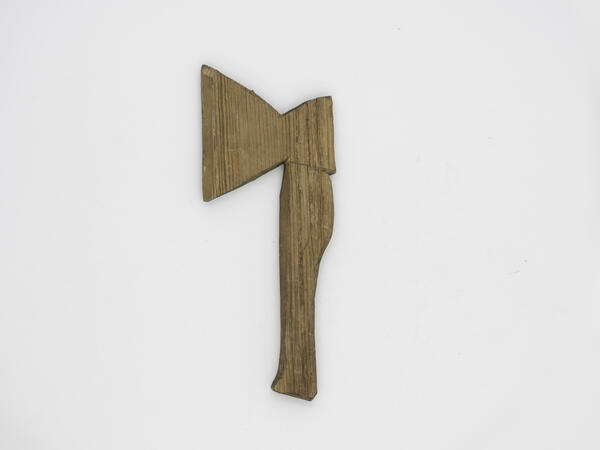
A small wooden hatchet from the museum collection belongs to the category of children’s toys that were made in imitation of household items. Since wood was the most common and inexpensive material, it could not but affect the most diverse subject matter of toys, among which those that imitated tools of labor stood out in a peasant family.
It was believed that when playing with such toys, the child got acquainted with their purpose in everyday life, was introduced to the work, and maybe acquired a particular skill. Small children, as a rule, were amused by various rattles-little bells. They were made of dried poppy seed capsules or scraps of cloth with sewn bells. Toys depicting animals — pigs, cows, horses, birds, as well as various whistles were also popular.
These kinds of toys had been made for kids since ancient times. Of course, the old toys were very different from the ones children play with today. They were mostly homemade. They were made by both parents and children themselves. The materials used were very different: straw or cloth, of which dolls were made, or wood, as in the case of a hatchet from a museum collection. Moreover, the craftsmen fantasized as best they could: birch bark, clay, cones, branches, and ropes were used to make toys. In addition, according to a number of researchers, toys in their own way personified a certain stage of childhood. For example, for young children toys stimulated movement, vision, and hearing, stimulated the simplest orientation.
Also, infants could play with various jars, little nails, and stones. In the old days, children’s toys were called poteshkas (playthings). The girls mostly amused themselves with dolls made of rags and straw. At the same time, it is interesting that the faces of the dolls were not drawn, allowing the child to get creative and paint the toy herself. Playing with dolls, the girl acquired the skills of a hostess and a mother.
There were also toys for babies in the cradle. Most often, various bells, jingles, and rattles hang on them. They were called trinkets. They were intended not only for amusement of a child, but also for the baby to be able to concentrate the sight at bright objects. In addition, the parents sincerely believed that trinkets could protect the baby from the ‘evil eye’ or from evil spirits.
All children’s toys were treated with great care. They were never scattered around the hut, they were kept in a certain place. Sometimes the toys were inherited as a dowry of a girl getting married, and then passed to her children.
It was believed that when playing with such toys, the child got acquainted with their purpose in everyday life, was introduced to the work, and maybe acquired a particular skill. Small children, as a rule, were amused by various rattles-little bells. They were made of dried poppy seed capsules or scraps of cloth with sewn bells. Toys depicting animals — pigs, cows, horses, birds, as well as various whistles were also popular.
These kinds of toys had been made for kids since ancient times. Of course, the old toys were very different from the ones children play with today. They were mostly homemade. They were made by both parents and children themselves. The materials used were very different: straw or cloth, of which dolls were made, or wood, as in the case of a hatchet from a museum collection. Moreover, the craftsmen fantasized as best they could: birch bark, clay, cones, branches, and ropes were used to make toys. In addition, according to a number of researchers, toys in their own way personified a certain stage of childhood. For example, for young children toys stimulated movement, vision, and hearing, stimulated the simplest orientation.
Also, infants could play with various jars, little nails, and stones. In the old days, children’s toys were called poteshkas (playthings). The girls mostly amused themselves with dolls made of rags and straw. At the same time, it is interesting that the faces of the dolls were not drawn, allowing the child to get creative and paint the toy herself. Playing with dolls, the girl acquired the skills of a hostess and a mother.
There were also toys for babies in the cradle. Most often, various bells, jingles, and rattles hang on them. They were called trinkets. They were intended not only for amusement of a child, but also for the baby to be able to concentrate the sight at bright objects. In addition, the parents sincerely believed that trinkets could protect the baby from the ‘evil eye’ or from evil spirits.
All children’s toys were treated with great care. They were never scattered around the hut, they were kept in a certain place. Sometimes the toys were inherited as a dowry of a girl getting married, and then passed to her children.
#8
Full name: “Hatchet” children’s toy
Date: the beginning of the 20th century
Technique: wood, handiwork
Place: Boguchany village, Kansky district, Yenisei province
Copyright: Krasnoyarsk Regional Museum of Local History
Dimensions: 12,2×6×0,9 cm
Goskatalog Number: 20046025
Date: the beginning of the 20th century
Technique: wood, handiwork
Place: Boguchany village, Kansky district, Yenisei province
Copyright: Krasnoyarsk Regional Museum of Local History
Dimensions: 12,2×6×0,9 cm
Goskatalog Number: 20046025
#9
Baby bottle teat
#19
#10
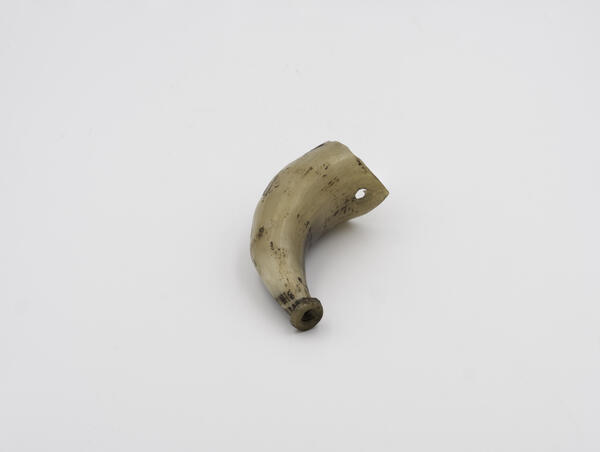
Horn baby bottles were an ancient analog of modern baby feeding bottles. They were made of a cow’s horn and a dug. The sharp end of the horn was sawed off and a groove was made inside to attach the ‘teat’. Cow skin was kept in thick brine, after which it was thoroughly washed and tied to a horn.
Cow’s milk was poured into such a horn and given to the child. In addition, teats made of linen cloth with breadcrumb, beetroot, or butter mixed with honey wrapped in it were common. Usually, such teats were given to the baby in the first year of its life. Of course, hygiene-wise, they were dangerous. After many hours, the milk turned sour, the bread also turned sour and had a detrimental effect on the children’s stomach.
Archaeologists have information about many vessels intended for child nursing. They were often used from the first days of the child’s life in case the mother could not feed it on her own or find a wet nurse. The most ancient devices date back to the second millennium BC. For example, the ancient Romans used oblong clay vessels with a spout, which, for a long time, scientists took for lamps or vases. However, the presence of remnants of animal milk components convinced them that this was the prototype of a modern baby bottle. Similar terracotta containers were found in the ancient Greeks. They used them for the first complementary food, which was usually made of a mixture of wine and honey. Vessels intended for children were usually richly decorated and painted. Among them, there were bottles in the form of fish, pigs, or other animals.
The first familiar teats for children appeared only in the 19th century. At that time, the invention of rubber was a revolutionary breakthrough in many areas of production. The first rubber teat was patented by Julia Prat in 1845. However, at first, they were not popular because of the strange smell and taste. The advantage was that the products could be washed and sterilized. The first rubber teats were attached to glass feeding bottles. The first such model was patented in 1841 by Charles Windshill.
Cow’s milk was poured into such a horn and given to the child. In addition, teats made of linen cloth with breadcrumb, beetroot, or butter mixed with honey wrapped in it were common. Usually, such teats were given to the baby in the first year of its life. Of course, hygiene-wise, they were dangerous. After many hours, the milk turned sour, the bread also turned sour and had a detrimental effect on the children’s stomach.
Archaeologists have information about many vessels intended for child nursing. They were often used from the first days of the child’s life in case the mother could not feed it on her own or find a wet nurse. The most ancient devices date back to the second millennium BC. For example, the ancient Romans used oblong clay vessels with a spout, which, for a long time, scientists took for lamps or vases. However, the presence of remnants of animal milk components convinced them that this was the prototype of a modern baby bottle. Similar terracotta containers were found in the ancient Greeks. They used them for the first complementary food, which was usually made of a mixture of wine and honey. Vessels intended for children were usually richly decorated and painted. Among them, there were bottles in the form of fish, pigs, or other animals.
The first familiar teats for children appeared only in the 19th century. At that time, the invention of rubber was a revolutionary breakthrough in many areas of production. The first rubber teat was patented by Julia Prat in 1845. However, at first, they were not popular because of the strange smell and taste. The advantage was that the products could be washed and sterilized. The first rubber teats were attached to glass feeding bottles. The first such model was patented in 1841 by Charles Windshill.
#11
Full name: Horn-baby feeding bottle
Date: the 19th century
Technique: handicraft
Place: Yeniseysk Governorate, Kansky district
Copyright: Krasnoyarsk Regional Museum of Local History
Dimensions: 12,8×4 cm
Goskatalog Number: 22388911
Date: the 19th century
Technique: handicraft
Place: Yeniseysk Governorate, Kansky district
Copyright: Krasnoyarsk Regional Museum of Local History
Dimensions: 12,8×4 cm
Goskatalog Number: 22388911
#12
Faceless doll
#20
#14
Rag dolls in the Russian folk tradition had existed since ancient times. According to researcher Galina Dain: ‘Back in the middle of the twentieth century, rag dolls were played with in every family in the village and city. And only since the 1960s, when industrial enterprises began to produce millions of batches of plastic toys, the tradition of making a rag doll almost died out. However, it did not disappear completely, having been deeply engraved in people’s memory.’
The rag doll was the most common toy in Russia. Such toys could be found in every farmhouse. They were created not only for entertainment. One of the main purposes of the Slavic folk doll was to protect the house and its inhabitants. It was often used in magical rituals and holidays: special dolls were made for a wedding, the birth of a child, and other important events.
It was believed that only a woman was able to make a strong amulet that would protect a child. Dolls from rags and straw were mainly created for girls to play with. At the same time, people did not draw faces on dolls, allowing the child to use imagination and paint the toy herself. Initially, the ‘faceless’ dolls symbolized the purity of thoughts. In ancient times, the Slavs did not draw and embroider their faces, so that evil spirits would not enter them and other people’s evil thoughts would not be reflected.
Another important feature of Russian folk dolls was the way they were made: they were made without using scissors and needles. This technique was also supposed to protect the child from the evil eye. This is where the names of some dolls also come from: ‘rvanka’ was a doll made from scraps of cloth torn by hands (from the Russian verb ‘to tear’ ‘rvat’), and ‘motanki’ were dolls made from threads (from the Russian verb ‘to wind’ ‘motat’).
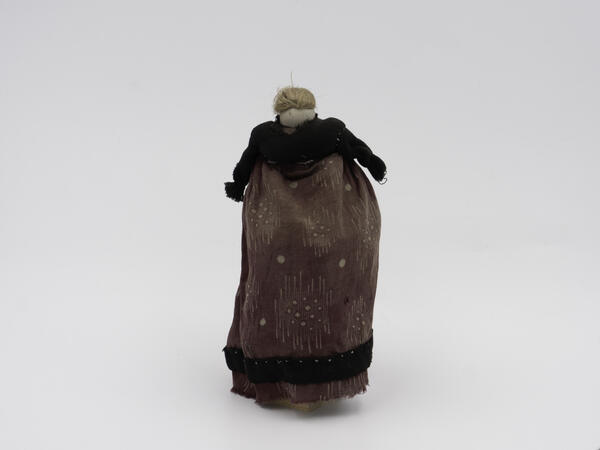
All the toys were homemade then. Moreover, in each family, dolls were made in their own way, so it was next to impossible to find two identical ones. They were made by both parents and children themselves. The materials used were very different: straw and the fabric like on the doll from the museum exhibition were used. Also, the craftswomen used birch bark, clay, cones, branches, and ropes. It was believed that by playing with dolls, the girl acquired the skills of a hostess and a mother.
Up to the age of 7, both girls and boys played with dolls. In the future, the ability to make dolls was considered an advantage. If the girl was good at making toys, it meant that she would become a good craftswoman. Children learned everyday things from making dolls: sewing, embroidery, spinning, and mending. Sometimes toys were inherited as a dowry of a girl getting married. Then these toys were passed to her children.
The rag doll was the most common toy in Russia. Such toys could be found in every farmhouse. They were created not only for entertainment. One of the main purposes of the Slavic folk doll was to protect the house and its inhabitants. It was often used in magical rituals and holidays: special dolls were made for a wedding, the birth of a child, and other important events.
It was believed that only a woman was able to make a strong amulet that would protect a child. Dolls from rags and straw were mainly created for girls to play with. At the same time, people did not draw faces on dolls, allowing the child to use imagination and paint the toy herself. Initially, the ‘faceless’ dolls symbolized the purity of thoughts. In ancient times, the Slavs did not draw and embroider their faces, so that evil spirits would not enter them and other people’s evil thoughts would not be reflected.
Another important feature of Russian folk dolls was the way they were made: they were made without using scissors and needles. This technique was also supposed to protect the child from the evil eye. This is where the names of some dolls also come from: ‘rvanka’ was a doll made from scraps of cloth torn by hands (from the Russian verb ‘to tear’ ‘rvat’), and ‘motanki’ were dolls made from threads (from the Russian verb ‘to wind’ ‘motat’).
All the toys were homemade then. Moreover, in each family, dolls were made in their own way, so it was next to impossible to find two identical ones. They were made by both parents and children themselves. The materials used were very different: straw and the fabric like on the doll from the museum exhibition were used. Also, the craftswomen used birch bark, clay, cones, branches, and ropes. It was believed that by playing with dolls, the girl acquired the skills of a hostess and a mother.
Up to the age of 7, both girls and boys played with dolls. In the future, the ability to make dolls was considered an advantage. If the girl was good at making toys, it meant that she would become a good craftswoman. Children learned everyday things from making dolls: sewing, embroidery, spinning, and mending. Sometimes toys were inherited as a dowry of a girl getting married. Then these toys were passed to her children.
#15
Full name: Faceless doll in a black cardigan and dark cherry skirt with a graphic pattern and a black stripe
Date: the beginning of the 20th century
Technique: fabric, hurds
Place: Kansky district, Yenisei province
Copyright: Krasnoyarsk Regional Museum of Local History
Dimensions: 17×10×5 cm
Goskatalog Number: 22388906
Date: the beginning of the 20th century
Technique: fabric, hurds
Place: Kansky district, Yenisei province
Copyright: Krasnoyarsk Regional Museum of Local History
Dimensions: 17×10×5 cm
Goskatalog Number: 22388906
#16
Ministry of Culture of the Russian Federation
read morehide
00:00
00:00
1x
Box, Hatchet, Baby bottle teat, Faceless doll
0
 Point your smartphone camera to open in the app
Open in app
Share