Font
Color
Graphics
Изображение точки

To see AR mode in action:

1. Install ARTEFACT app for iOS or Android;

2. Find the exhibition «Culture and Way of Life of the Adyghes»

3. Push the «Augmented reality» button and point your phone's camera at the exhibit;

Скрыть точки интересаПоказать точки интереса
Показать в высоком качестве

Cradle

Creation period
Late 19th c.
Technique
Carving, grinding (wood)
11
Open in app
#1
Cradle
#4
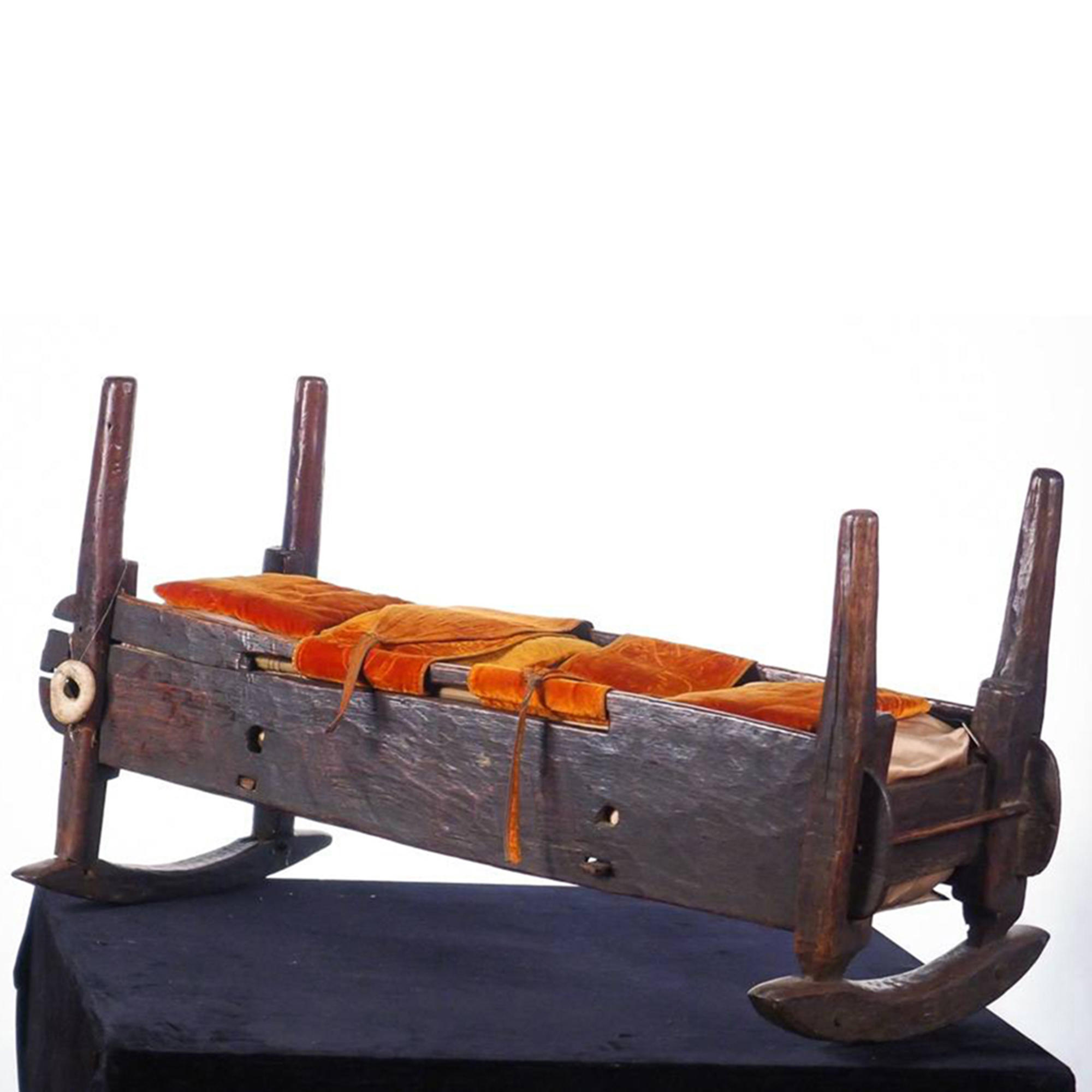
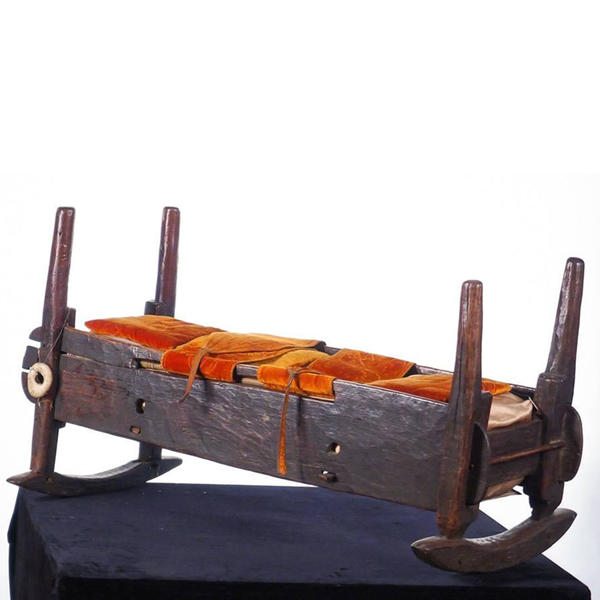
For small children, the Adyghes made wooden cradles, which were called ‘kushe’. Arc-shaped skids were attached to the backrests of the crib, with the help of which the cradle could be rocked. A mattress stuffed with straw or sheep wool was laid at the bottom. And the baby was put into bed only after being swaddled tightly. Thus, the child remained dry throughout the night, and also could not hang over through the low sides of the cradle and fall out of it. 

The Adyghes often decorated cradles with symbolic objects. To the sides they would tie coins and animal claws. And under the pillow they could put a piece of iron or a small dagger. People believed that these peculiar amulets protected the small and therefore weak child from evil spirits and unpleasant incidents.

#7
In the old days, the cradle for a newborn was not made by the parents themselves, but by their relatives. According to some researchers, the child was presented with its first bed by its mother’s family. Others say that everything depended on the baby’s sex: for the boy the cradle was made in the house of his maternal grandmother, and for the girl – paternal.
Before the baby was placed in the cradle for the first time, they put a white egg into it. It symbolised a life ‘till grey hair’ and thereby promised the child longevity. And it was also customary to put a cat in the cradle for a while so that the newborn could sleep as tight and blissfully as this animal.
#8
For the first time, the baby was put in the ‘kushe’ when it turned two weeks old. It was a solemn ceremony in which only women could be present: the mother herself, relatives and female neighbours of the family. The newborn was not cradled by her mother, but by an elderly woman from her husband’s clan. Such an honourable role could be assigned only to a respected and wise relative who had already raised several children of her own. 

According to tradition, baby cots were made of hawthorn. The Adyghes had revered this shrub since ancient times. The scientist Sarabi Mafedzev explained this tradition by the fact that during a certain treatment the hawthorn could acquire a reddish-brown, similar to ochre, shade. It was this colour that played an important role in the cults of Sun, Fire, and the deity of thunder Shible. Therefore, the Adyghes believed that the red cradle was connected with the celestial body and therefore gave the baby lying in it health, strength, longevity and a good heart. But they did not recommend making beds from elderberry: according to legend, children from elderberry cradles grew up fiery and unrestrained, with a very nasty temper.
read morehide
00:00
00:00
1x

Cradle

Creation period
Late 19th c.
Technique
Carving, grinding (wood)
11
Point your smartphone camera to open in the app
Share
VkontakteOdnoklassnikiTelegram
Share on my website
Copy linkCopied
Copy
Open in app
To see AR mode in action:
  1. Install ARTEFACT app for 
  2. iOS or Android;
  3. Find and download the «Paintings in Details» exhibition
  4. Push the «Augmented reality» button and point your phone's camera at the painting;
  5. Watch what happens on your phone screen whilst you flip through the pictures.
 
We use Cookies
Cookies on the Artefact Website. We use cookies to ensure that we give you the best experience on our website. If you continue without changing your settings, we'll assume that you are happy to receive all cookies on the Artefact website. However, if you would like to, you can change your cookie settings at any time.
Learn more about useHide
Content is available only in Russian

X

Нашли опечатку?...

%title%%type%