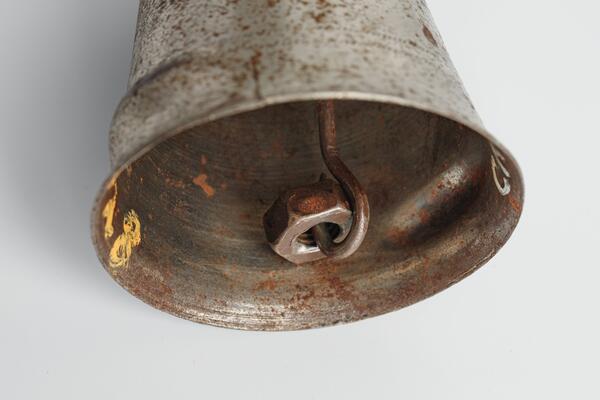
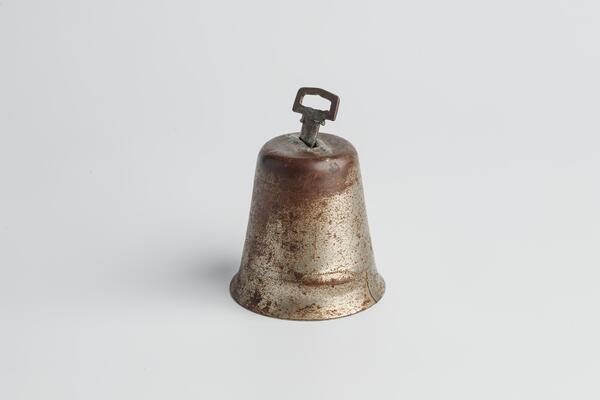
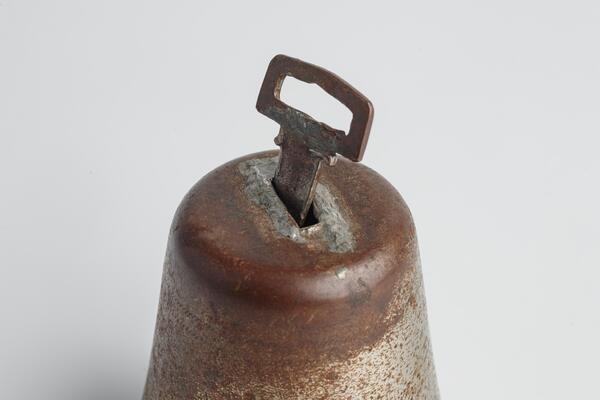
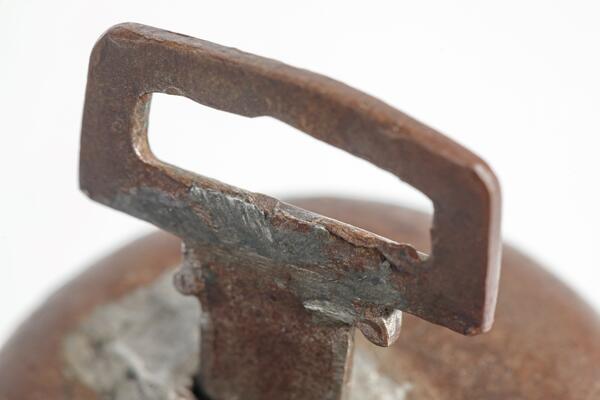
The Museum of Intelligence Officer Nikolai Ivanovich Kuznetsov in the village of Zyryanka displays a small bell once used by teachers at the Zyryanka elementary school to signal the start of lessons. The bell is made of chrome-plated iron.
In 1918, the bell rang for the first time for six-year-old Nika — the future partisan Nikolai Kuznetsov — who had just enrolled in the village school. Yet his journey toward knowledge had begun long before that first classroom lesson, in the quiet warmth of his family home. There, his older sister Agafya (affectionately called Gasia) became his first teacher. Before the 1917 Revolution, Gasia had completed six grades at a girls’ gymnasium in Kamyshlov — a rare achievement for a village girl at the time.
The books with bright covers she brought back from the city opened a window to the wider world for young Nika. Gasia would read aloud while he traced the lines with his finger, memorizing poems and retelling tales as if he’d written them himself. By the age of six, he was reading fluently; by eight, he knew dozens of poems by heart and recited them with such enthusiasm that his listeners couldn’t help but smile.
His father, too, contributed to Nika’s education, often bringing home books — mostly tales of legendary and historical Russian heroes, figures he deeply admired. He told his son stories of Mikula Selyaninovich, Ivan Susanin, and Yermak Timofeyevich. For little Nika, these were more than just bedtime tales; they shaped his understanding of courage, duty, and love for the homeland. Years later, deep behind enemy lines during World War II, Nikolai Kuznetsov would recite “Ivan Susanin” and Lermontov’s “Borodino” to his comrades in “The Winners” partisan unit around a night campfire.
In 1920, Gasia became a teacher at the very school where Nika studied — an event celebrated by the entire village, as the Kuznetsovs welcomed their first educator. Each morning, the siblings walked to school together: Gasia in her neatly ironed dress, Nika in a crisp white shirt, and their younger sister Lida in a frilly skirt. In a village where most families made do with wooden rollers, the Kuznetsovs’ iron was a prized possession — and a symbol of their shared reverence for discipline, hard work, and learning.
The tradition of signaling the start of lessons dates back to antiquity. As early as the 4th century BCE, Plato’s Academy near Athens used a clepsydra — a water clock with three interconnected vessels — to mark time. When the water overflowed, it forced air through a tube fitted with a flute. This sound announced the beginning of classes.
The widespread use of bells in schools, however, began in the 17th century, thanks to the Czech humanist educator John Amos Comenius. He introduced the bell as a tool of order and discipline. In his schools, teachers rang hand-held devices — table bells, gongs, or small handbells — to call students to attention. The electric bell familiar to us today did not appear until the mid-19th century.