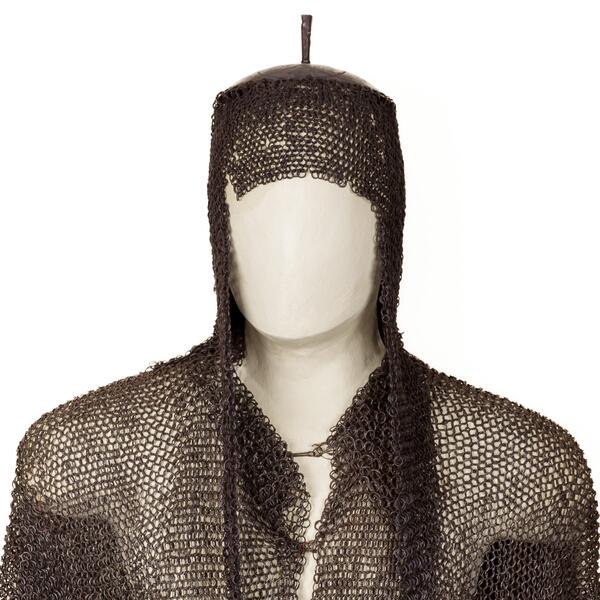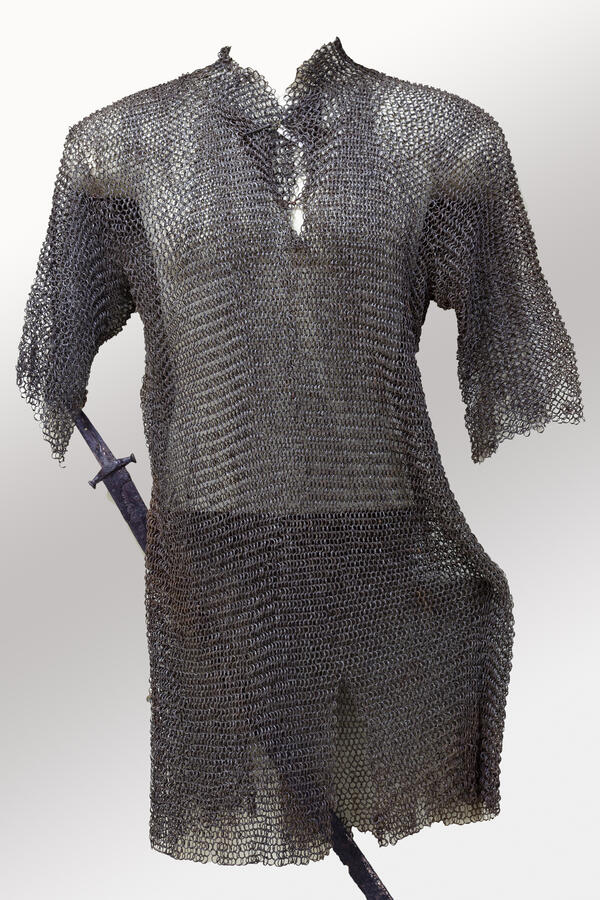
Chain mail is a type of armor that has been widespread in Europe and Asia and known since ancient times. The peoples of the Caucasus, Central Asia and India used chain mail up until the 19th century, and the earliest fragment of mail dates back to the 3rd century BC. The reason this type of armor was so popular can be easily explained — the manufacturing process was relatively easy. To create mail armor, the only things needed were just a few kilograms of iron and a device for pulling wire. However, chain mail was expensive since it required a huge amount of laborious work: it took an artisan over 100 hours to draw the wire, cut it, and join the rings together.
At different times, different peoples had their own ways of linking the rings together. The latest versions were incredibly durable. In Europe, chain mail was eventually replaced by plate armor, which, nevertheless, had chain mail elements. However, chain mail continued to be widely used in the Caucasus. Among other things, this was due to the terrain characteristics — chain mail armor provided more freedom of motion.
Circassian chain mail was often shorter than its counterparts in Western Europe. It was a short-sleeved shirt woven from rings with a small V-shaped neck hole and slit collar with a typical hook-and-eye fastener. This chain mail differed from the ones made in Europe through its lightness and durability. The rings were welded — this provided tear resistance. Circassian noblemen wore chain mail as a vital part of protection. Underneath, they put on a padded garment, which softened the blow, protected against the cold and prevented the armor from rubbing the skin. These arming doublets were sewn from various fabrics and stuffed with cotton wool.
In the Caucasus, warriors continued to wear chain mail even after firearms became widely used. The technique of weaving and soldering rings made the chain mail quite capable of stopping a bullet from smoothbores. Warriors used this type of armor until the end of the Caucasian War. This type of protective equipment finally went out of use only when rifles appeared in the second half of the 19th century.