Font
Color
Graphics
Изображение точки

To see AR mode in action:

1. Install ARTEFACT app for iOS or Android;

2. Find the exhibition «Zaraysk Kremlin. Painting and graphics»

3. Push the «Augmented reality» button and point your phone's camera at the exhibit;

Скрыть точки интересаПоказать точки интереса
Показать в высоком качестве

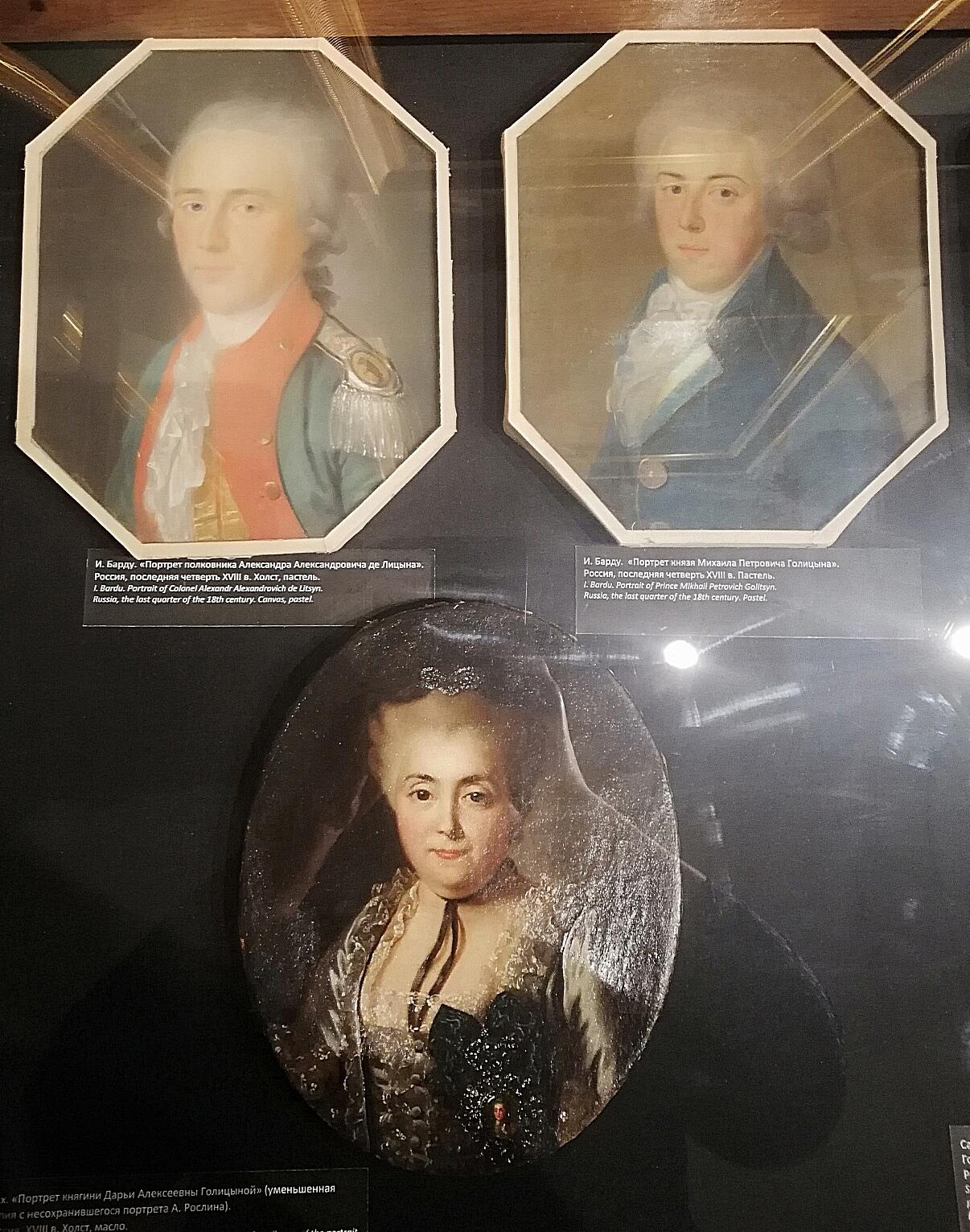
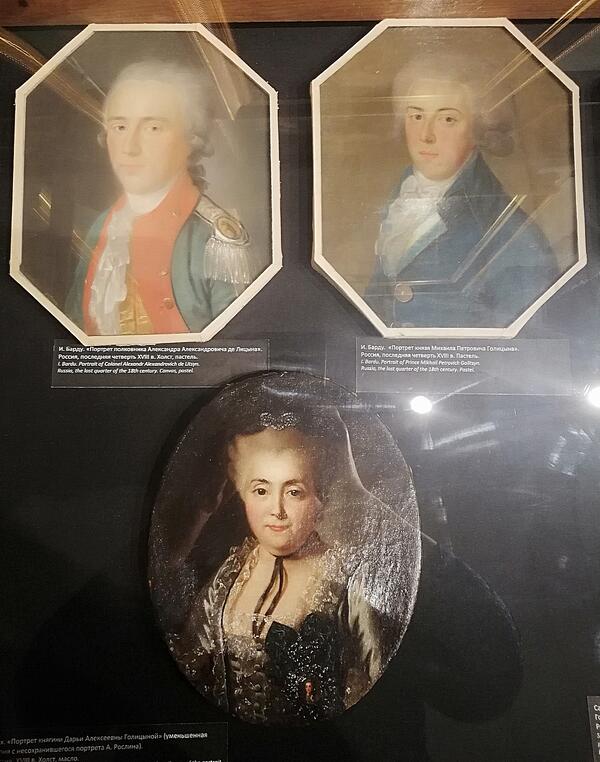
Princes Golitsyn

Creation period
Последняя четверть XVIII век
Place of сreation
Россия
Dimensions
28х23, 30х24, 27,5х22,5
Technique
Холст, пастель, масло
Collection
2
Open in app
#5
#1
Иохан Барду, неизвестный художник.
Портреты князей Голицыных.
#2
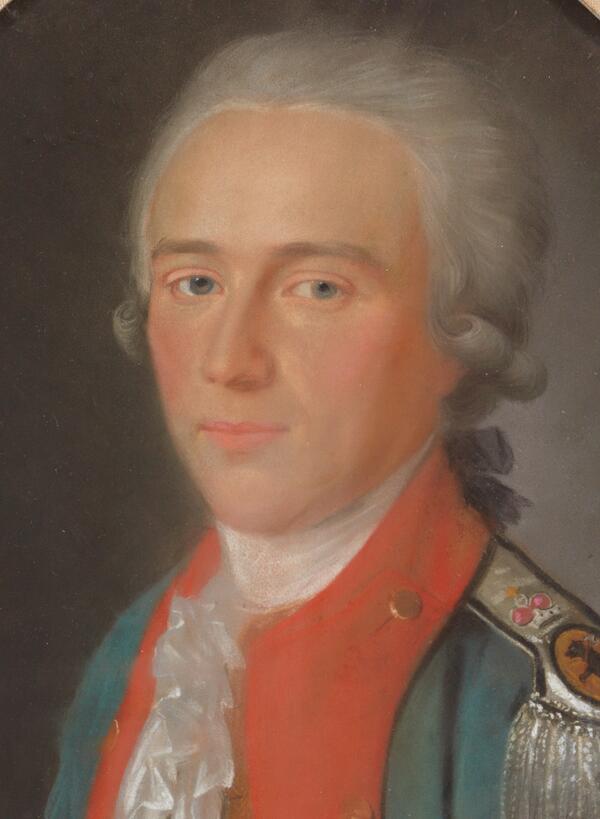
Portrait of A.A. de Litsyn
Alexander Alexandrovich de Litsyn (1768-1789) was the illegitimate son of Prince Alexander Mikhailovich Golitsyn and the Hungarian Countess von Klupfel. Thanks to the efforts of his father, he, like his two sisters, received the nobility from the Holy Roman Emperor Joseph II. Then with Her Imperial Majesty’s Edict of Catherine II, all three entered into Russian allegiance.

In the portrait we see a young officer in a white powdered wig, his eyes are serious, but a slight smile crosses his lips. The young man is not more than 20 years old. He is wearing the uniform of the Yaroslavl Infantry Regiment, in which he served as a colonel. Since 1785, Alexander de Litsyn was married to Princess Anna Alexandrovna Gruzinskaya, daughter of the Georgian Tsarevich Alexander Bakarovich Bagration-Gruzinsky. She followed her husband on his military campaigns in the Russian-Turkish war of 1787-1791. Unfortunately, the marriage, like the life of Alexander de Litsyn, did not last long - he was seriously wounded during the assault of Ochakov in December 1788, and died the following year.

Alexander Alexandrovich de Litsyn’s portrait is one of two original works by the Swiss pastel painter Johann Bardou kept in the museum. In Russia, pastel portrait has long been considered the job of foreign artists: there are practically no Russian pastel painters of the 18th century except Gabriel Ivanovich Skorodumov. This form of art became more widespread in the second half of the 18th century. Basically, pastels were used for the execution of intimate portraits. Among those who paid tribute to such works were the famous Russian portrait painters Dmitry Grigorievich Levitsky and Fyodor Stepanovich Rokotov.

The biography and works of Johann Bardou have hardly been studied. It is known that he studied at the Berlin Academy of Arts, and from the 1780s he worked in Russia. He created mainly small octagon-shaped works.

Among the works of Bardou, the portraits of Empress Catherine II and Prince Alexander Mikhailovich Golitsyn, painted by him in 1775 in Warsaw, are especially famous.
#3
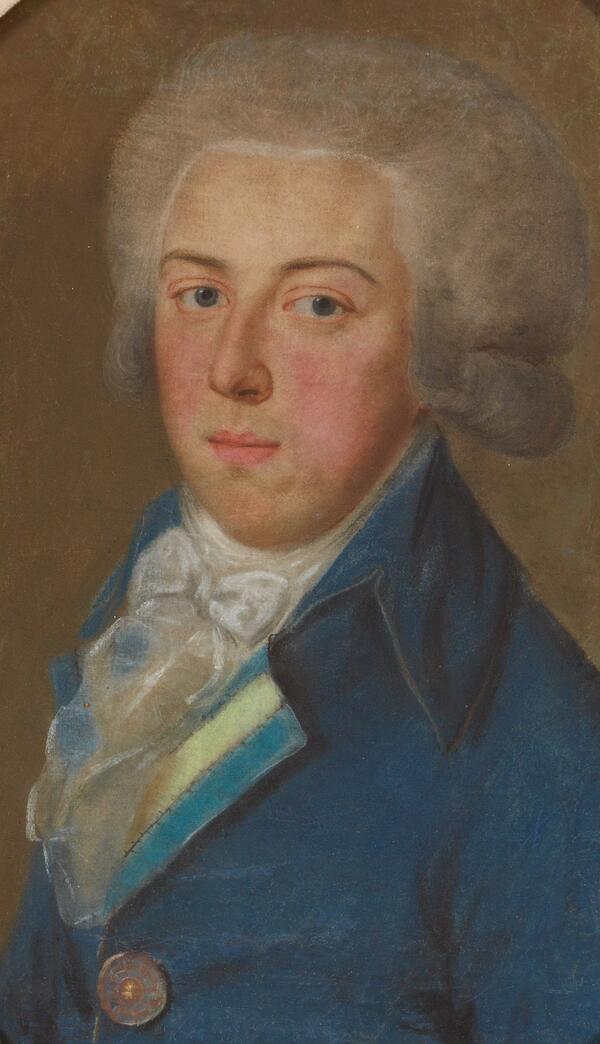
Prince Mikhail Petrovich Golitsyn was a privy councilor, stallmaster, chamberlain and bibliomaniac from the Golitsyn family. The prince twice held the post of the Bogorodsky district leader of the nobility. His father, Pyotr Mikhailovich Golitsyn, was one of the leaders of the suppression of the Pugachev uprising and owned several honorary military awards. His son, Michael, served at court and did not make much progress in this field. Having received the rank of chamberlain in 1806, he retired and moved to Moscow.

Collecting was the real passion of Prince Mikhail Golitsyn. Many court officials of St. Petersburg pre-arranged mansions for themselves in Moscow, where they moved after completing their service. They all furnished their homes with special taste, decorating them with a variety of art and luxury items. However, even in this diversity, Golitsyn’s collection stood apart, because it was his house that contemporaries called the “Moscow Hermitage”.

The prince approached to his collection very seriously, he took part in almost all auctions of the early 19th century. Within these auctions Golitsyn became the owner of many interesting and rare works. At such events, he bought individual items related to the collections of Moscow completists Nikolai Fedorovich Khitrovo, Mikhail Mikhailovich Golitsyn, Pyotr Gavrilovich Golovkin and others. The prince also took part in the sale of the gallery of the Golitsyn hospital in 1817-1818. Among the main works in the collection of Mikhail Petrovich were works of the Flemish school: canvases by Peter Paul Rubens, David Teniers, Jacob van Ruisdael and other famous authors. The Count’s collection also included paintings by the Italian painter Antonio da Correggio. Golitsyn’s collection also included antique sculptures and a huge library with many rare publications and manuscripts.

Art objects were kept in the city estate of Golitsyn on Staraya Basmannaya Street in Moscow, as well as in the Pekhra-Yakovlevskoye estate near Moscow.

Of course, having such an expensive hobby, the prince eventually went bankrupt, and after 1825 he was forced to sell his collection. The richest library, which included books in European languages, was transported by the prince to Paris. In 1825 he published a catalog of his book collection and sold everything at auction. Mikhail Golitsyn died in poverty, being in the care of his cousin Sergei Mikhailovich Golitsyn.
Portrait of Prince M.P. Golitsyn
#4
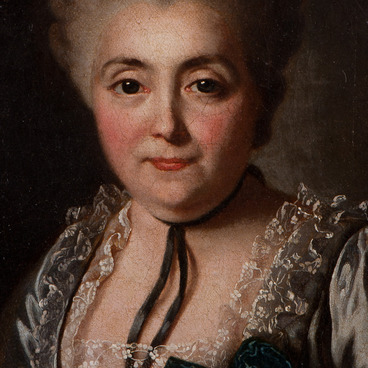
Portrait of Princess D.A. Golitsyna
Princess Daria Alekseevna Golitsyna (1724-1798) was the youngest daughter of Prince Alexei Matveyevich Gagarin from a marriage with Anna Petrovna Shafirova. She was the maid of honor of Elizaveta Petrovna, and later was appointed, together with her sister, to be the lady in waiting of Grand Duchess Ekaterina Alekseevna. After her sister’s death in 1746, Daria Alekseevna married Alexander Mikhailovich Golitsyn, who had previously proposed to her sister. The princess won not only the heart of Adjutant General Golitsyn, but also the future empress. Although she was with the Grand Duchess for much less time than her older sister, she was in good grace of Catherine.

In 1773, Princess Golitsyna was granted the status of the lady in waiting - the highest court title of a woman serving with the Empress, and was also awarded the Order of St. Catherine - in fact, the second in seniority in the Russian Empire at that time.

Daria Alekseevna led an active social life: she arranged balls, all kinds of concerts and home performances, where one could see French comedies.

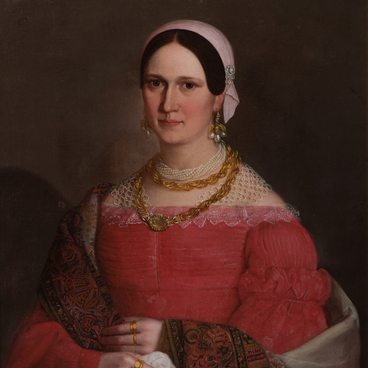
The portrait from the Zaraysk Kremlin collection is a miniature copy of the lost work by the Swedish portrait painter Alexander Roslin. From 1755 to 1777 Roslin lived and worked in Russia, where he created numerous portraits of the imperial family and other nobility. The artist was especially successful in conveying all the details of lace, fabrics, costumes and other accessories. The Swedish master was appreciated by the Parisians and created many portraits of his contemporaries.

The portrait by Roslin has been lost, but the copy made by an unknown artist has a rather high standard of performance. The picture perfectly conveys the brilliance of the socialite’s lively charm. The gaze of the princess’s dark eyes is full of intelligence and energy, her expression is not without a touch of coquetry. Daria Golitsyna is depicted with a miniature portrait of Catherine II - a sign of her special position. All the princess’ accessories are painted with great skill and precision, which speaks of the high level of the unknown copyist painter.

The portrait came to the collection from the Bogdanovs' estate in the Zaraysk district in the 1920s.
#6
read morehide
00:00
00:00
1x

Princes Golitsyn

Creation period
Последняя четверть XVIII век
Place of сreation
Россия
Dimensions
28х23, 30х24, 27,5х22,5
Technique
Холст, пастель, масло
Collection
2
Point your smartphone camera to open in the app
Share
VkontakteOdnoklassnikiTelegram
Share on my website
Copy linkCopied
Copy
Open in app
To see AR mode in action:
  1. Install ARTEFACT app for 
  2. iOS or Android;
  3. Find and download the «Paintings in Details» exhibition
  4. Push the «Augmented reality» button and point your phone's camera at the painting;
  5. Watch what happens on your phone screen whilst you flip through the pictures.
 
We use Cookies
Cookies on the Artefact Website. We use cookies to ensure that we give you the best experience on our website. If you continue without changing your settings, we'll assume that you are happy to receive all cookies on the Artefact website. However, if you would like to, you can change your cookie settings at any time.
Learn more about useHide
Content is available only in Russian

X

Нашли опечатку?...

%title%%type%