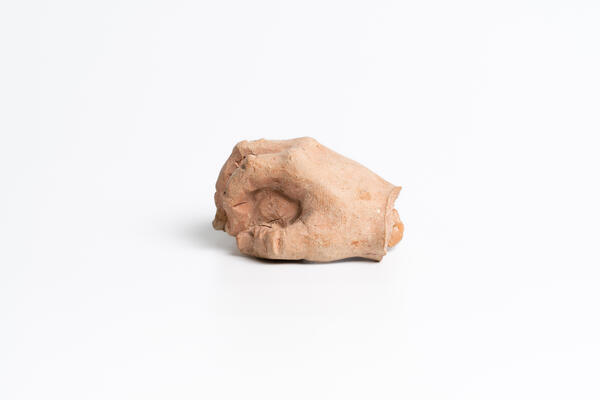
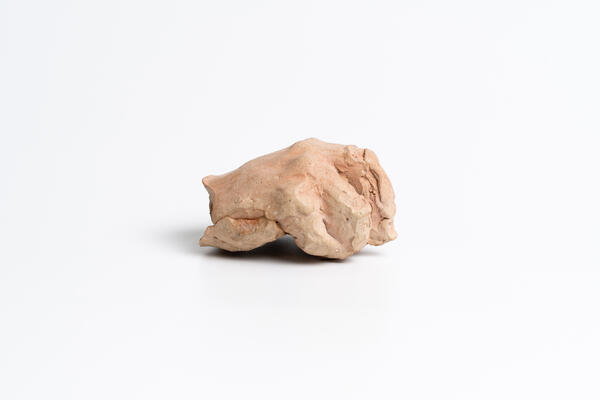
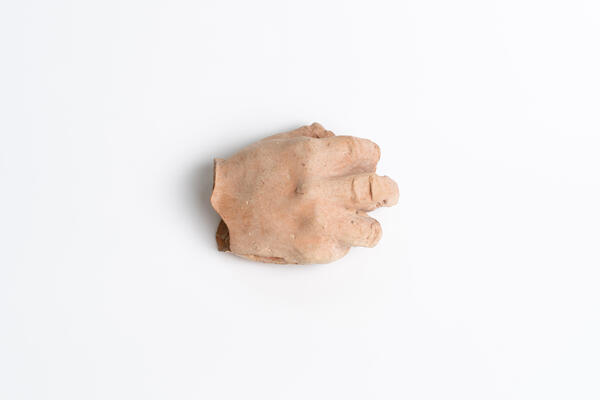
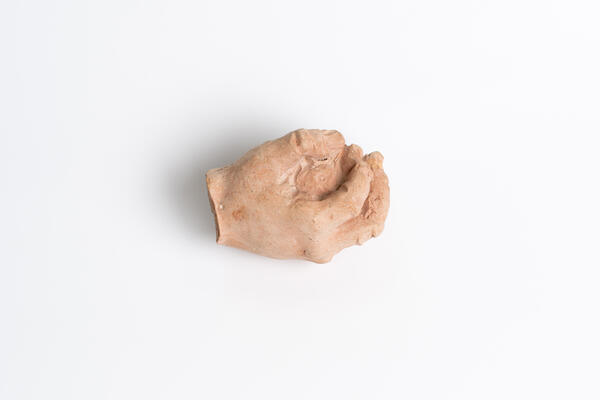
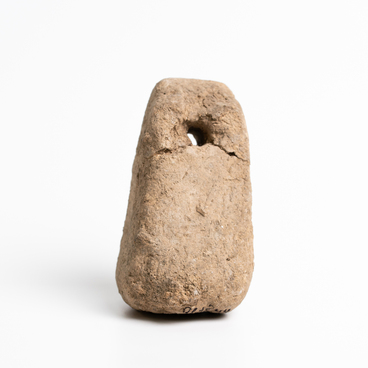
The exhibition features a fragment of a ceramic statue of Heracles from the Belyaus settlement. It features a relief image of the hero’s fingers and nails, with the muscles of the hand shown in anatomically accurate manner. The fingers either clutch some object or are shown this way without a reason. The popularity of Heracles among the inhabitants of Chersonesus and its agricultural lands (chora) can be explained by the fact that these cities were founded by immigrants from the Dorian city of Heraclea Pontica, a city-state of Megara. It was believed that Heracles was the mythical founder of Heraclea Pontica and the protector of the city and its surroundings.
The colonists from Heraclea Pontica brought the cult of Heracles to Chersonesus. There, he was also revered as the savior and protector of the city and its agricultural lands in the Northwestern Crimea. The origin of the cult of Heracles in Chersonesus can be traced back to the early 4th century BCE. During the second half of the 4th century BCE, the cult began to develop rapidly and gained popularity. In fact, it acquired the status of a nationwide cult — perhaps in this role it was adopted in the metropolis. In the 4th and 3rd centuries BCE, Heracles was primarily revered as a defender and guardian of the borders. The heroic aspect of his life was emphasized at this time.
By the last third of the 3rd century BCE, the cult of Heracles started to lose its significance. This was due to the city’s economic and political crisis. Initially, all figurines were created by craftsmen manually, but over time, a significant change occurred in the coroplastic art. Craftsmen began to make molds based on finished statues, one or several depending on the size and complexity of the statue. The mold was fired, and a new statue could be created using the impression method, which looked exactly the same. All these factors contributed to the mass production of terracotta statues and their spread in Greek colonies, including the territory of the Northern Black Sea region.
The technique of creating figurines using molds was brought to this area. In local workshops, craftsmen began to make figurines using molds. Artisans moved from one city to another, transferring the techniques and skills of their trade to a new location, leading to the spread of this art form.