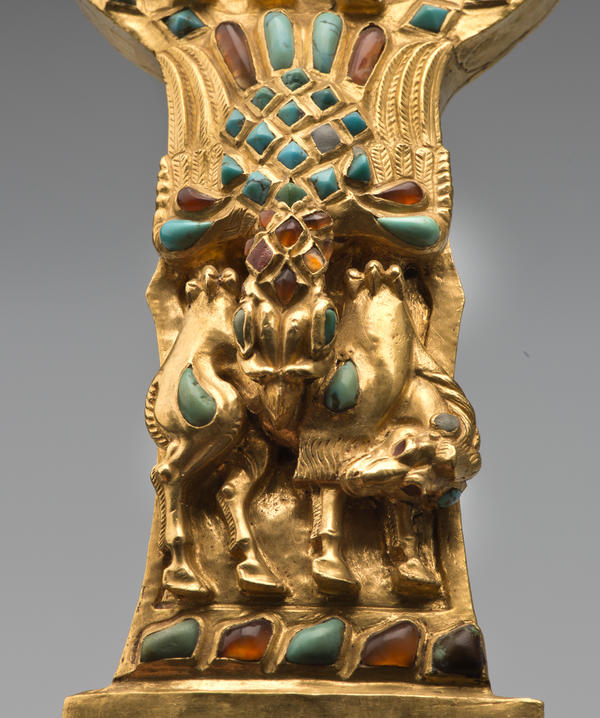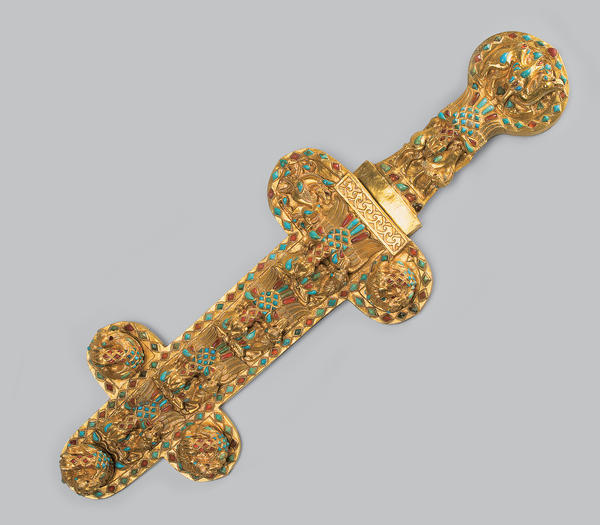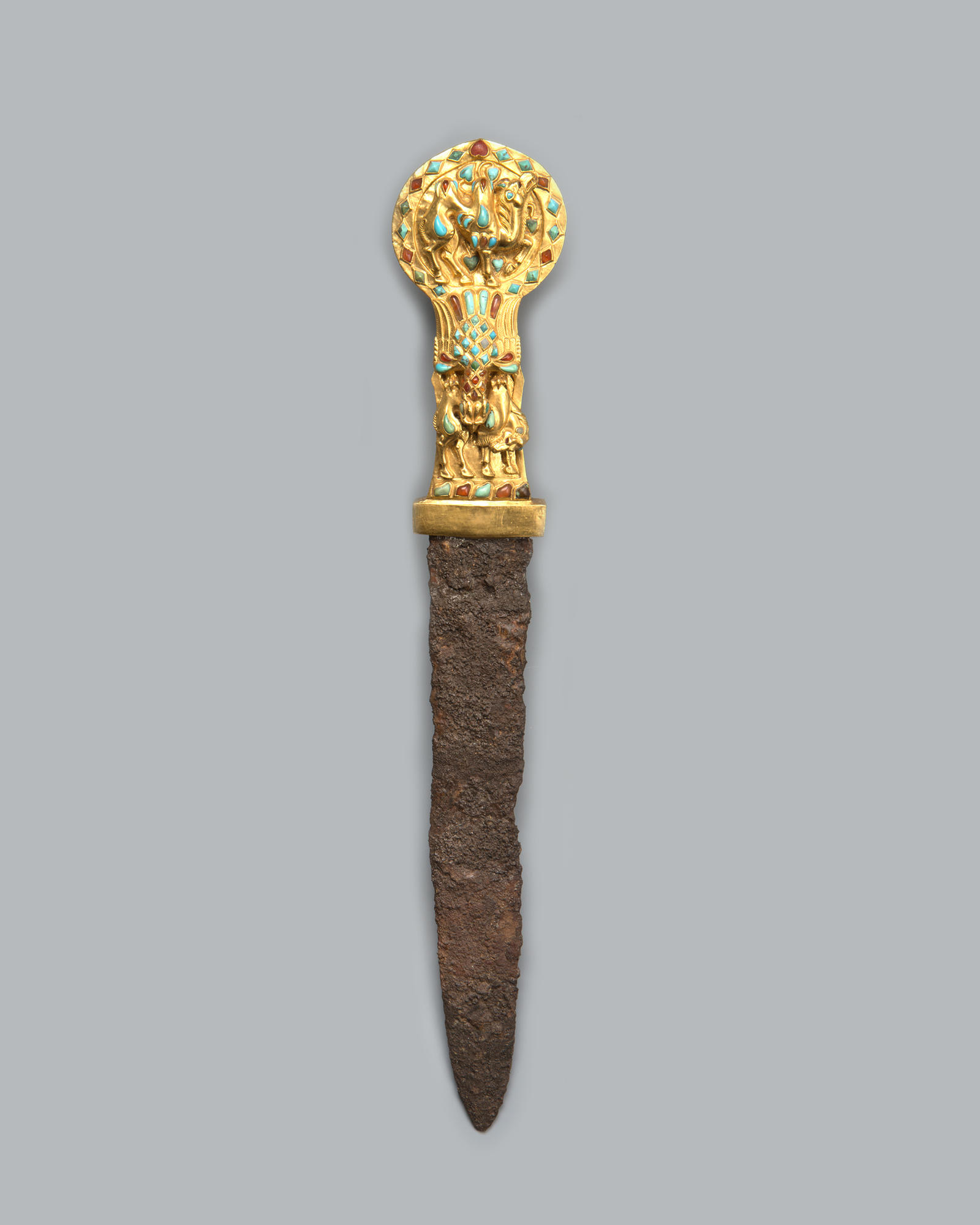


The sword from the collection of Azov Historical-Archaeological and Paleontological Museum-Reserve is a very rare sample of Sarmatian weapons. It would be attached to the warrior’s sword belt, on the right side according to Sarmatian custom. In Iranian-speaking nomads a sword, in addition to its primary function, had other functions as well. It was the embodiment of the god of war, it functioned as a social symbol, a sign of the warriors — the highest class even kings originated from, according to the legend.
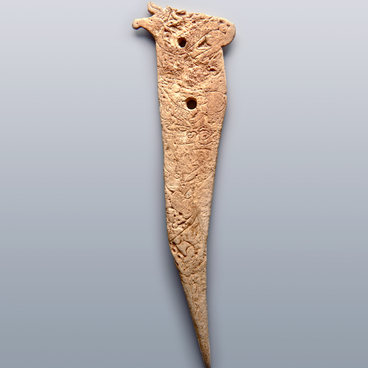
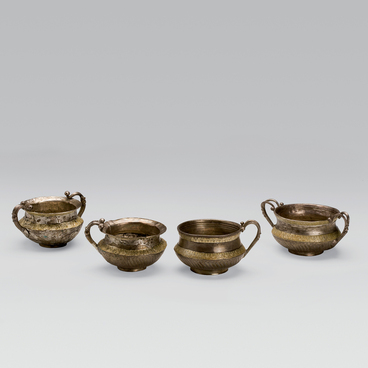
The sword hilt, the scabbard and the sword belt are generously decorated with gold plates, turquoise, inserts of coral and carnelian. Weapons of this design, decorated with precious metals and semi-precious stones, were found in archaeological sites more than once. A sword of a similar shape, but with completely different images, was discovered in 1978 by archaeologists of the joint Soviet-Afghan expedition, when they were studying the rich burials of the Kushan nobility on the territory of modern Afghanistan.
The sword hilt, the scabbard and the sword belt are generously decorated with gold plates, turquoise, inserts of coral and carnelian. Weapons of this design, decorated with precious metals and semi-precious stones, were found in archaeological sites more than once. A sword of a similar shape, but with completely different images, was discovered in 1978 by archaeologists of the joint Soviet-Afghan expedition, when they were studying the rich burials of the Kushan nobility on the territory of modern Afghanistan.