Up to the 19th century, both in Russia and Europe, the main source of illumination was candles, made of tallow, wax, paraffin and stearin, and also spermaceti. In the early 1800s, oil lamps using vegetable and animal fats appeared in Europe.
The history of kerosene lamps began in Lviv. According to legend, it came about through a commercial scam: tradesmen from the town of Drohobych apparently offered an apothecary from a big Lviv pharmacy to buy distillate from them, distill it into cheap alcohol and make a profit from it.
In reality, in 1852, the owner of a large pharmacy called “Under the Golden Star”, Piotr Mikołasz set up a laboratory for chemical and pharmaceutical experiments and purchased a quintal of distilled petroleum from a Drohobych entrepreneur to make medicinal “rock oil” from it.
Two chemists and Masters of Pharmacy, Jan Zech and Jan Jozef Ignacy Łukasiewicz, carried out the distillation and purification work. Their experiments resulted in producing an oily yellowish liquid which gave off a steady light when burned.
The third person to contribute to developing a new lamp was the tinsmith Adam Bratkowski: he improved the oil lamp by making it suitable for the use of kerosene.
Thus in 1853 the first kerosene lamp illuminated a pharmacy. The official birthday of the kerosene lamp is July 31, 1853: on that day, the first emergency operation was performed in a hospital in Lviv.
Jan Zech patented his method of refining oil, asking that it be kept secret, and opened his own shop. In one year alone, it sold around 60 tons of kerosene, which was used both for lighting and, for instance, for stain removal. Ignacy Łukasiewicz eventually set up his own refinery, which produced kerosene, lubricating oils and asphalt.
The word of the new burners spread beyond Lviv, getting the Viennese company “Ditmar” interested in producing them. Shortly thereafter, the company set up manufacturing facilities in Vienna, making up to a thousand kerosene burners a year. Over time, “Viennese” burners were sold in Lviv analogous to a local invention.
The structure of a kerosene lamp is quite simple. It consists of a tin body and a glass cylindrical top. Air is supplied from below. One end of the porous wick is dipped in a tank of kerosene, the other end is lit. Such lamps were used to illuminate streets and premises.
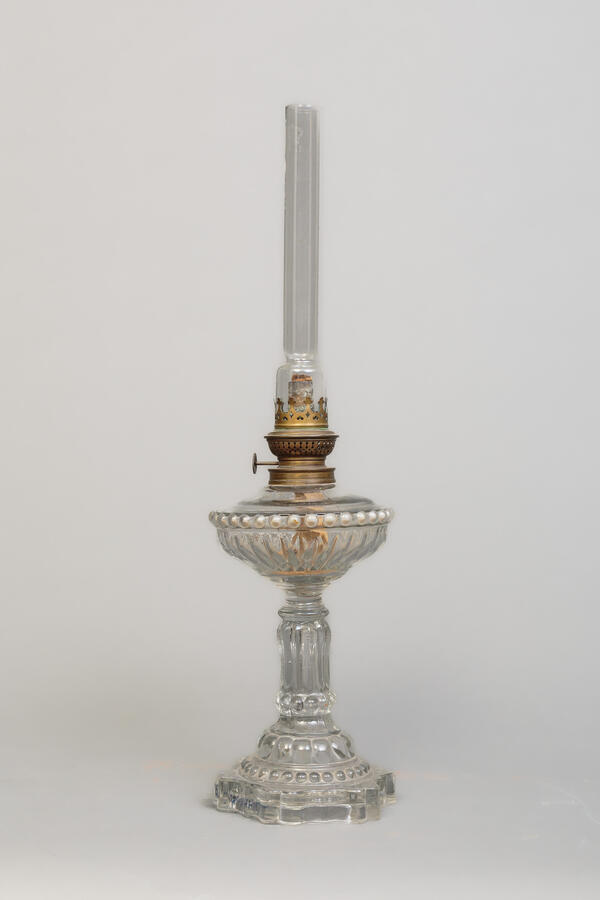
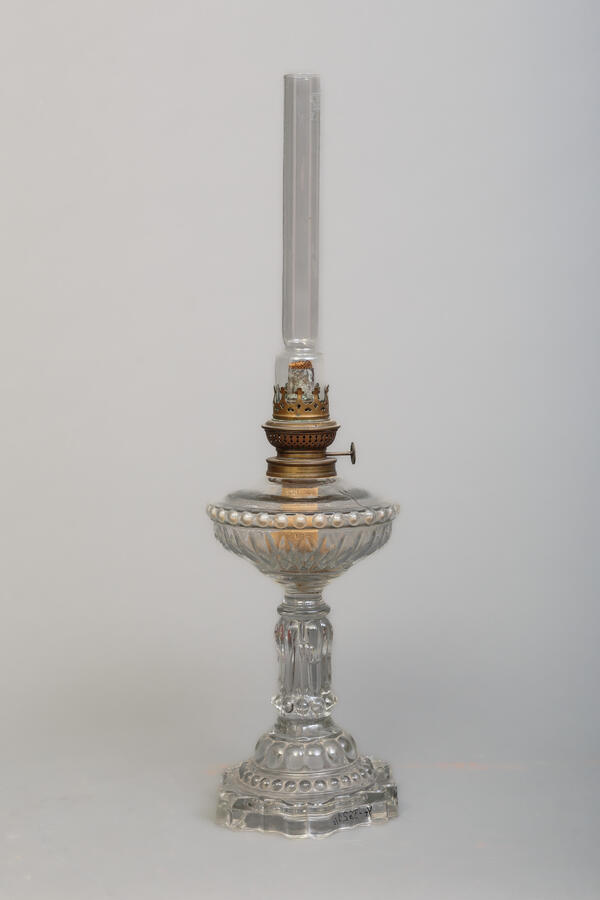
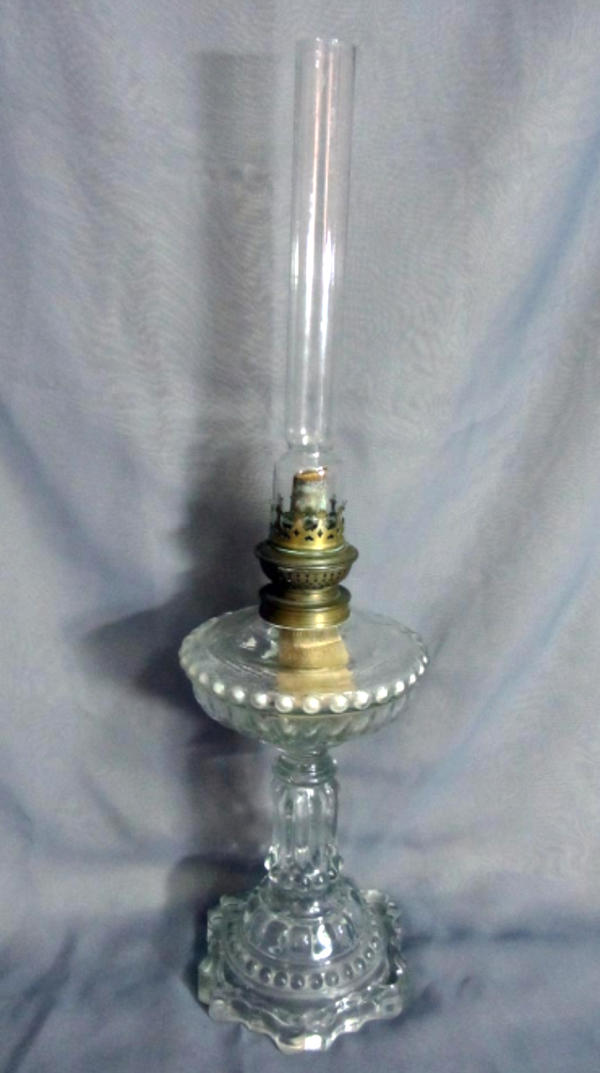
The kerosene lamp on display, with a long, narrow, cylindrical, colorless glass chimney, was intended for home use.
The history of kerosene lamps began in Lviv. According to legend, it came about through a commercial scam: tradesmen from the town of Drohobych apparently offered an apothecary from a big Lviv pharmacy to buy distillate from them, distill it into cheap alcohol and make a profit from it.
In reality, in 1852, the owner of a large pharmacy called “Under the Golden Star”, Piotr Mikołasz set up a laboratory for chemical and pharmaceutical experiments and purchased a quintal of distilled petroleum from a Drohobych entrepreneur to make medicinal “rock oil” from it.
Two chemists and Masters of Pharmacy, Jan Zech and Jan Jozef Ignacy Łukasiewicz, carried out the distillation and purification work. Their experiments resulted in producing an oily yellowish liquid which gave off a steady light when burned.
The third person to contribute to developing a new lamp was the tinsmith Adam Bratkowski: he improved the oil lamp by making it suitable for the use of kerosene.
Thus in 1853 the first kerosene lamp illuminated a pharmacy. The official birthday of the kerosene lamp is July 31, 1853: on that day, the first emergency operation was performed in a hospital in Lviv.
Jan Zech patented his method of refining oil, asking that it be kept secret, and opened his own shop. In one year alone, it sold around 60 tons of kerosene, which was used both for lighting and, for instance, for stain removal. Ignacy Łukasiewicz eventually set up his own refinery, which produced kerosene, lubricating oils and asphalt.
The word of the new burners spread beyond Lviv, getting the Viennese company “Ditmar” interested in producing them. Shortly thereafter, the company set up manufacturing facilities in Vienna, making up to a thousand kerosene burners a year. Over time, “Viennese” burners were sold in Lviv analogous to a local invention.
The structure of a kerosene lamp is quite simple. It consists of a tin body and a glass cylindrical top. Air is supplied from below. One end of the porous wick is dipped in a tank of kerosene, the other end is lit. Such lamps were used to illuminate streets and premises.
The kerosene lamp on display, with a long, narrow, cylindrical, colorless glass chimney, was intended for home use.