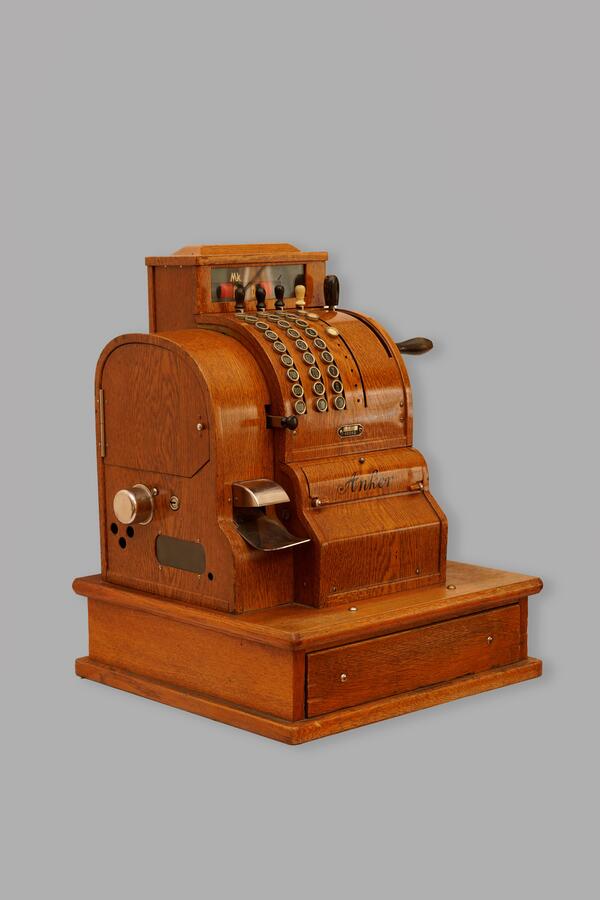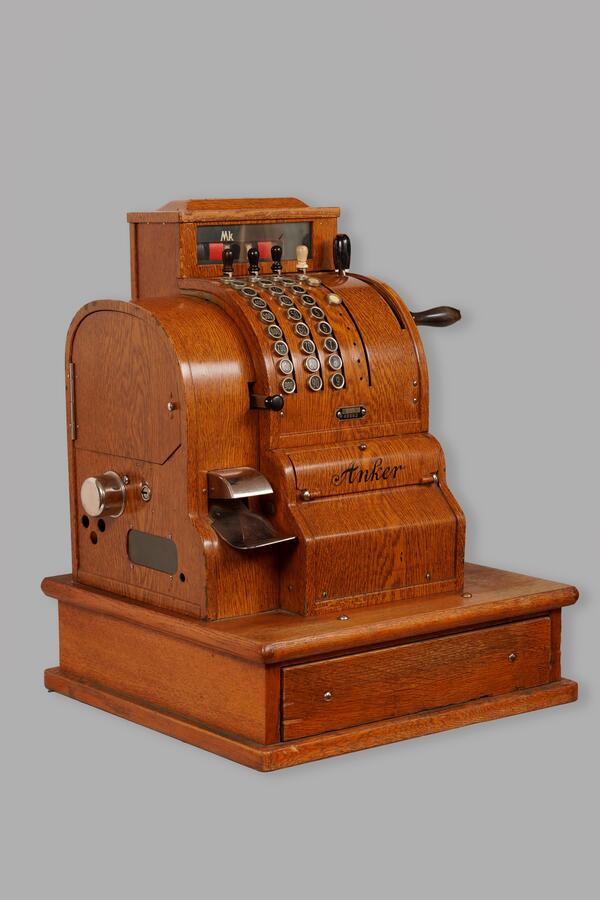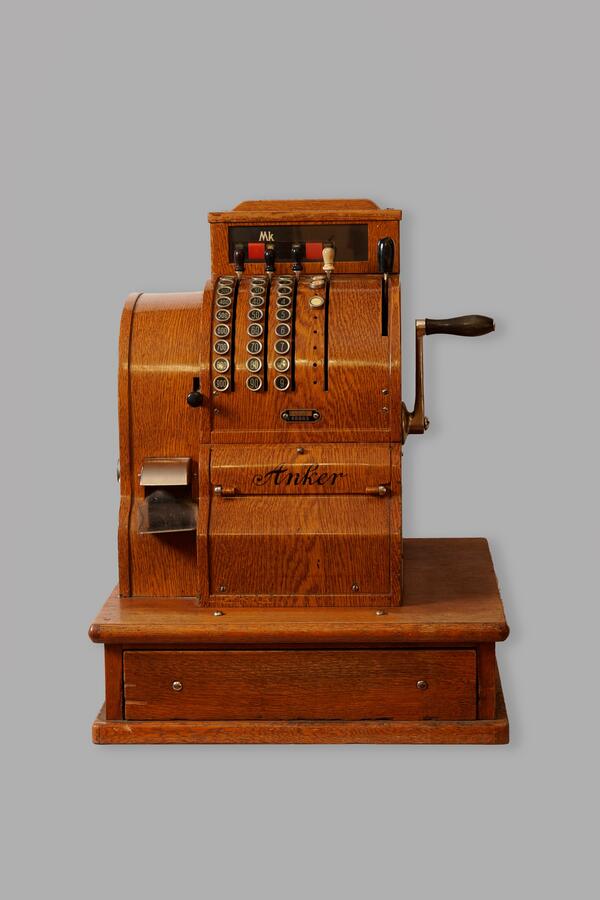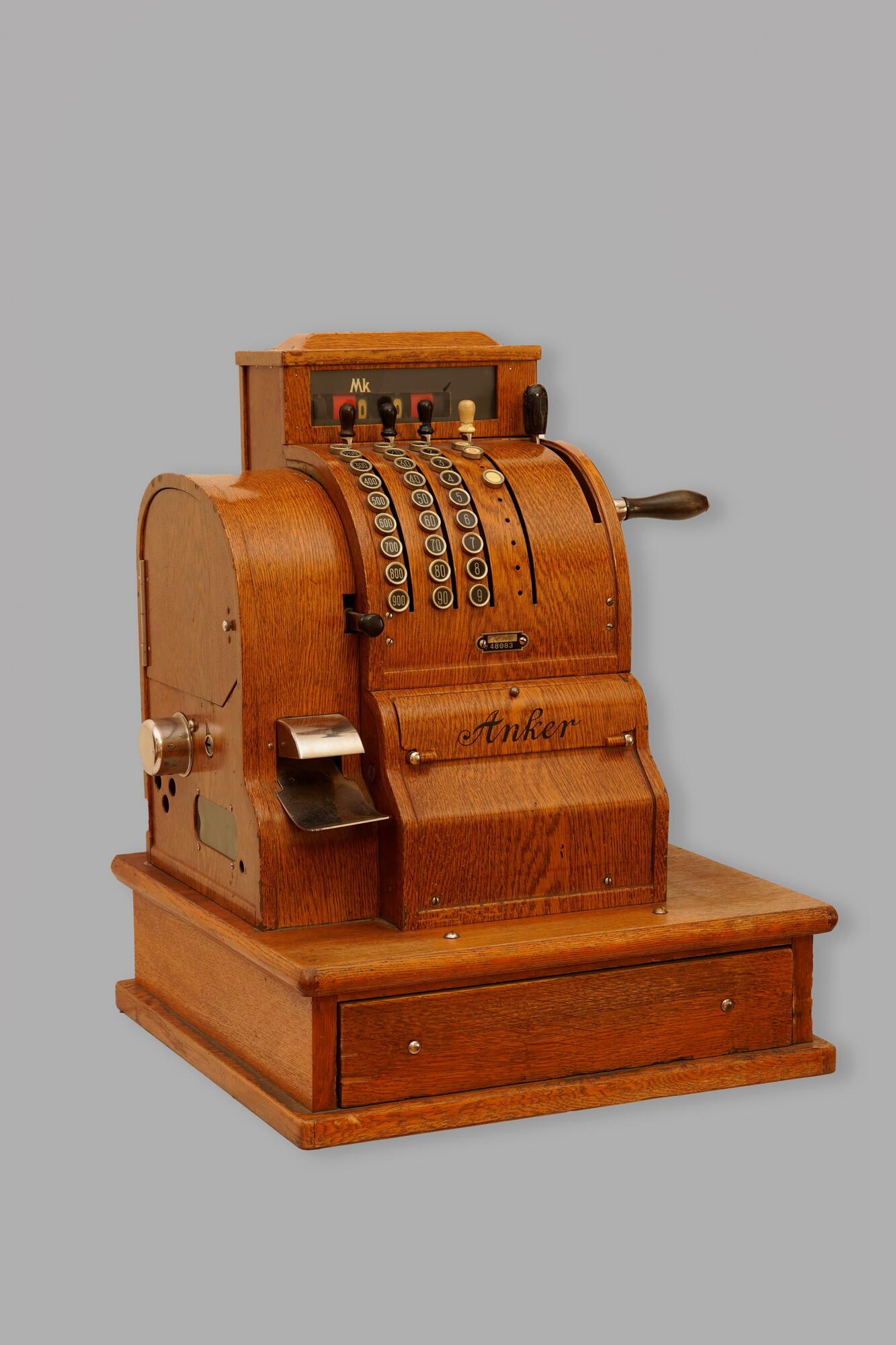


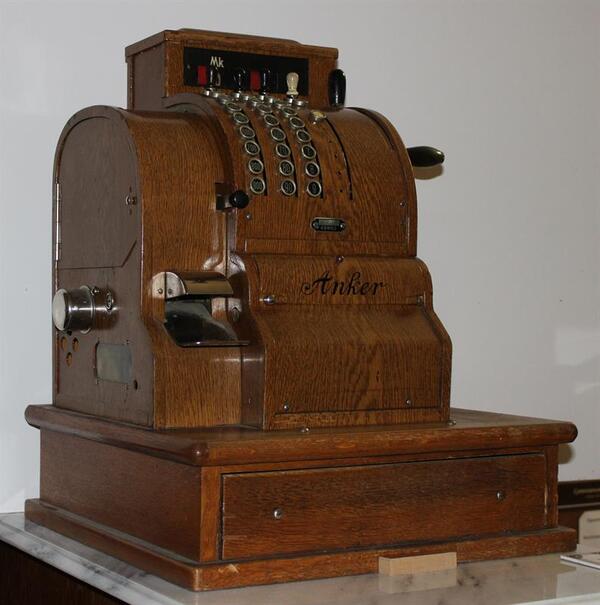
The first cash register appeared on the counter of a small cafe in the city of Dayton in Ohio. This cafe was in a financially advantageous location — not far from the station in the city center. It always had numerous visitors. However, for a long time the business was unprofitable: the customers’ money often ended up not in the cash register, but in the cashier’s pocket. The café’s owner James Ritty had to fire unscrupulous employees, but this situation did not change. The cafe was on the verge of bankruptcy.
In 1878, Ritty went on a steamboat cruise. In the engine room, he noticed a tachometer, which accurately recorded the revolutions of the ship’s propeller. The restaurateur became interested in the principles of the device’s operation, since a device for controlling cash flow could work in a similar way. When he returned home, he shared his thoughts with his brother John Ritty, and soon a cash register appeared in their workshop.
The device looked like a big clock. Two hands, for counting “minutes” and “seconds”, were used to count dollars and cents respectively. When the inventors designed the case of the second model, they put an elegant disc instead of the dial. Two rows of keys were used to calculate the total amount sold. The model was patented by the Ritty brothers on November 4, 1879. The third model was called “Ritty’s Incorruptible Cashier”. Now the client was able to see the amount of the sale. The fourth model, with which the mass production of cash registers began, printed receipts on perforated paper.
In 1881, James Ritty found the production of “mechanical cashiers” too complicated and insufficiently profitable, and returned to his restaurant business. Jacob Eckert acquired the patent for Ritty’s invention and in 1884 John H. Patterson purchased all the rights. The National Cash Register Company (NCR), founded by Patterson, specialized in the production of cash registers. New improvements were introduced: sellers could open the drawer for the proceeds only after they recorded the fact of the payment. Each time the drawer was opened, a special bell rang.
In Russia, cash registers came into use at the end of the 19th thanks to European merchants. It was not until the Soviet times, namely 1934, that the production of Russian cash registers for revenue control began.
In 1878, Ritty went on a steamboat cruise. In the engine room, he noticed a tachometer, which accurately recorded the revolutions of the ship’s propeller. The restaurateur became interested in the principles of the device’s operation, since a device for controlling cash flow could work in a similar way. When he returned home, he shared his thoughts with his brother John Ritty, and soon a cash register appeared in their workshop.
The device looked like a big clock. Two hands, for counting “minutes” and “seconds”, were used to count dollars and cents respectively. When the inventors designed the case of the second model, they put an elegant disc instead of the dial. Two rows of keys were used to calculate the total amount sold. The model was patented by the Ritty brothers on November 4, 1879. The third model was called “Ritty’s Incorruptible Cashier”. Now the client was able to see the amount of the sale. The fourth model, with which the mass production of cash registers began, printed receipts on perforated paper.
In 1881, James Ritty found the production of “mechanical cashiers” too complicated and insufficiently profitable, and returned to his restaurant business. Jacob Eckert acquired the patent for Ritty’s invention and in 1884 John H. Patterson purchased all the rights. The National Cash Register Company (NCR), founded by Patterson, specialized in the production of cash registers. New improvements were introduced: sellers could open the drawer for the proceeds only after they recorded the fact of the payment. Each time the drawer was opened, a special bell rang.
In Russia, cash registers came into use at the end of the 19th thanks to European merchants. It was not until the Soviet times, namely 1934, that the production of Russian cash registers for revenue control began.