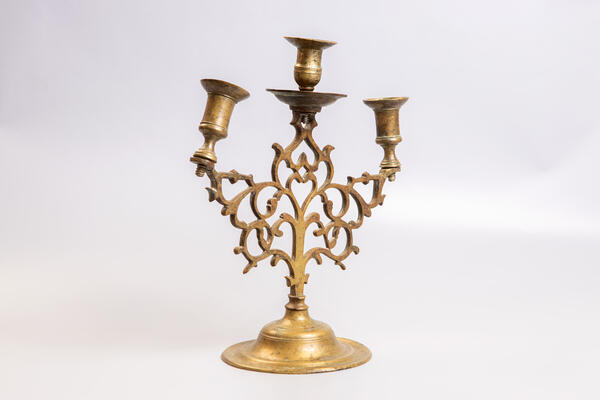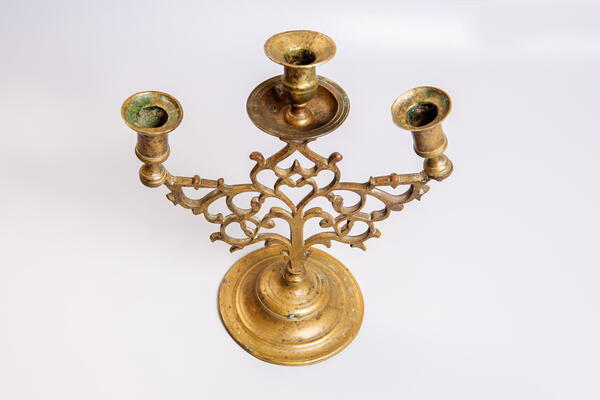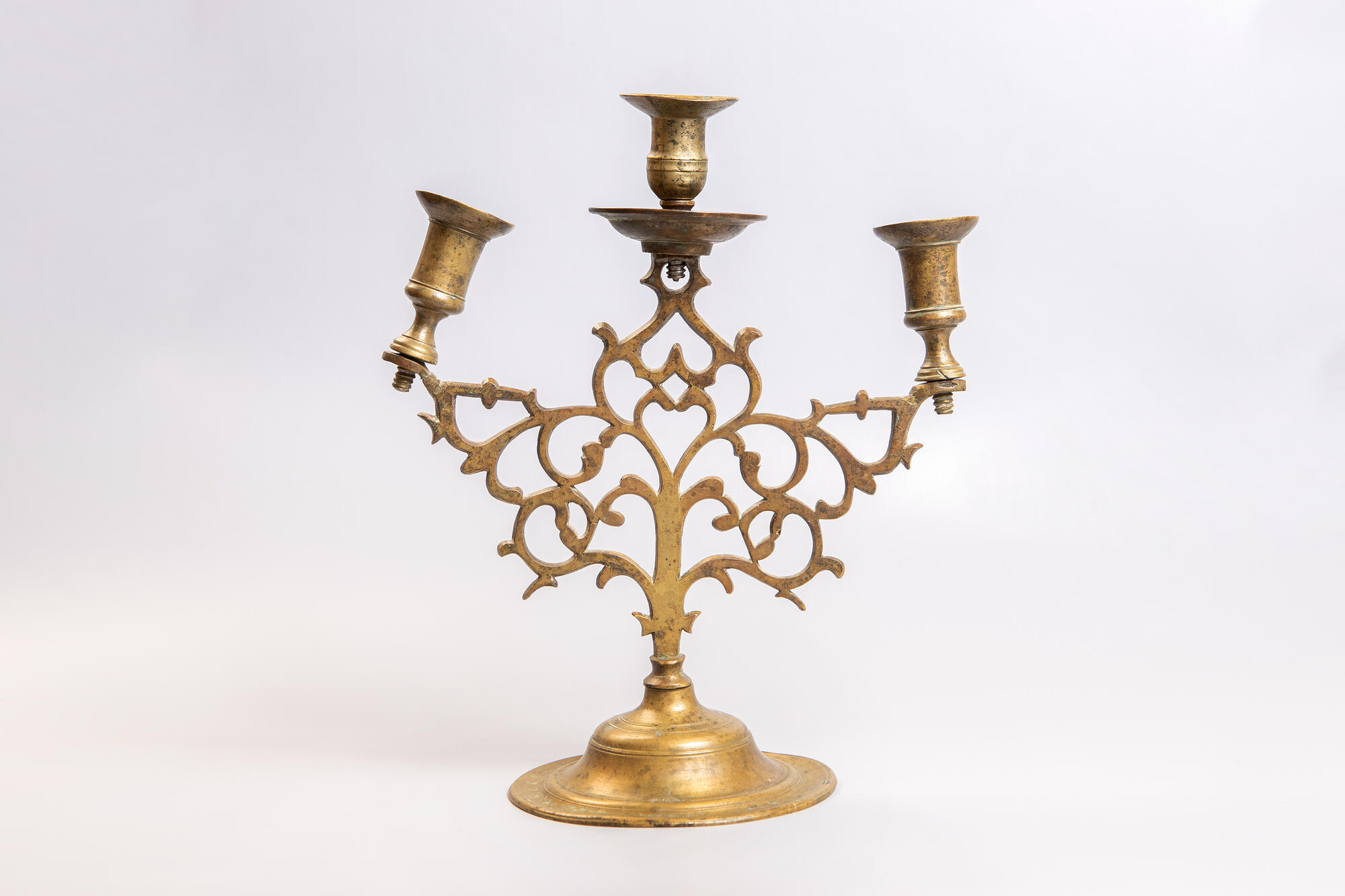


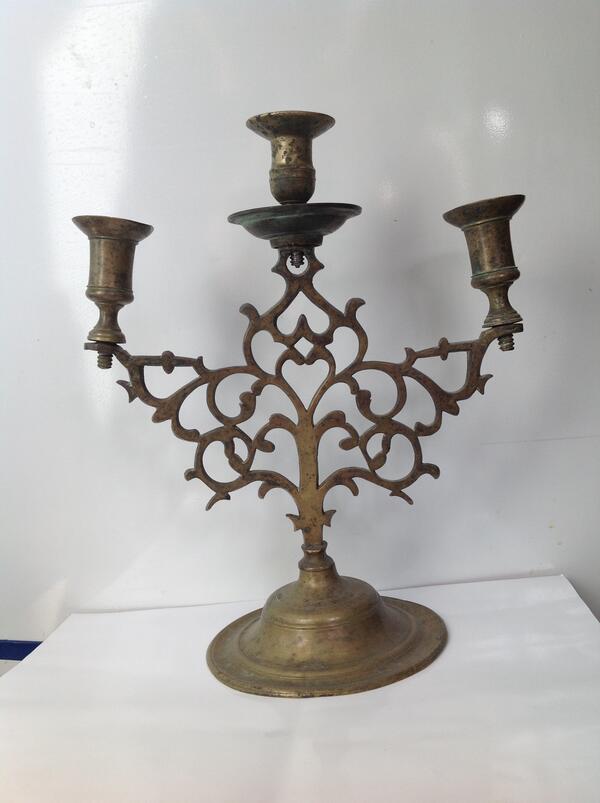
The exhibition “The World of the Streltsy” includes several candelabra — decorative objects with arms or horns for candles. This candelabra is a so-called “trikirion” — a candle holder with three horns. It was made at the turn of the 18th century.
Artisans made various types of candelabra. If horns were arranged in a circle around the central support and decorated with crystal, they were called girandoles. There were floor candelabra, including huge and heavy ones.
There is no reliable evidence as to who and when made the first chandelier. Candlesticks began to be used in everyday life and religious ceremonies. Archaeologists and historians found out that candle stands were used in the culture of the Babylonians, Etruscans and ancient Romans.
In Egypt, candle holders were used in ritual ceremonies and symbolized the rebirth of the god Ra from a lotus flower. This form was used to make the first candlesticks from clay, wood and reed. In Greece, candle stands were placed in temples, and were also found in the homes of the nobility. There they had a more aesthetic appearance. The Greeks sculpted coasters from red and white clay, burned them, glazed them, and decorated with images of mythical characters and grape leaves.
In India, candlesticks were made from ivory and sugar cane. The figure of a snake was often used as decoration. Etruscan candlesticks have survived to our times. These were the first lamps made of bronze, iron, silver, but there were also wooden ones. They were decorated with the images of people and animals, and the height of the products reached 1.6 meters. Some had a bowl that could move along the stand, and others included a series of coasters.
In the Renaissance, there were candlesticks that were created as works of art and luxury items. They were made of bronze, brass, silver and gold, decorated with floral ornaments, relief carvings and precious stones. Painted and gilded porcelain candlesticks were available only to the nobility and royal families. The candelabra depicted biblical and mythological scenes and landscapes.
Artisans made various types of candelabra. If horns were arranged in a circle around the central support and decorated with crystal, they were called girandoles. There were floor candelabra, including huge and heavy ones.
There is no reliable evidence as to who and when made the first chandelier. Candlesticks began to be used in everyday life and religious ceremonies. Archaeologists and historians found out that candle stands were used in the culture of the Babylonians, Etruscans and ancient Romans.
In Egypt, candle holders were used in ritual ceremonies and symbolized the rebirth of the god Ra from a lotus flower. This form was used to make the first candlesticks from clay, wood and reed. In Greece, candle stands were placed in temples, and were also found in the homes of the nobility. There they had a more aesthetic appearance. The Greeks sculpted coasters from red and white clay, burned them, glazed them, and decorated with images of mythical characters and grape leaves.
In India, candlesticks were made from ivory and sugar cane. The figure of a snake was often used as decoration. Etruscan candlesticks have survived to our times. These were the first lamps made of bronze, iron, silver, but there were also wooden ones. They were decorated with the images of people and animals, and the height of the products reached 1.6 meters. Some had a bowl that could move along the stand, and others included a series of coasters.
In the Renaissance, there were candlesticks that were created as works of art and luxury items. They were made of bronze, brass, silver and gold, decorated with floral ornaments, relief carvings and precious stones. Painted and gilded porcelain candlesticks were available only to the nobility and royal families. The candelabra depicted biblical and mythological scenes and landscapes.