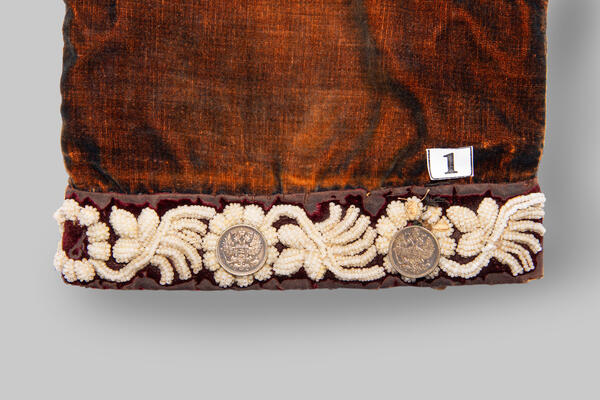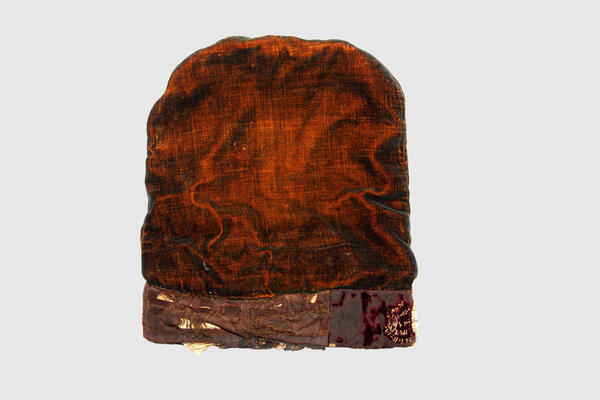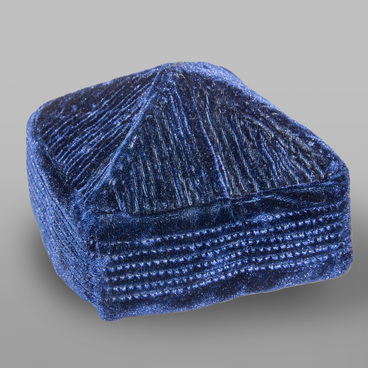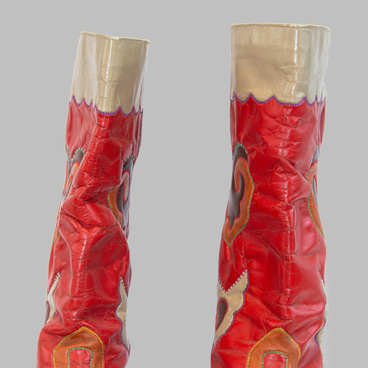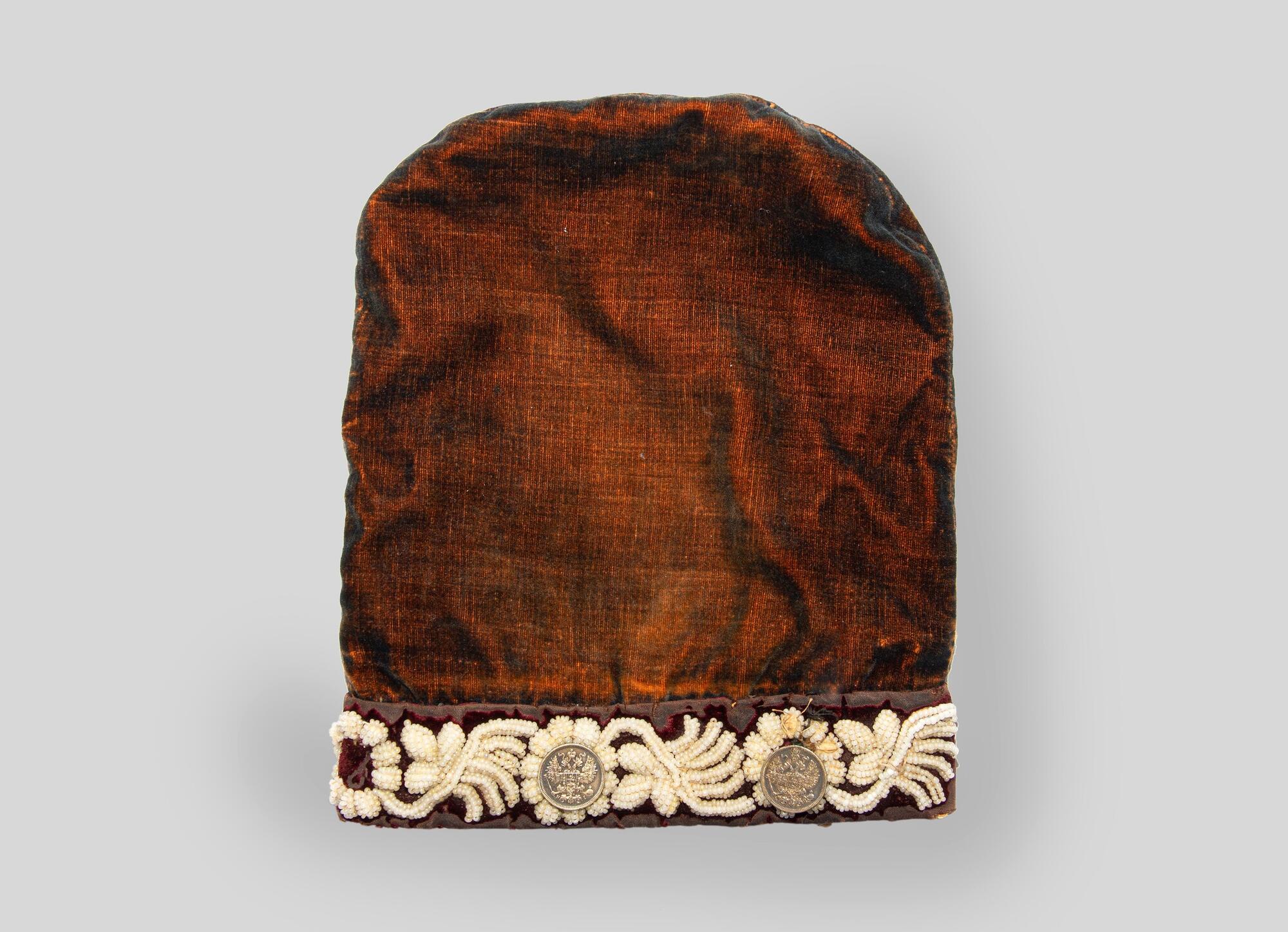


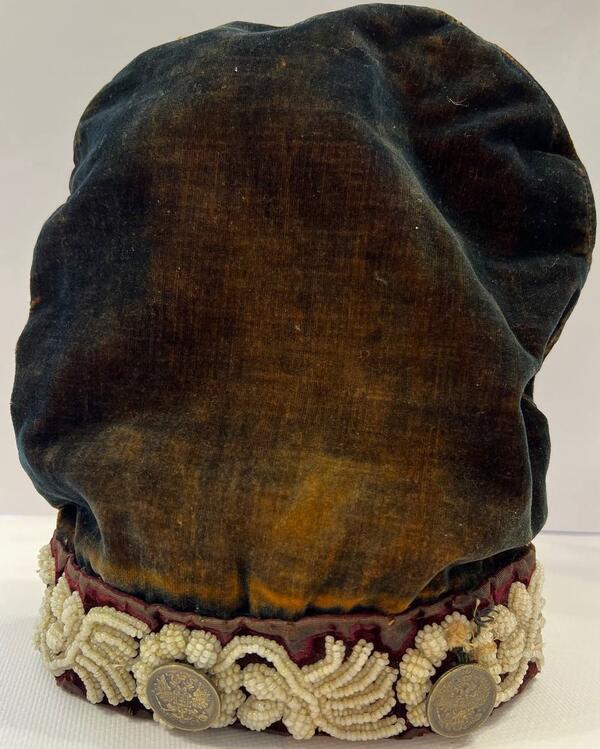
The national costume is a precious heritage that the Tatar people are proud of. Folk clothes are not only of aesthetic, but also of cultural value: an outfit can tell a lot about the customs and history of the Tatars. Although the costume has undergone many changes, its essence has remained the same: it includes grace, comfort and dignity. A women’s folk costume is unthinkable without a headdress. In ancient times, the headdress was made in a conical, “pyramidal” or “helmet-shaped” form and covered with gilded ruble coins, coral, and pearls. Gradually, the shape changed and became hemispherical. A kalfak was sewn from velvet of bright saturated colors — blue, red, green, and brown. It was embroidered with gold threads, beads or freshwater pearls. Earlier samples were knitted or made from knitted silk, and the décor was painstaking and time-consuming.
At the beginning of the 20th century, a Tatar woman, especially the one living in a city, got the opportunity to wear European-style clothes. The kaflak, which had changed and become a miniature headdress, was quite noticeable and allowed Tatar women to emphasize their nationality even in a European dress. In the 20th century, the kalfak practically disappeared from everyday life, remaining on the stage and at national events. For example, it is used as a symbol in the Tatar public women’s organization “Ak Kalfak”. Due to its small size and the ability to match a modern dress, the national headdress is becoming increasingly popular: modern designers include kalfaks in the festive outfit of Tatar women.
The famous ethnographer Nikolay Vorobyov believed that the kalfak grew smaller due to changes in world fashion trends. The historian and ethnologist Svetlana Suslova noted that the kalfak existed both as a girls’ headdress and as a women’s one: initially this piece of clothing was intended only for young girls, but gradually women began to wear kalfaks up to the old age.
In the 21st century, the variant “tүbәtәy kalfak” and “blunt kalfak” with a solid rim and a flat top became very fashionable among Tatar women. Historically, these caps were worn under the headscarf, now they are worn on top of it.
At the beginning of the 20th century, a Tatar woman, especially the one living in a city, got the opportunity to wear European-style clothes. The kaflak, which had changed and become a miniature headdress, was quite noticeable and allowed Tatar women to emphasize their nationality even in a European dress. In the 20th century, the kalfak practically disappeared from everyday life, remaining on the stage and at national events. For example, it is used as a symbol in the Tatar public women’s organization “Ak Kalfak”. Due to its small size and the ability to match a modern dress, the national headdress is becoming increasingly popular: modern designers include kalfaks in the festive outfit of Tatar women.
The famous ethnographer Nikolay Vorobyov believed that the kalfak grew smaller due to changes in world fashion trends. The historian and ethnologist Svetlana Suslova noted that the kalfak existed both as a girls’ headdress and as a women’s one: initially this piece of clothing was intended only for young girls, but gradually women began to wear kalfaks up to the old age.
In the 21st century, the variant “tүbәtәy kalfak” and “blunt kalfak” with a solid rim and a flat top became very fashionable among Tatar women. Historically, these caps were worn under the headscarf, now they are worn on top of it.