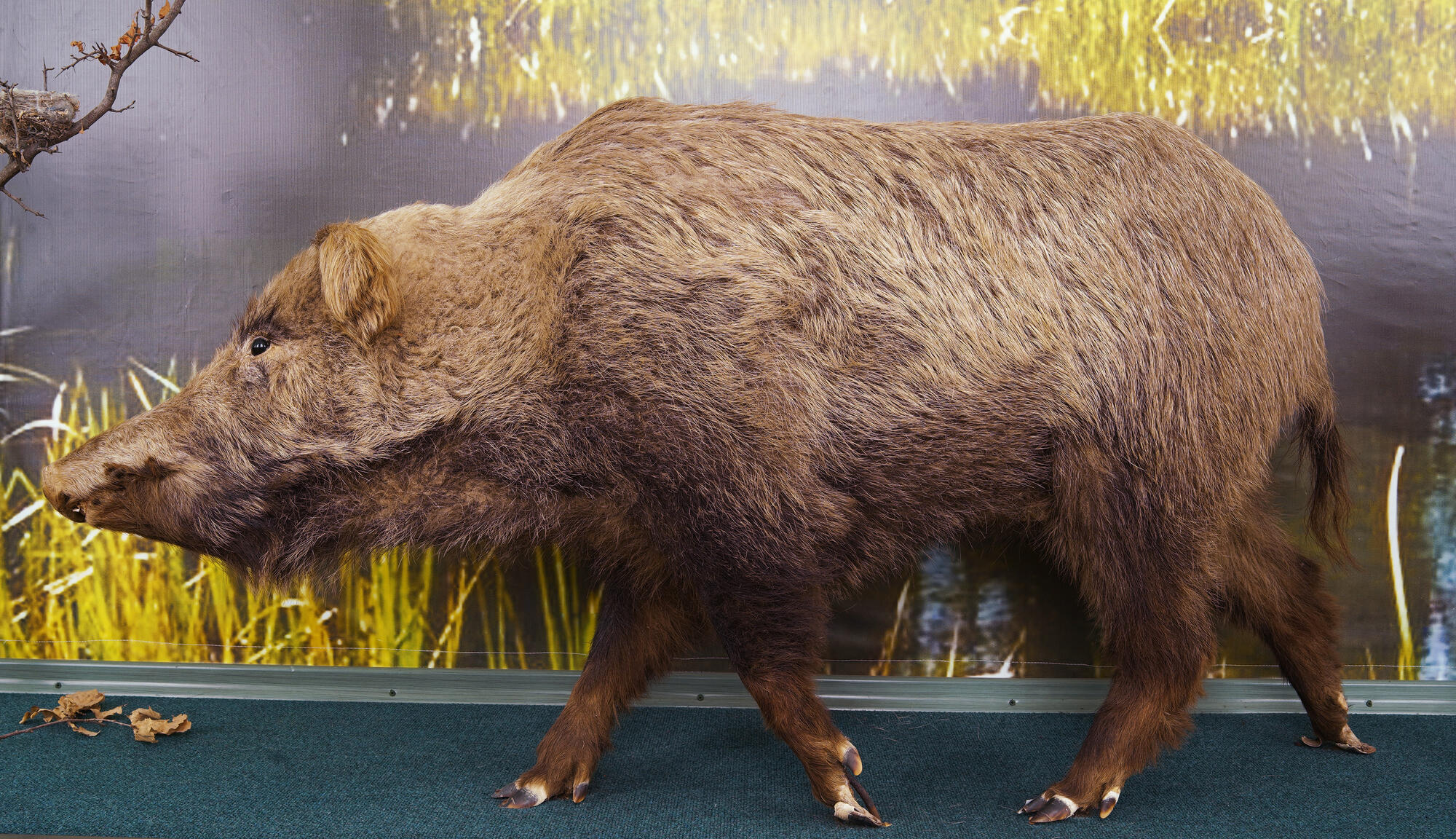


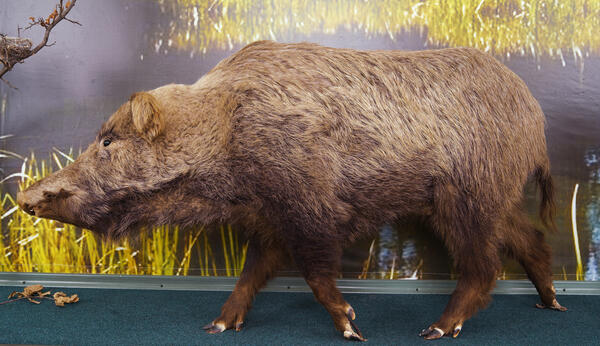
In the Urazovo Local History Museum, you can see a stuffed wild boar, which was created in the late 1980s.
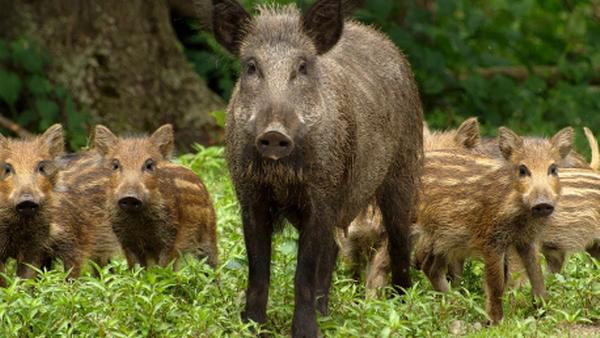
The wild boar is a large animal, a representative of the pig family. His body weight on average reaches 114–200 kilograms. At the withers, the animals are slightly higher than at the rump. The wild boar’s coat is tough and looks more like stubble. Its color can vary from dark gray to brown. With the arrival of winter, it thickens and a dense undercoat appears. The wild boar’s head is disproportionately large, the neck is short, thick, with powerful muscles.
The most remarkable part of the wild boar’s body are the fangs. In a mature individual, they can grow up to 25 centimeters. With its fangs, the animal gets its own food, digs out the ground in order to get the rhizomes. They easily turn out stumps, stones, even break freezing layers. The wild boars are omnivorous, so they get worms, snails, various beetles out of the ground, and they catch mice. Also, with their fangs, they defend themselves from bears or wolves.
The most remarkable part of the wild boar’s body are the fangs. In a mature individual, they can grow up to 25 centimeters. With its fangs, the animal gets its own food, digs out the ground in order to get the rhizomes. They easily turn out stumps, stones, even break freezing layers. The wild boars are omnivorous, so they get worms, snails, various beetles out of the ground, and they catch mice. Also, with their fangs, they defend themselves from bears or wolves.
Wild boars prefer to live in oak forests, which alternate with glades and meadows. An important condition for the habitation of animals is a reservoir near the rookery, so they can often be found in shrub river valleys or wetlands. On soft ground, the hooves of the wild boar are spread wide, which increases the support area and allows him to move freely through the marshland.
Wild pigs have a fine sense of smell, good hearing, but poor eyesight: they can only distinguish moving objects well. They are mobile and travel long distances, swim quickly and easily pass through dense thickets. Wild boars are very sensitive to temperature extremes, therefore, in order not to get sunburn and to protect themselves from the bites of various insects, they are thoroughly smeared with mud.