Background
There is a phenomenon that dates back to old times. The name for that phenomenon is the Germans of Russia, or Russian Germans. According to chronicles, Germans began to appear in Rus at the end of the 1st millennium. In 961, by the invitation of Princess Olga, the widow of Prince Igor, a group of farmers and craftsmen moved from German territory to Rus.
There is another phenomenon known in history as the Volga Germans. Alfred Schnittke is directly related to them. In 1762, Catherine II signed the manifesto “On allowing foreigners to settle in Russia, ” recruiting them “to inhabit the most useful parts of the Russian empire, that remained idle.” In other words, those were completely wild lands at the outskirts of the state, hard to cultivate.
A society is viable and sustainable when it is based on a cohesive national idea. Whatever form it takes, it is always based on national self-respect and love for the Motherland with all her virtues and shortcomings, her distant and recent past, her unique and original culture, history, her spirit and intellect.
The Alfred Schnittke talent needs no proof. He is recognized all around the world as a brilliant composer ahead of his time, “the composer of the 21st century”. There is not a single serious publication in the world that does not contain information about Alfred Schnittke. His music is constantly performed by the best symphony orchestras; it is featured in the films and shows by leading modern directors.
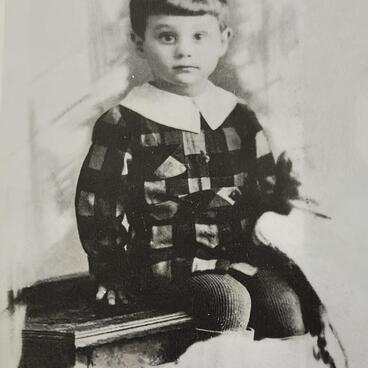
Engels is the cradle of genius. He was born and lived in the town until he was 12 years old. Leo Tolstoy said that every person’s worldview is shaped by the age of five, and A. Schnittke’s worldview was shaped in Engels, the capital of the Volga German Republic — at the crossroads of Russian, German and Jewish cultures.