

The victory of the Russian troops in the Battle of Poltava in 1709, a landmark for the entire Petrine Russia, was of particular importance for the Borisovskaya Sloboda of the Kursk Governorate. The commander-in-chief, Count Boris Petrovich Sheremetev, a participant in the war, deeply revered the Tikhvin Icon of the Virgin, carried a copy with him, and before the decisive battle vowed to erect a monastery in honor of the Tikhvin Mother of God in case of victory.
In 1710 (according to other sources, in 1714), he fulfilled his promise by founding a convent near Borisovka. Until the early 20th century, the convent did not receive state funding, the sisters did not live there and were not fully supported.
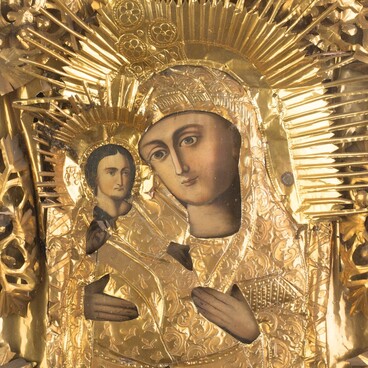
In the mid-19th century, there were two ancient, especially revered images in the convent: an icon of St. Nicholas the Wonderworker and a copy from the Tikhvin Icon of the Mother of God. Most of the icons kept there were made by local craftsmen even during Count Sheremetev’s lifetime. They were trained by masters invited from St. Petersburg.
The vast majority of local icon painters were lichkuns: they painted only faces, hands and feet, as the rest of the icon would be covered by a revetment. For several hundred lichkuns, there were several dozen colorists, full-fledged icon painters, who were able to paint the figures, attire and attributes. The icons created by the colorists were highly respected. If a lichkun painted three to five icons a day and received about 16 kopecks of net profit for each (minus costs of the materials), then a colorist worked on four, at most seven, icons in one week. For each image, the colorist received about one ruble.
The images of the Savior, the Mother of God, St. Nicholas and the patron saints of cattle and crops were the most popular among peasants.
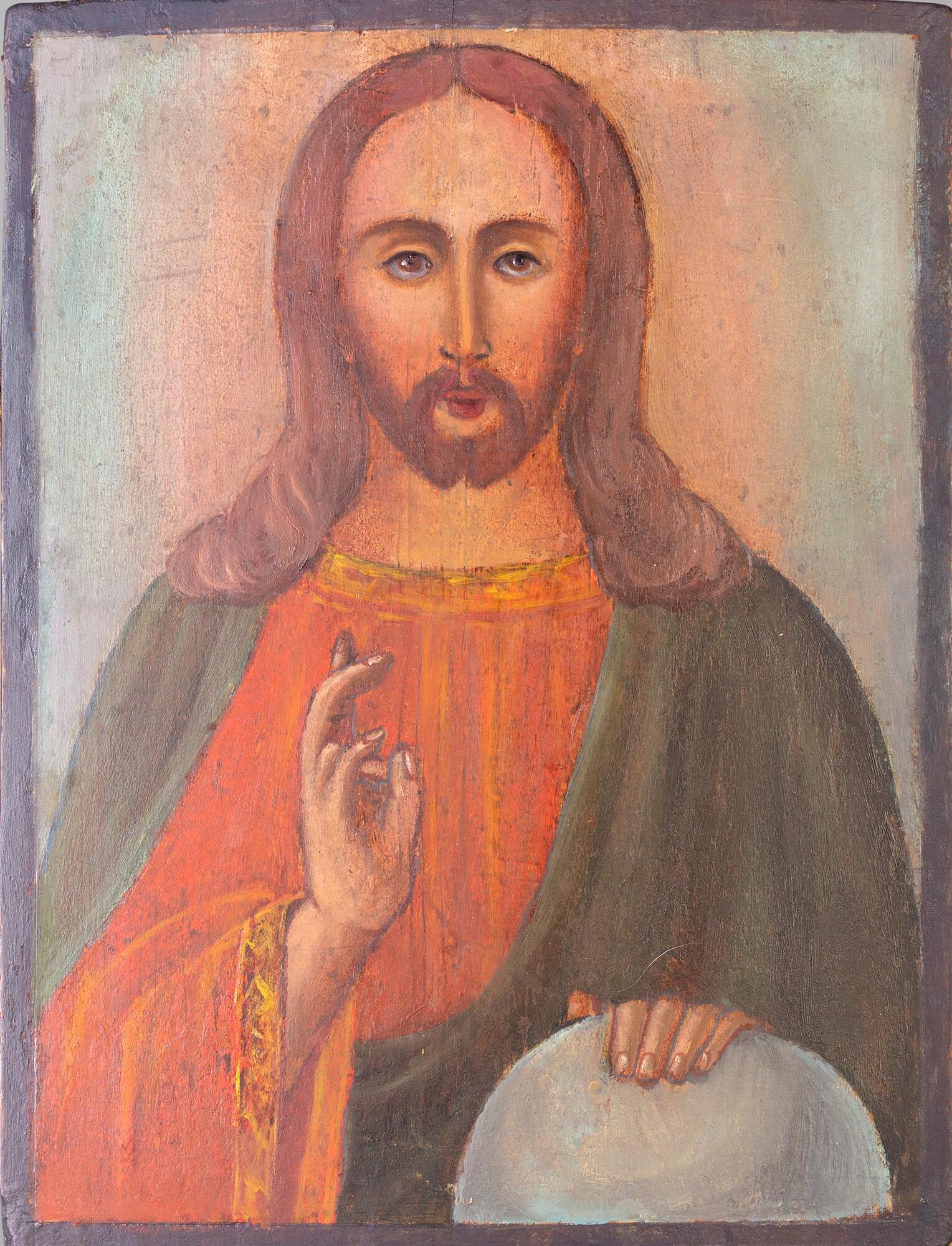
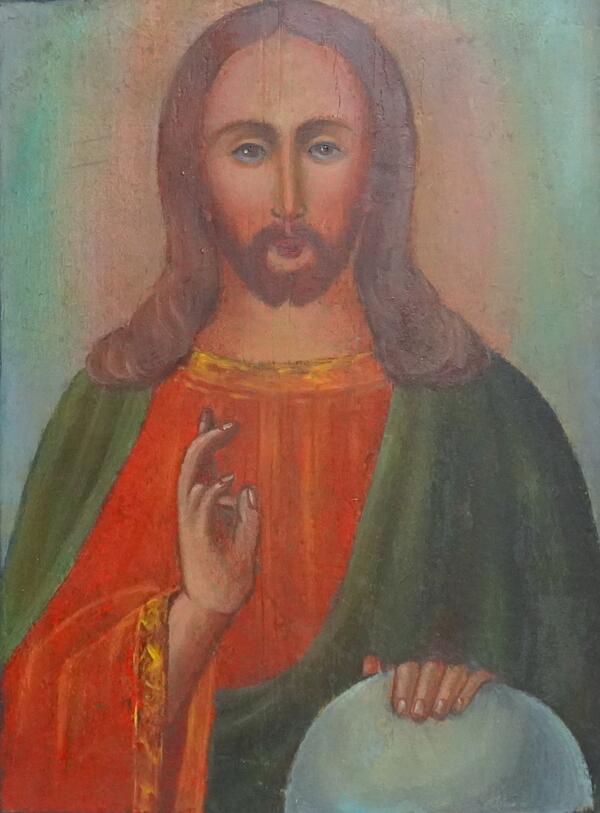
The presented image of Christ is compositionally close to the central iconographic type Savior Almighty, or Pantocrator (from Greek παντοκράτωρ — “almighty”). According to the canon, the image of Christ Pantocrator can be full, half or chest-length; usually Christ sits on a throne; His right hand makes a gesture of blessing forming the shapes of His initials, and in the left hand He holds the Gospel or a scroll. The red color in Christ’s attire symbolizes His human nature and the sacrifice He made for the human race. The green color denotes the eternal life and unity with God granted by Jesus.
In 1710 (according to other sources, in 1714), he fulfilled his promise by founding a convent near Borisovka. Until the early 20th century, the convent did not receive state funding, the sisters did not live there and were not fully supported.
In the mid-19th century, there were two ancient, especially revered images in the convent: an icon of St. Nicholas the Wonderworker and a copy from the Tikhvin Icon of the Mother of God. Most of the icons kept there were made by local craftsmen even during Count Sheremetev’s lifetime. They were trained by masters invited from St. Petersburg.
The vast majority of local icon painters were lichkuns: they painted only faces, hands and feet, as the rest of the icon would be covered by a revetment. For several hundred lichkuns, there were several dozen colorists, full-fledged icon painters, who were able to paint the figures, attire and attributes. The icons created by the colorists were highly respected. If a lichkun painted three to five icons a day and received about 16 kopecks of net profit for each (minus costs of the materials), then a colorist worked on four, at most seven, icons in one week. For each image, the colorist received about one ruble.
The images of the Savior, the Mother of God, St. Nicholas and the patron saints of cattle and crops were the most popular among peasants.
The presented image of Christ is compositionally close to the central iconographic type Savior Almighty, or Pantocrator (from Greek παντοκράτωρ — “almighty”). According to the canon, the image of Christ Pantocrator can be full, half or chest-length; usually Christ sits on a throne; His right hand makes a gesture of blessing forming the shapes of His initials, and in the left hand He holds the Gospel or a scroll. The red color in Christ’s attire symbolizes His human nature and the sacrifice He made for the human race. The green color denotes the eternal life and unity with God granted by Jesus.