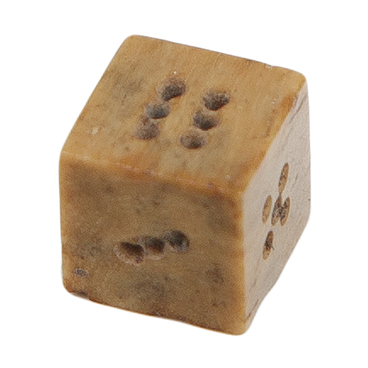
Since ancient times, children’s toys have imitated adult household items: weapons, dishes, tools, furniture, and vehicles. The toys of the late Middle Ages include miniature vessels — complete copies of household utensils. These are prototypes of toy-kitchen sets that modern kids love playing with.
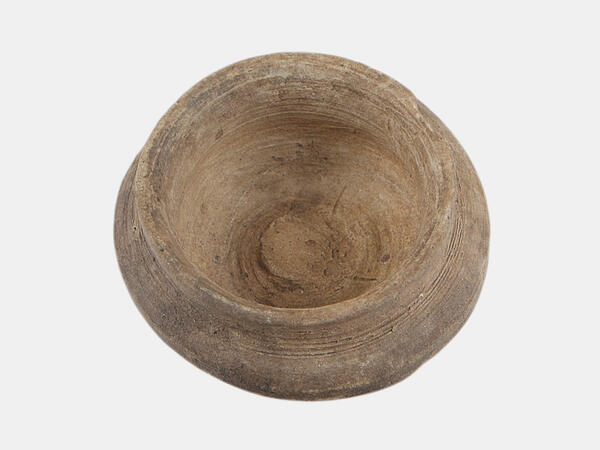
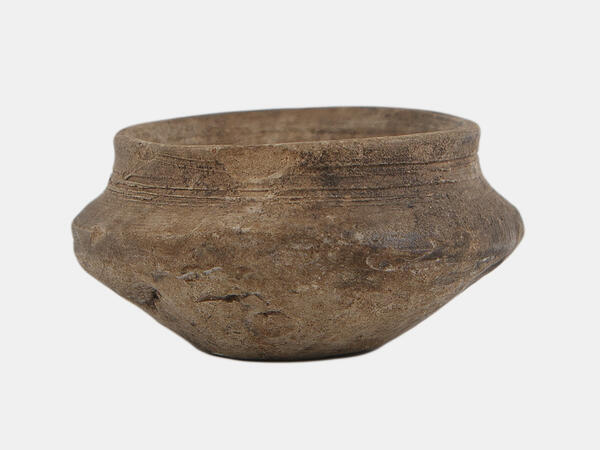
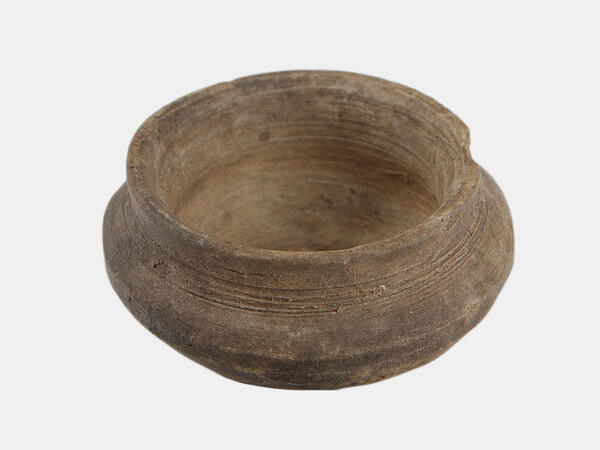
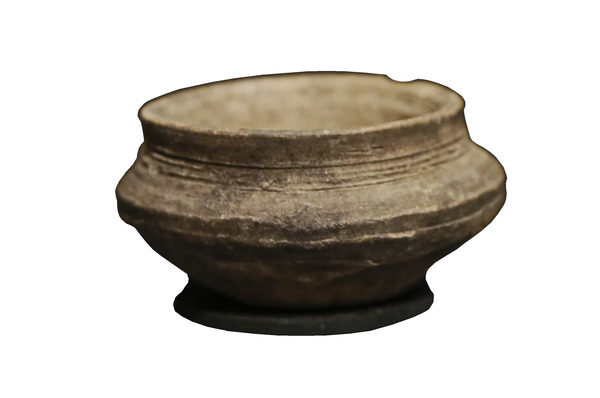
Medieval toys, as well as their household counterparts, had a carefully designed shape, proportions and ornaments. The most expressive example of such a toy was found around the Water Gate of the Tula Kremlin in the archaeological layer of the 16th–17th centuries.
Medieval Russian clay products feature archaic decorative patterns and techniques. Simple patterns consist of round impressions lined up in one or several rows around the vessel. Craftsmen applied the pattern using different devices: a pointed stick, a toothed wheel, a comb, or a stamp. Wavy and herringbone patterns, scrolls, oblique notches, and broken lines were etched on soft wet clay with a stick.
The toy pot from the collection of the Tula Kremlin Museum has a ribbed, squat body and a high neck, decorated with horizontal lines around the body. Unlike similar finds, it is not decorated with engobe painting. Engobe is a ceramic term that literally translates from French and Italian as “slip.” Engobe is a slip coating of raw clay, white or colored, which is applied before firing.
Archaeological excavations in the historical part of Tula revealed that in the 16th–18th centuries lots of various types of pottery were produced, including dishes, building materials, stove tiles, craft tools, toys, and various household items.
The general term “ceramics” (from the Greek word “keramos” meaning “clay”) is often used to describe fired clay products. In urban cultural layers, ceramics are the main part of archaeological finds, accounting for more than 90% of the thousands of discovered objects. A long-term study of Tula ceramics made it possible to develop a scale of its development from the 16th to the early 19th century and to get a better understanding of the periods in the historical cultural layer.