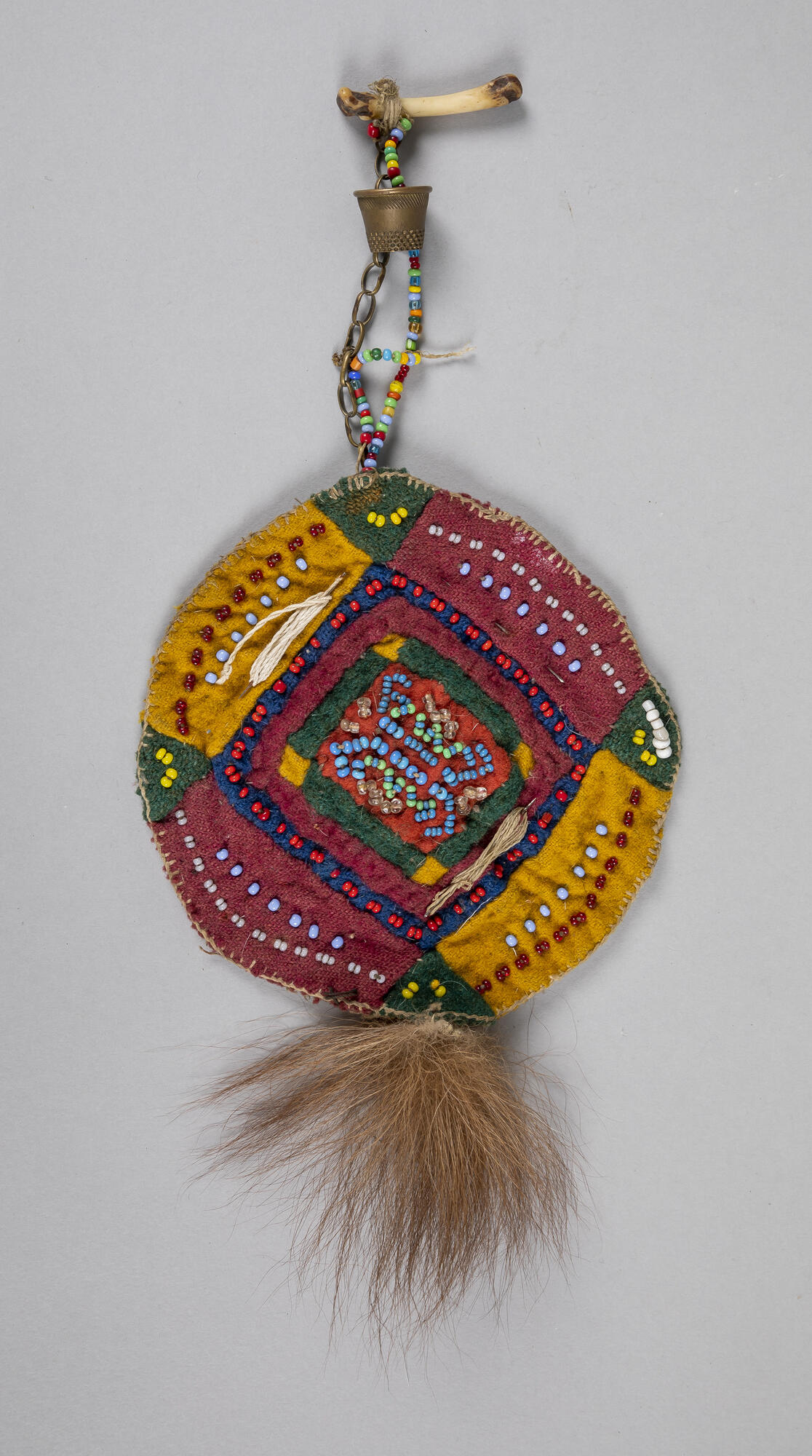


Although, at first glance the needle case seems like a simple thing to make, it is quite far from the truth. First, four squares are cut out of cloth. Then they are sewn together to form the central part of the needle case, the so-called eye or heart. This central part is not a working surface at all. It is decorated with buttons and embroidered with seed beads. The center can also be made from a single square piece of cloth, on which a pattern is created by fabric applique or mosaic.
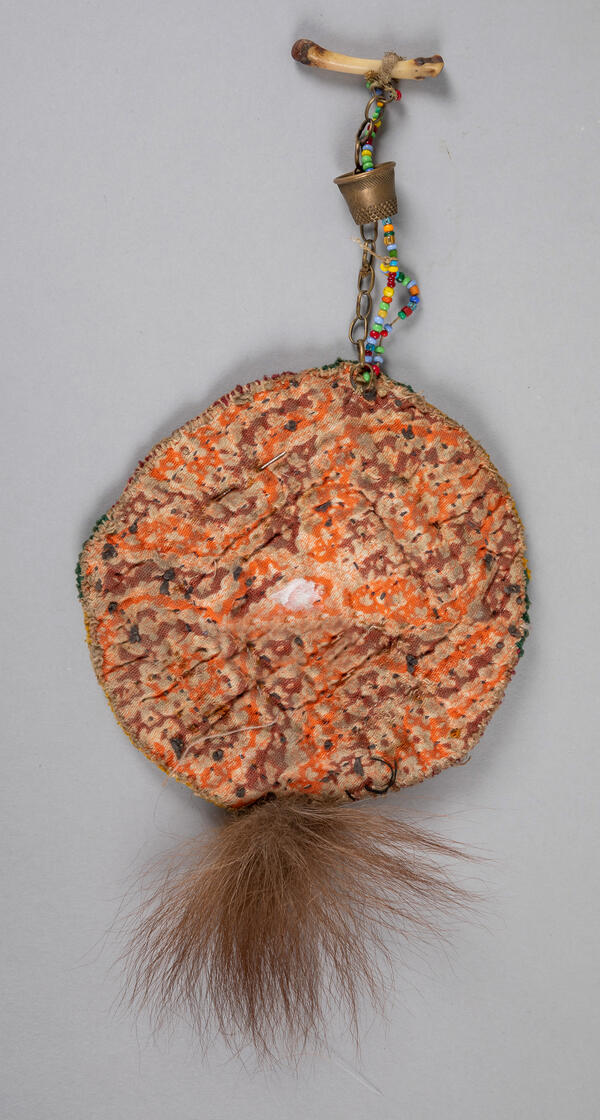
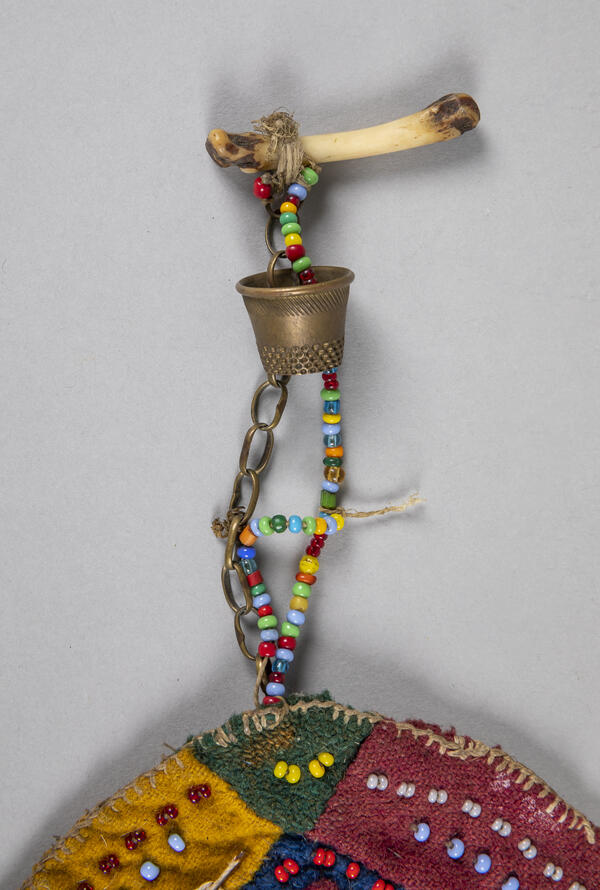
The edge of the rim is sewn from otter fur, mink or sable. A fastener is sewn to the left side. It holds tendon threads made of the hyoid bone of a deer, the forearm bones of a loon or swan, and the horn or femur of a deer. The fastener is used to store pre-made tendon threads. Such threads are used for sewing clothes and shoes. Strong threads, resistant to tearing, are made of deer veins.
Thin abdominal deer skin is used for the back of the needle case. For these purposes fur with curls, taken from the back of an old sakha (fur coat) is sometimes used. Cloth, rovduga (suede leather made of deer or elk skin), canvas fabric or artificial leather can also be used. The entire surface is sewn across with small stitches, similar to deer tracks.
The color in the pattern is very important. Three main colors were chosen for the manufacture of the needle case: white, red and black. The rest of the colors have descriptive or comparative names. For example, yellow is “autumn leaf color”, green is “fresh spring grass color”.
In the corner of the needle case is a pouch for storing a thimble made of fur. The pouch is attached to the case with a forked rovduga strap. Large beads are strung onto the strap, one of which serves to tighten the neck and protects the thimble from falling out.
The cut of a modern composite pouch resembles that of a smaller version of the handmade pouch. Instead of a thimble pouch, a holder is attached. This element is made from a fox tooth, a duck, wing, or a capercaillie paw with the joint intact. A figured fragment in the shape resembling an oar handle can also be carved out of the rib bone or shoulder blade of a deer. Several thimbles are strung on a chain with a holder.