

Needles have been in everyday use almost as long as clothes. Experts estimate that the oldest bone needles found in Russia are 40,000 years old. Needles made of iron and bronze appeared later. Steel needles are believed to have originated in China, later their production was established in Europe as well.
For a long time, they were forged by hand, with the loop-eyelet bent at the blunt end. The machine, which made holes in the steel needle itself, was invented in England in 1850.
Steel needles were brought to Russia by merchants from Germany in the 17th century, and in 1717 Peter I initiated the establishment of needle factories ordering to hire apprentices and workers “where they will find them and at what price they will like”. The work turned out to be lucrative, but so hard that many people refused to do it.
Needlework has long been compulsory for girls and women of all classes. In merchant and noble circles, it was one of girls’ “pious entertainments” and was always kept close at hand, even when visiting guests. Most of them were fond of embroidering with satin or beads.
Needles and later pins were considered a luxury from ancient times and required careful handling. To store them, pin cushions were invented. At first, they were made from scraps of cloth and paper folded in layers, but even such a device was affordable only to the wealthy. In the 15th century, silver or ivory cases and soft pin cushions stuffed with wool and covered with cloth came into fashion. In the 16th century, cushions were fixed on wooden or silver stands.
Gradually pin cushions grew more and more decorative. They were lined with expensive fabrics and decorated with embroidery. In the 19th century, all sorts of “baskets” and “egg cups” became common, with their stands made of glass, metal and porcelain.
In the early 20th century needlewomen used tabletop clamps that successfully combined both decorative and practical functions: they were attached to the table and kept the fabric from sliding around.
As early as the turn of the 17th century, boxes in the form of miniature chests for storing valuables were common in Russia. Especially popular in the 16th–17th centuries were boxes with secure hiding compartments. They were considered luxury items and were richly decorated with ivory, leather, enamel, gold and silver inlays, precious and semi-precious stones and coral.
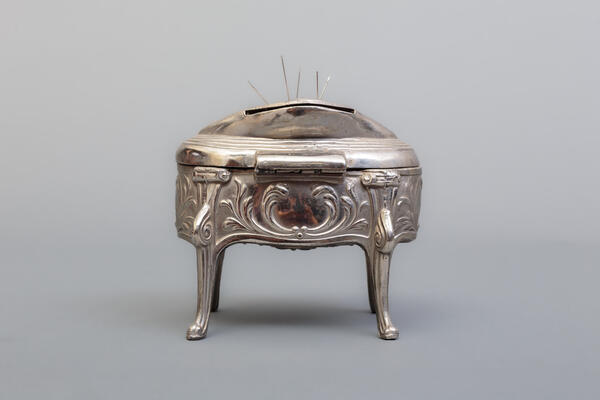
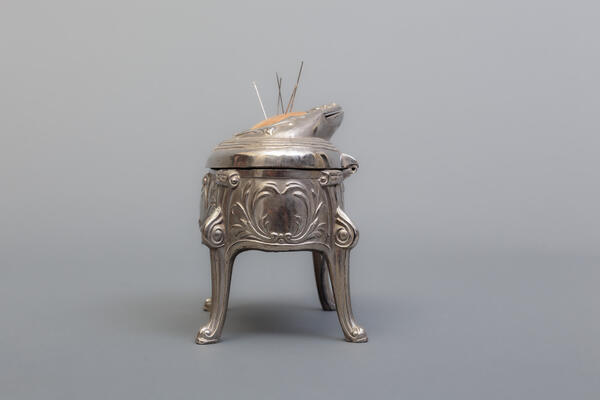
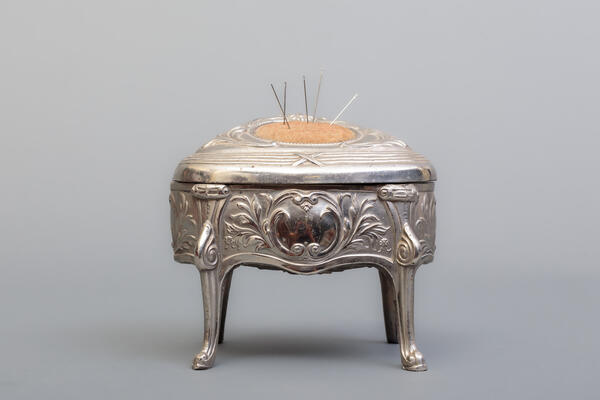
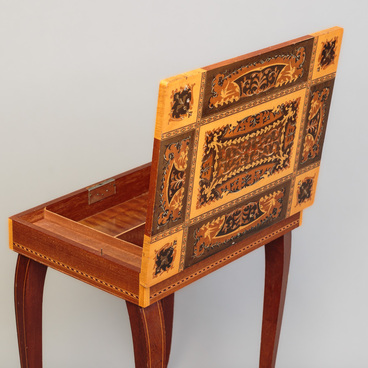
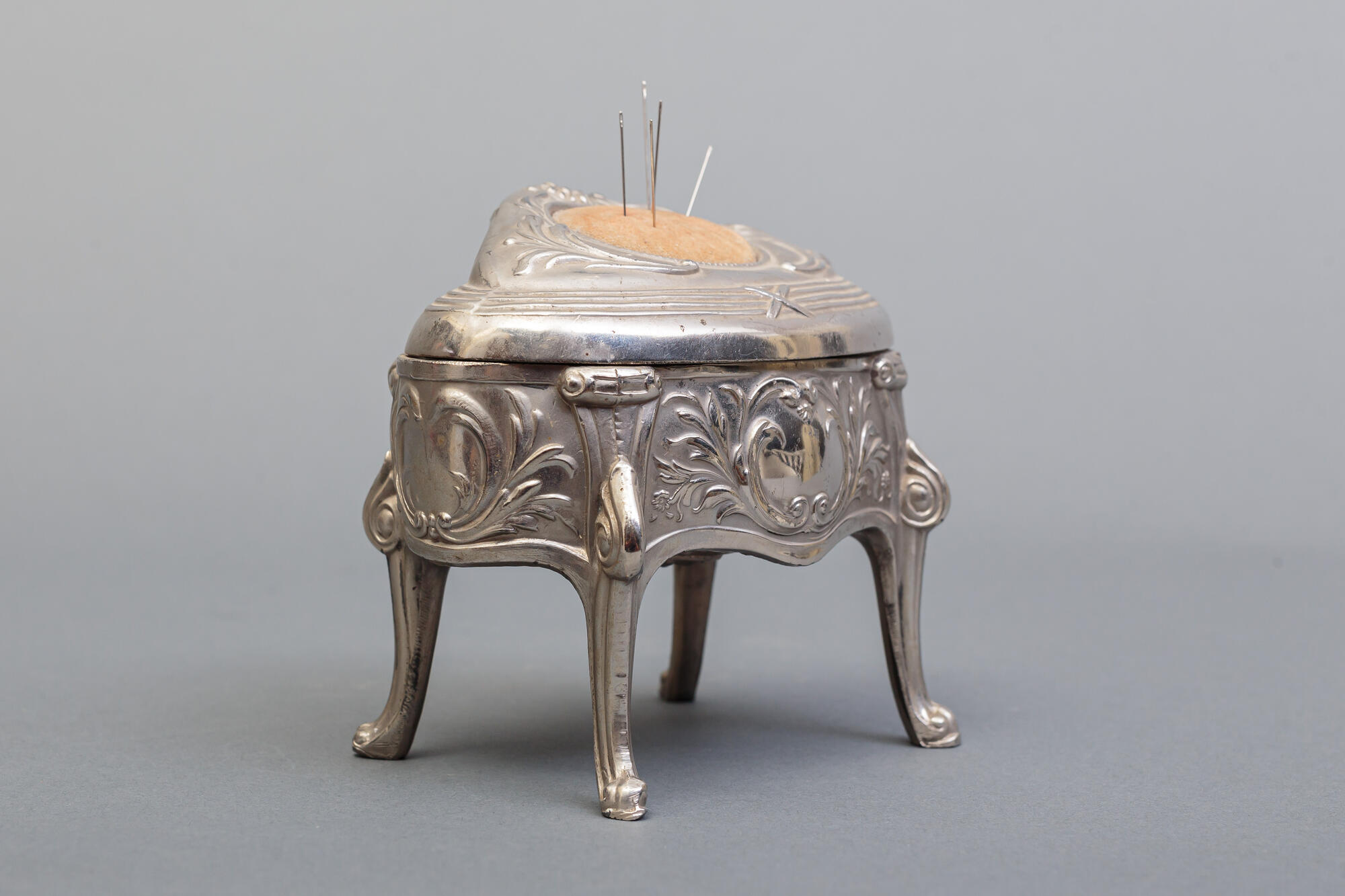
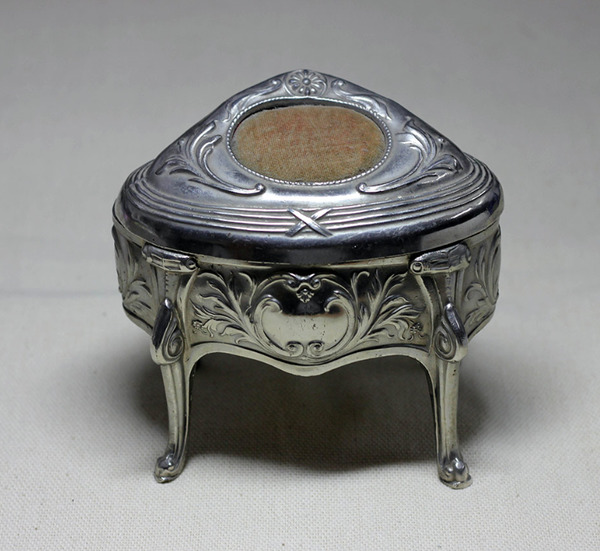
The exhibition features a pin cushion box, which was supposed to hold not only needles, but other essential little things and personal maiden’s treasures as well.
For a long time, they were forged by hand, with the loop-eyelet bent at the blunt end. The machine, which made holes in the steel needle itself, was invented in England in 1850.
Steel needles were brought to Russia by merchants from Germany in the 17th century, and in 1717 Peter I initiated the establishment of needle factories ordering to hire apprentices and workers “where they will find them and at what price they will like”. The work turned out to be lucrative, but so hard that many people refused to do it.
Needlework has long been compulsory for girls and women of all classes. In merchant and noble circles, it was one of girls’ “pious entertainments” and was always kept close at hand, even when visiting guests. Most of them were fond of embroidering with satin or beads.
Needles and later pins were considered a luxury from ancient times and required careful handling. To store them, pin cushions were invented. At first, they were made from scraps of cloth and paper folded in layers, but even such a device was affordable only to the wealthy. In the 15th century, silver or ivory cases and soft pin cushions stuffed with wool and covered with cloth came into fashion. In the 16th century, cushions were fixed on wooden or silver stands.
Gradually pin cushions grew more and more decorative. They were lined with expensive fabrics and decorated with embroidery. In the 19th century, all sorts of “baskets” and “egg cups” became common, with their stands made of glass, metal and porcelain.
In the early 20th century needlewomen used tabletop clamps that successfully combined both decorative and practical functions: they were attached to the table and kept the fabric from sliding around.
As early as the turn of the 17th century, boxes in the form of miniature chests for storing valuables were common in Russia. Especially popular in the 16th–17th centuries were boxes with secure hiding compartments. They were considered luxury items and were richly decorated with ivory, leather, enamel, gold and silver inlays, precious and semi-precious stones and coral.
The exhibition features a pin cushion box, which was supposed to hold not only needles, but other essential little things and personal maiden’s treasures as well.