The crystal chandelier hung in the writer’s apartment in Nashchokinsky Lane. One can imagine how it swayed and jingled when his upstairs neighbors hosted their infamous dance parties.


Crystal chandelier from M. Bulgakov’s apartment
Creation period
the late 19th — early 20th century
Place of сreation
Austria-Hungary
Dimensions
77x41 cm
Technique
crystal, metal; stamping, casting, assembly
Collection
Exhibition
0
Open in app#6
#7
Yet another ball is in full swing above us, the chandelier is swaying, the light bulbs are going out, it is impossible to work, M.A. is furious. — If we don’t get out of here, I won’t do anything anymore! This is a mockery — it is supposed to be the writers’ house! Felt! Ceilings! While the truth is, when the house was being built, the builders said that there would be special ceilings and felt for insulating the writers’ offices, so they promised complete silence. But in fact…
#8
Bulgakov never managed to move out of his apartment in Nashchokinsky. After his death, Elena Bulgakova moved into an apartment on Suvorovsky Boulevard, which is now renamed Nikitsky.
#9
Zhukhovitsky came for some reason at eleven o’clock and was for some reason angry and upset (M.A. explained to me later — ‘well, it’s clear, he must have been pounded in the institution’). He began with speeches, which he was clearly instructed to give, threatening that [Bulgakov’s four-act play The Days of the] Turbins would be banned if M.A. did not write a propaganda play. M.A. said, ‘Well, I’ll be selling that chandelier’.
#10
Informants appeared from time to time in Mikhail Bulgakov’s apartment, who then compiled reports for the “institution” — the People’s Commissariat of Internal Affairs of the USSR, abbreviated as the NKVD. In some cases, Bulgakov did not know who from his circle had become an informant, but sometimes he was completely sure. Among the known informants was the writer Emmanuel Zhukhovitsky, whom Mikhail Bulgakov liked to make fun of.
#11
I would like to go abroad, Zhukhovitsky continued the conversation as follows, First, Mikhail Afanasyevich, you should rather go to the factories, write about the working class, and then go abroad. Bulgakov replied, But, you know, I decided the opposite — first go abroad, and then write about the working class.
#13
Sometimes Zhukhovitsky
was not invited to their apartment for weeks, but, as Elena Bulgakova recalled,
when Mikhail Bulgakov would get bored, he asked her, “Call this scoundrel!”
#15
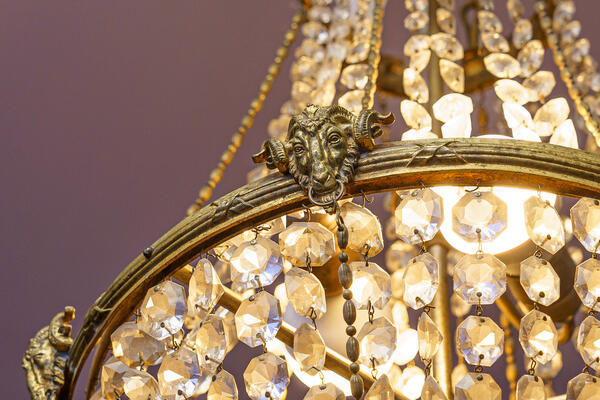
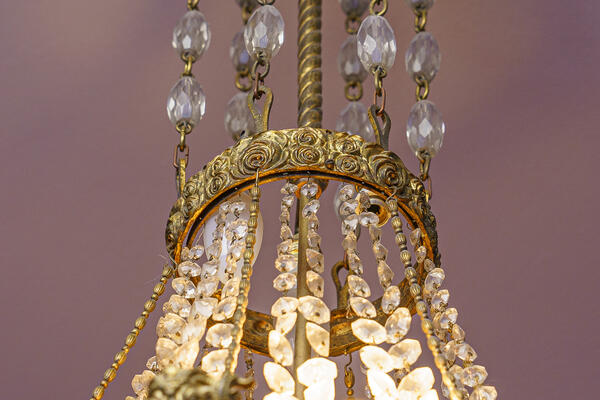
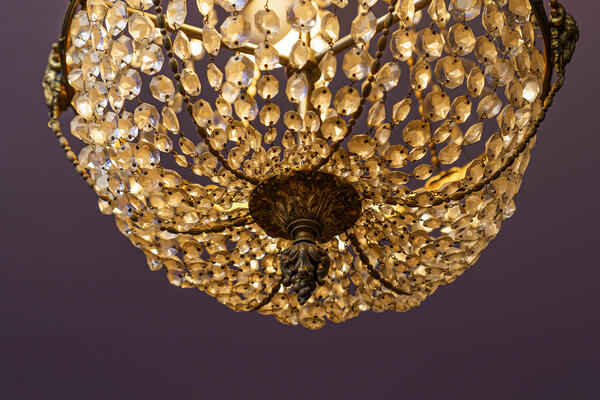
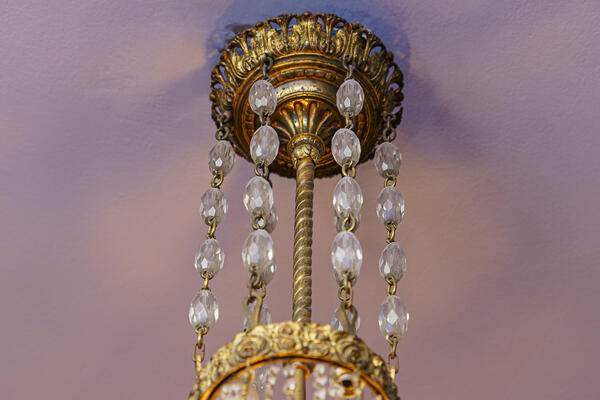
Crystal chandelier from M. Bulgakov’s apartment
#14
Ministry of Culture of the Russian Federation
read morehide
00:00
00:00
1x
Crystal chandelier from M. Bulgakov’s apartment
Creation period
the late 19th — early 20th century
Place of сreation
Austria-Hungary
Dimensions
77x41 cm
Technique
crystal, metal; stamping, casting, assembly
Collection
Exhibition
0
 Point your smartphone camera to open in the app
Open in app
Share