

On December 1, 1618, the Russian state and the Polish-Lithuanian Commonwealth concluded the Truce of Deulino, and the latter annexed the Pogar territories. By that time, Poland had a heraldic system. The troops were divided into khorugvs — small detachments that recruited soldiers from several neighboring settlements. A total of four khorugvs were formed in Starodub: Trubchev with 30 equestrians, Pochep with 50 equestrians, and Starodub and Mglin with 100 equestrians. Later, the Trubchev khorugv was replaced with the Pogar one.
In 1663, the Starodubsky Regiment was formed, which included from 8 to 11 sotnyas (a company of 100 soldiers), including the Pogar Cossack Sotnya.
The word “khorugv” could also be attributed to a banner or flag, which depicted emblems, memorable dates, and an icon of the saint who patronized the detachment.
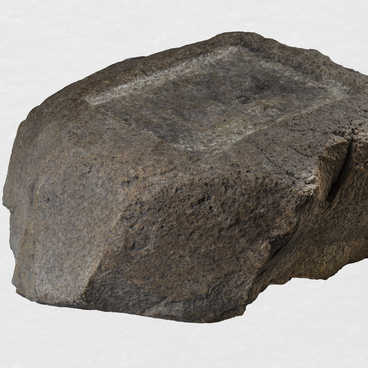
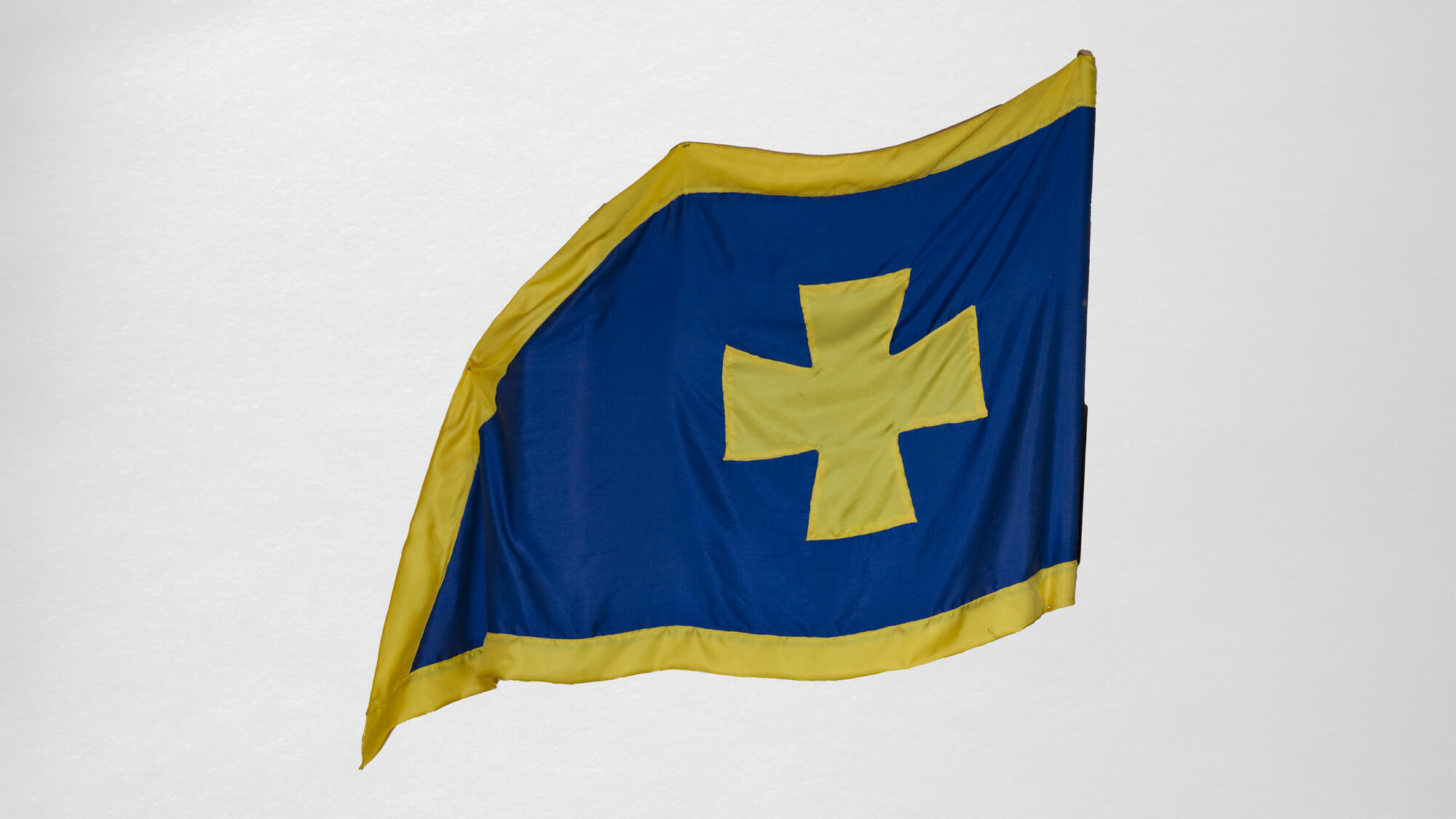
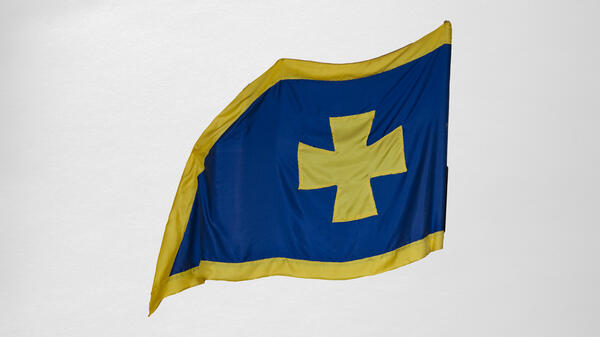
The Starodub Sotnya was allowed “to have a special red banner with a blue cross, which should be on patrol.” The Mglin banner was also red but with a black cross. The Pogar banner was blue with a gold one. Its heraldic elements largely repeated the town’s coat of arms: in addition to the cross, a gray diamond-shaped stone was also depicted on a blue background.
The shape of a khorugv resembled the tip of a saber or a banner with forked sharp ends. The Cossack, who was responsible for its safety during battles and campaigns, had the title of a standard-bearer.
The Pogar Sotnya participated in several wars. During the Northern War, it stormed Mogilev and Bykhov as part of the Starodubsky regiment, made trips through Kyiv and Lutsk to Warsaw. In 1708, the Cossacks of the Pogar Sotnya, together with Russian troops, repelled the attacks of the Swedes on the Vablya River. The Pogar Fortress housed the field chancellery of Peter I, headed by Field Marshal of the Russian infantry Boris Sheremetev. In 1738, the Pogar Cossacks, led by the former sotnik, the General Officer Staff of Cossack Hetman Semyon Galetsky, engaged in an unequal battle against the Crimean Tatars. The General Officer Staff was the keeper of a bunchuk —the main Cossack attribute of power. It looked like a tug pole with a ball or a point at the upper end, with horse tail hairs and two silver tassels.
Galetsky was brutally murdered. His son Peter saved the banner, carried his father’s body from the battlefield, and buried him in the Pogar Church of Saint Nicholas.
In 1663, the Starodubsky Regiment was formed, which included from 8 to 11 sotnyas (a company of 100 soldiers), including the Pogar Cossack Sotnya.
The word “khorugv” could also be attributed to a banner or flag, which depicted emblems, memorable dates, and an icon of the saint who patronized the detachment.
The Starodub Sotnya was allowed “to have a special red banner with a blue cross, which should be on patrol.” The Mglin banner was also red but with a black cross. The Pogar banner was blue with a gold one. Its heraldic elements largely repeated the town’s coat of arms: in addition to the cross, a gray diamond-shaped stone was also depicted on a blue background.
The shape of a khorugv resembled the tip of a saber or a banner with forked sharp ends. The Cossack, who was responsible for its safety during battles and campaigns, had the title of a standard-bearer.
The Pogar Sotnya participated in several wars. During the Northern War, it stormed Mogilev and Bykhov as part of the Starodubsky regiment, made trips through Kyiv and Lutsk to Warsaw. In 1708, the Cossacks of the Pogar Sotnya, together with Russian troops, repelled the attacks of the Swedes on the Vablya River. The Pogar Fortress housed the field chancellery of Peter I, headed by Field Marshal of the Russian infantry Boris Sheremetev. In 1738, the Pogar Cossacks, led by the former sotnik, the General Officer Staff of Cossack Hetman Semyon Galetsky, engaged in an unequal battle against the Crimean Tatars. The General Officer Staff was the keeper of a bunchuk —the main Cossack attribute of power. It looked like a tug pole with a ball or a point at the upper end, with horse tail hairs and two silver tassels.
Galetsky was brutally murdered. His son Peter saved the banner, carried his father’s body from the battlefield, and buried him in the Pogar Church of Saint Nicholas.